 ultimate-guide
Benefits of Beeswax in Skincare: A 2026 Guide
Table of Contents
- Why Beeswax Belongs in Your Skincare Routine
- How Beeswax Protects and Hydrates Your Skin
- Is Beeswax Comedogenic? What You Need to Know
- Beeswax vs Shea Butter for Skin: Which One Wins?
- How to Use Beeswax in Homemade Skincare
- Choosing Quality Beeswax: Sourcing and Sustainability
- Safety First: Patch Testing and Skin Type Suitability
- Frequently Asked Questions
Last Updated: September 29, 2026
Why Beeswax Belongs in Your Skincare Routine
The benefits of beeswax in skincare come down to one thing: it forms a breathable seal that holds moisture in without smothering your skin. This guide from The Beekeeper’s Basket breaks down exactly what that means for dryness, irritation, and everyday barrier care.
How Beeswax Protects and Hydrates Your Skin
Beeswax protects skin by creating a semi-permeable barrier that reduces transepidermal water loss, the steady evaporation of moisture through the outer skin layer. That barrier is why dermatological formulas for dry, cracked, or chapped skin often include it.
The Occlusive Barrier and Transepidermal Water Loss
An occlusive ingredient sits on top of the skin and physically slows water from escaping. Beeswax does this while staying breathable, so skin doesn’t feel sealed under plastic. The result is better skin hydration and a stronger lipid barrier over time.
Skin Soothing and Anti-Inflammatory Support
Beeswax has long been used in topical application for minor skin irritation, and it’s a common base in ointment and salve formulas for that reason. It’s gentle, it stays where you put it, and it doesn’t sting compromised skin the way some synthetic alternatives can.
Is Beeswax Comedogenic? What You Need to Know
Beeswax rates low on the comedogenic scale, typically around 0 to 2, which means it’s unlikely to clog pores for most people. That said, “low” is not “zero,” and how a product is formulated matters as much as the wax itself.
Beeswax vs Shea Butter for Skin: Which One Wins?
Neither wins outright, because they do different jobs. Beeswax is an occlusive and a structurant; shea butter is an emollient and an occlusive with a much lower melt point. Understanding that difference tells you which one to reach for, and when to use both.
The Mechanism Difference
Beeswax melts between roughly 144°F and 147°F (62-64°C), so it stays firm at skin temperature and forms a semi-permeable film that slows water loss. Shea butter melts near 89-100°F (32-38°C), which is why it glides on and sinks in rather than sitting on top. Shea also carries a fat profile rich in stearic and oleic acids plus unsaponifiables like cinnamic acid esters, which is part of why it feels softening rather than sealing.
Side-by-Side
| Feature | Beeswax | Shea Butter |
|---|---|---|
| Primary role | Occlusive seal + structurant | Emollient softener + mild occlusive |
| Melt point | ~144-147°F (62-64°C) | ~89-100°F (32-38°C) |
| Texture | Firm, waxy, holds shape | Rich, creamy, melts on contact |
| Best for | Lip balm, salves, barrier care, stick formats | Body butter, dry patches, after-sun |
| Comedogenic rating | Low (commonly cited 0-2) | Low to moderate (commonly cited 0-2) |
| Adds structure | Yes | No |
| Warm-weather stability | High | Low, can liquefy |
| Scent | Mild honey-like | Nutty, can be strong in unrefined |
When to Use Which
Use beeswax when the product needs to hold its shape, stay put, or survive a pocket or purse in summer. Lip balms, heel salves, cuticle sticks, and barrier ointments are beeswax territory. Use shea butter when the goal is softening rough or ashy skin and you want something that melts in rather than sits on top. Body butters and overnight hand creams are shea territory.
When to Use Both
Most well-built balms use both, and the ratio is where the craft lives. A common starting point for a firm-but-spreadable balm is roughly 1 part beeswax to 2 parts shea butter to 3 parts liquid carrier oil by weight. Push the beeswax up and you get a harder stick; push the shea up and you get a softer, creamier product that may need a cooler storage spot.
The Short Answer
Beeswax is the better choice for sealing and structure. Shea butter is the better choice for deep softening and glide. If you want one product that does both, use them together and tune the ratio to your climate and the format you're pouring into.
How to Use Beeswax in Homemade Skincare
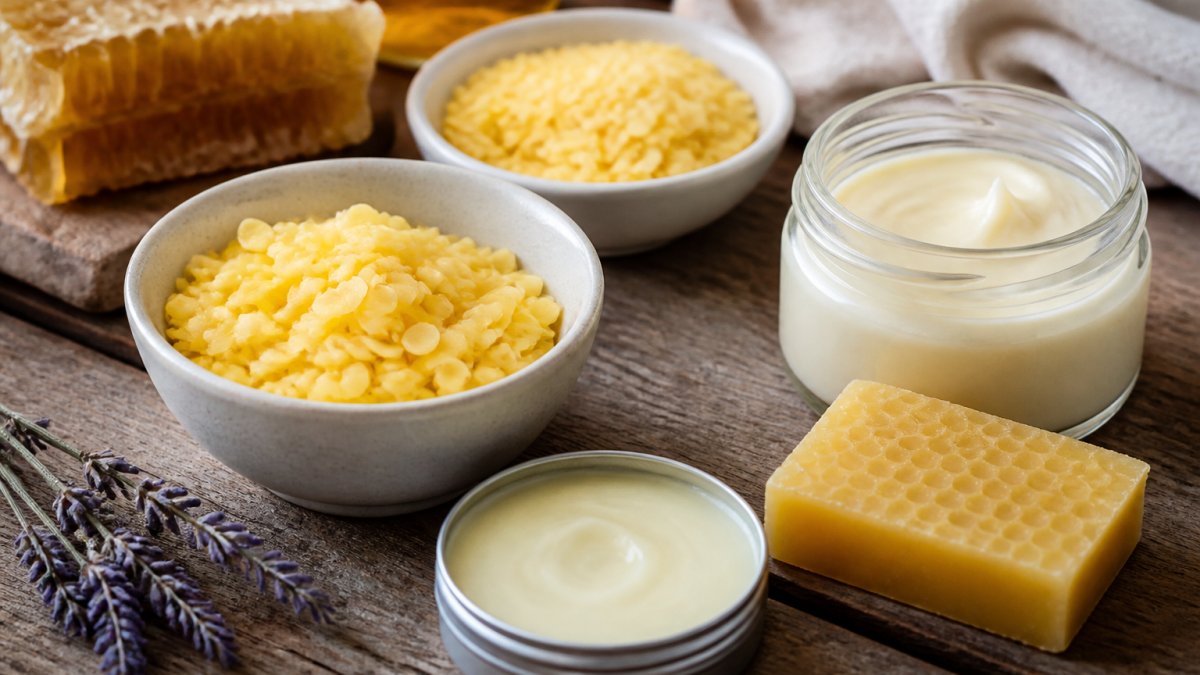
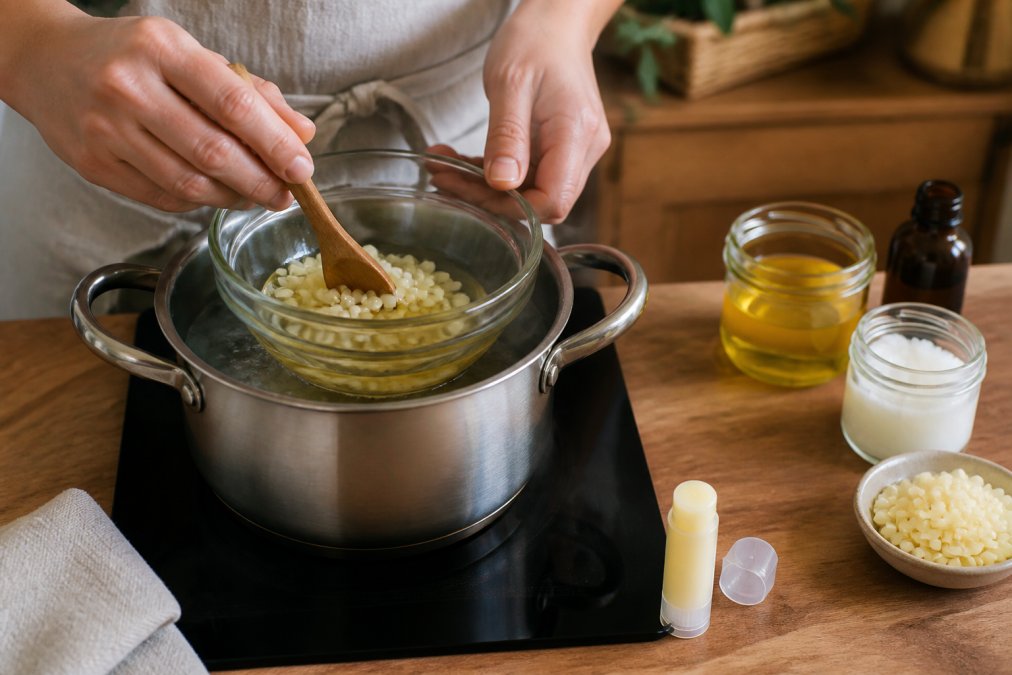
Using beeswax in homemade skincare is straightforward once you know the melt point and ratios. Grate or pellet the wax, melt it gently with your oils, and stir as it cools. Rushing the cooling step is the most common mistake.
- Weigh your beeswax and carrier oils on a kitchen scale.
- Melt them together in a double boiler over low heat.
- Stir until fully combined, then remove from heat.
- Add any essential oils once the mixture cools slightly.
- Pour into clean jars or tubes and let set undisturbed.
A Simple Beeswax Lip Balm and Salve Recipe
This recipe makes about six lip balm tubes or two small salve tins.
- 1 tablespoon beeswax pellets
- 2 tablespoons carrier oil (jojoba, sweet almond, or olive)
- 1 teaspoon shea butter
- 5 to 10 drops essential oil, optional
Choosing Quality Beeswax: Sourcing and Sustainability
Most guides stop at "buy from a reputable supplier." That's not useful. Here's what actually separates good beeswax from bad, and why sourcing matters for both your skin and the bees.
How to Judge Quality
Good cosmetic-grade beeswax is filtered, free of debris and honey residue, and ranges from pale yellow to golden amber. Color alone isn't a quality signal, darker wax often just means older comb or more pollen contact. What matters is that it's clean, dry, and smells faintly of honey rather than smoke or chemicals.
Watch for these red flags:
- Gritty or cloudy wax, incomplete filtering, which can leave particles that feel abrasive in a balm.
- Sticky or tacky surface, residual honey, which can shorten shelf life and attract mold.
- Chemical or smoky smell, often a sign of over-processing or poor hive management.
- Suspiciously cheap pellets, beeswax is labor-intensive to produce; rock-bottom pricing usually means cut or adulterated wax.
Adulteration Is Common
Beeswax is one of the more frequently adulterated cosmetic ingredients because it's expensive relative to substitutes. Common fillers include paraffin, microcrystalline wax, and stearic acid. A pure beeswax pellet snaps cleanly when broken and has a faint honey scent; a cut product may feel greasier, smell flat, or behave inconsistently in a recipe. If you're buying in bulk, ask the supplier for a specification sheet or country of origin.
What Sustainable Sourcing Actually Means
Sustainable beekeeping isn't a marketing phrase, it describes specific practices:
- Leaving enough honey for the colony to survive winter rather than stripping hives bare.
- Harvesting cappings and excess comb rather than destroying brood comb.
- Avoiding overharvesting that forces supplemental feeding or weakens colonies.
- Supporting regional pollinators by keeping hives in areas with diverse forage.
Questions Worth Asking a Supplier
If sourcing claims matter to you, ask directly:
- Where was this wax harvested, and by whom?
- Is it filtered, and to what grade?
- Is it pure beeswax, or blended with other waxes?
- How are the hives managed during harvest?
At The Beekeeper's Basket, every product is handcrafted in small batches in New England, and we build our line around bee-inspired ingredients rather than treating them as an afterthought. If sourcing claims matter to you, ask a supplier directly where their wax comes from. The good ones answer without hesitation.
Safety First: Patch Testing and Skin Type Suitability
Patch testing is the single most important step before adding any new beeswax product to your routine. Apply a small amount to your inner forearm, wait 24 hours, and check for redness, itching, or swelling before using it more widely.
Frequently Asked Questions
Is beeswax good to put on your face?
Yes, beeswax is generally safe and beneficial for facial skin. It acts as an emollient and occlusive, creating a protective layer that helps lock in moisture and shield skin from environmental stressors. Its anti-inflammatory properties can soothe irritation, and it is a common ingredient in lip balms, ointments, and creams. However, if you have very oily or acne-prone skin, you may prefer a lighter moisturizer to avoid a heavy feel.
Does beeswax clog pores?
Beeswax is considered non-comedogenic, meaning it is unlikely to clog pores for most people. Its molecular structure is too large to penetrate the pore lining, so it sits on the skin's surface to form a breathable, protective barrier. This makes it suitable for many skin types, including sensitive skin. If you are prone to congestion, look for beeswax in well-formulated products that also contain non-comedogenic oils.
Which is better for skin, shea butter or beeswax?
The better choice depends on your skin's needs. Shea butter is rich in fatty acids and vitamins, making it deeply moisturizing and easily absorbed. Beeswax is a superior occlusive agent, creating a protective layer that seals in moisture and shields skin. For very dry, cracked skin, a combination of both is often ideal. If you need a lighter, more breathable barrier, beeswax alone may be preferable.
What are the disadvantages of beeswax for skin?
While beeswax offers many benefits, it has a few drawbacks. Its occlusive nature can feel heavy or waxy on very oily skin, and it may not be ideal for those prone to congestion. Rarely, individuals with allergies to bee products may experience skin irritation. Always perform a patch test before using a new beeswax-based product, especially if you have sensitive skin or known allergies.
How do I use beeswax in homemade skincare?
To use beeswax in homemade skincare, melt it gently with carrier oils in a double boiler. A typical ratio is 1 part beeswax to 4-6 parts oil for a salve, or 1 part beeswax to 8 parts oil for a lotion bar. Stir in any essential oils off the heat, then pour into containers. This method works for lip balms, ointments, and moisturizing bars. Always patch test your final product.
Is beeswax sustainable and ethical?
Beeswax is a renewable resource produced by honeybees as a byproduct of honey production. When sourced from small-scale, local beekeepers who prioritize bee health, it is considered sustainable. Look for suppliers who are transparent about their sourcing and avoid beeswax from operations that use harmful pesticides or unsustainable practices. Supporting local apiaries helps ensure ethical production.