 blog
Best Natural Soaps for Dry Skin: 2026 Guide
Table of Contents
- Why Dry Skin Needs a Different Kind of Cleanser
- What Makes Natural Soaps for Dry Skin Actually Work
- Benefits of Goat Milk Soap for Dry, Sensitive Skin
- Beeswax Benefits for Skin: A Natural Barrier Boost
- How to Choose Natural Soap for Sensitive Skin
- Hard Water, Seasonal Shifts, and Other Factors That Affect Dry Skin
- How to Keep Skin Hydrated After Every Shower
- Frequently Asked Questions
Last Updated: September 28, 2026
Why Dry Skin Needs a Different Kind of Cleanser
If your skin feels tight and itchy minutes after a shower, the soap is usually the problem. The best natural soaps for dry skin replace the fatty lipids that cleansing strips away. At The Beekeeper’s Basket, we make small-batch soaps.
How Commercial Soaps Strip Your Moisture Barrier
Most mass-market bars rely on harsh cleansing agents and synthetic fragrance. These lift away dirt and oil together, then keep going, pulling out the lipids your skin needs to stay soft.
What Makes Natural Soaps for Dry Skin Actually Work
Natural soaps for dry skin work when they clean without stripping. The mechanism comes down to three jobs at once: replacing the lipids cleansing removes, holding water in the upper layers, and keeping surface pH close to where your skin wants it.
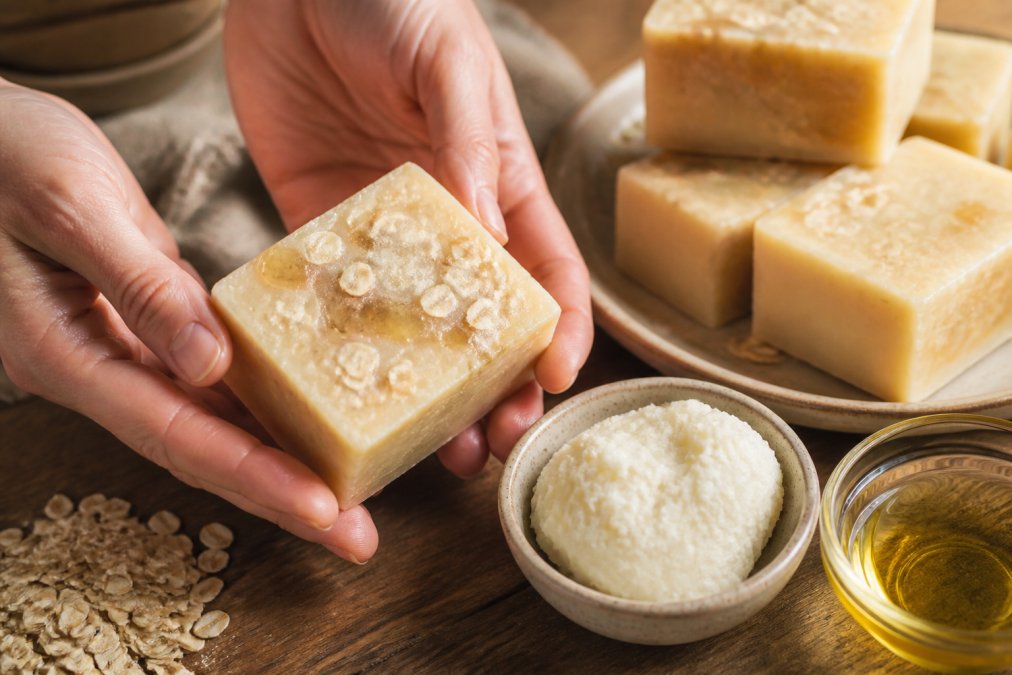
The Three Roles Every Good Bar Plays
- Emollients (shea butter, olive oil, cocoa butter) soften skin and fill the gaps between cells so the barrier stays flexible.
- Humectants (glycerin, honey, aloe) pull water from the air and deeper layers into the surface, a bar with retained glycerin feels different from one stripped of it.
- Occlusives (beeswax, lanolin) sit on top and slow water loss. They do not add moisture; they keep what is there from evaporating.
A bar that only does one of these jobs will underperform. That is why the best natural soaps for dry skin tend to combine all three rather than leaning on a single hero ingredient.
Why Fatty Acid Profiles Matter More Than Ingredient Names
Two bars can both list "olive oil" and behave completely differently. What matters is the fatty acid profile the oil contributes after saponification:
- Oleic acid (high in olive and avocado oil) is a strong emollient but can feel heavy and mildly irritating at high concentrations.
- Lauric acid (high in coconut and palm kernel oil) creates big, fluffy lather but is the most cleansing, so it tips a bar toward stripping if it dominates.
- Stearic and palmitic acids (high in shea and cocoa butter) produce a hard, creamy bar with dense, low lather that rinses without squeaking.
Moisturizing Oils and Butters That Replenish Lipids
The ingredients list is where a bar proves itself. Look for:
- Shea butter for deep, nourishing lipid replenishment
- Olive oil and other natural oils that support skin elasticity
- Botanical extracts that calm sensitive skin
- Beeswax to seal in moisture and support the barrier
How to Read a Natural Soap Label
A label tells you more than the front of the package. Scan for cold-process methods, sulfate-free and paraben-free claims, and a full ingredient list. If it hides behind "fragrance" alone, treat it as synthetic fragrance until proven otherwise.
Why pH-Balanced Cleansing Is Not a Marketing Phrase
Healthy skin sits at a slightly acidic pH, generally in the high 4s to low 5s (pubmed.ncbi.nlm.nih.gov). Traditional lye-based soap, even a well-made one, finishes around pH 9 to 10. That temporarily raises skin pH every wash, and skin takes time to return to baseline. For most people that is fine; for dry or reactive skin, it is one more stressor on a struggling barrier.
Benefits of Goat Milk Soap for Dry, Sensitive Skin
Goat milk soap is one of the most soothing options for dry, reactive skin. Its natural fats and lactic acid soften rough patches while supporting the moisture barrier, which is why it appears so often in hypoallergenic and dermatologist-tested routines.
Beeswax Benefits for Skin: A Natural Barrier Boost
The beeswax benefits for skin come down to one job: it seals. Beeswax forms a breathable layer that slows water loss, making it a natural fit for emollient-rich soaps and lotions.
Beeswax does not add water to skin. It keeps the water you already have from escaping, which is why it works best alongside humectants like glycerin.
How to Choose Natural Soap for Sensitive Skin
Choosing well means matching the bar to your skin, your water, and your routine, not scanning for buzzwords. Learning how to choose natural soap for sensitive skin means reading past the marketing and trusting the formula.
Start with these filters:
- Sulfate-free and paraben-free formulas
- Non-comedogenic oils that will not clog pores
- Synthetic fragrance left out entirely
- Handcrafted, small-batch bars for consistency
Match the Bar to Your Skin Type
"Dry skin" is not one condition. The right bar depends on which version you have:
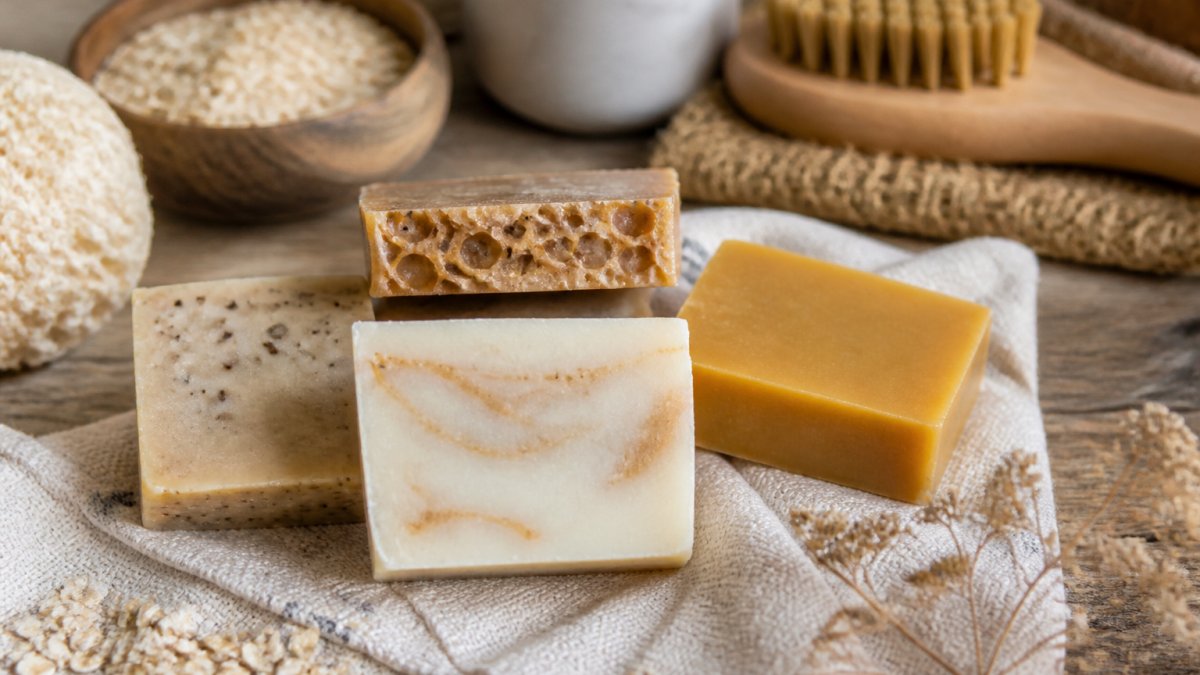
- Dry but not reactive: A traditional cold-process bar with a balanced oil blend (olive, shea, modest coconut) and a light natural scent usually works.
- Dry and reactive: Choose fragrance-free or essential-oil-free bars, short ingredient lists, and more stearic-rich butters like shea or cocoa. Fewer ingredients means fewer chances for a reaction.
- Dry with eczema or psoriasis flares: Many dermatologists recommend fragrance-free, dye-free cleansers and treating soap as a minor part of the routine. The bigger levers are prescription topicals and moisturizing after every wash.
- Dry and acne-prone: Non-comedogenic oils matter. Coconut oil ranks high on the comedogenic scale for some people; sunflower and safflower tend to be lower. A bar great for body skin may not suit your face.
Ingredients to Avoid if Your Skin Reacts Easily
Some ingredients cause more trouble than they solve:
- Synthetic fragrance and added dyes
- Harsh cleansing agents that over-strip
- Essential oils at high concentrations, which can trigger skin irritation
- Alcohol-heavy formulas that dry skin out further
- Coconut oil as the lead ingredient, which can be too cleansing for very dry skin even though it is technically natural
If a bar foams heavily, that is often a sign of a harsher cleansing agent. A soft, creamy lather usually means gentler cleansing agents are at work.
| Ingredient Type | What It Does | Best For |
|---|---|---|
| Shea butter | Replenishes lipids | Very dry skin |
| Goat milk | Softens and soothes | Sensitive, reactive skin |
| Beeswax | Seals in moisture | Barrier repair |
| Essential oils | Adds scent | Skin that tolerates fragrance |
| Sulfates | Strips oil | Not recommended for dry skin |
Patch-Test Before You Commit
A bar can look perfect on paper and still disagree with your skin. A simple protocol:
- Wash the inside of one forearm with the bar for three to four days in a row.
- Skip every other new product during that window so you can isolate the reaction.
- Watch for redness, itching, or tightness that lasts more than 15 minutes after drying.
- If your skin stays calm, move the bar to your full body routine.
Factor In Your Water and the Season
Two variables most buying guides ignore can matter as much as the bar itself:
- Hard water leaves calcium and magnesium residue that reacts with soap to form scum, which sits on skin and feels filmy or drying. In hard-water areas, a syndet-style bar or shower filter often outperforms traditional lye soap.
- Soft water rinses cleaner and lets a gentle bar work with less product.
- Winter calls for richer emollient bars with more shea or cocoa butter, since indoor heat and cold outdoor air both pull moisture from skin.
- Summer often suits a lighter formula with more olive or sunflower oil, as humidity and sweat change how a bar feels.
Buy Small First
A 4-ounce bar lasts most people three to four weeks with daily body use, long enough to know if it works, short enough that a wrong pick is no big loss. Buying a single bar before a multi-bar bundle is the cheapest way to test a formula against your actual skin, water, and routine.
Hard Water, Seasonal Shifts, and Other Factors That Affect Dry Skin
Two factors most guides ignore can matter as much as the bar itself: your water and the season. Hard water leaves mineral residue that interferes with lather and can leave skin feeling filmy and dry, while soft water rinses cleaner and lets a gentle bar do its job.
How to Keep Skin Hydrated After Every Shower
What you do in the two minutes after a shower matters more than any single product. Follow this routine:
- Pat skin dry instead of rubbing, leaving it slightly damp.
- Apply a nourishing lotion or body butter within three minutes.
- Focus on elbows, knees, and shins, where dryness shows first.
- Choose pH-balanced products that support the skin microbiome.
- Reapply on hands after every wash during dry months.
Frequently Asked Questions
What soap is best for extremely dry skin?
Cold-process natural soaps made with goat milk, shea butter, and olive oil work best for extremely dry skin. These ingredients replenish lipids and support the moisture barrier instead of stripping it. Look for sulfate-free, paraben-free bars with a pH-balanced formula. Avoid synthetic fragrance and harsh cleansing agents. A bar rich in emollients like beeswax and natural oils will leave skin feeling nourished rather than tight after washing.
How do I choose natural soap for sensitive skin?
Start by checking the label for gentle cleansing agents like coconut oil or olive oil rather than sulfates. Look for no synthetic fragrance. Goat milk soap is a strong option because its lactic acid is gentle and its fat content helps maintain skin elasticity. Test a small area first, and pick fragrance-free bars if your skin has reacted to scented products before.
Can natural soap help with skin conditions like eczema or psoriasis?
Natural soaps can support skin comfort but are not a treatment for eczema or psoriasis. Gentle, fragrance-free bars with goat milk, colloidal oatmeal, and shea butter may reduce irritation from cleansing. Avoiding sulfates and synthetic fragrance removes common triggers. If you have a diagnosed skin condition, talk to a dermatologist about cleansers that fit your routine.
What should I look for in a natural soap label?
Check for short ingredient lists with recognizable names like shea butter, olive oil, goat milk, beeswax, and botanical extracts. Avoid sulfates, parabens, synthetic fragrance, and artificial dyes. Look for terms like cold-process, handcrafted, and pH-balanced. A bar that lists its oils and butters near the top of the ingredients will have higher concentrations of moisturizing ingredients than one where they appear last.