 how-to
Can Natural Skincare Cause Allergic Reactions?
Table of Contents
- Yes, Natural Skincare Can Cause Allergic Reactions
- How Natural Ingredients That Cause Skin Allergies Trigger Reactions
- Allergic Contact Dermatitis from Skincare vs. Irritation
- Recognizing Signs and Symptoms of a Skin Reaction
- How to Perform Skincare Patch Test Instructions at Home
- Choosing Hypoallergenic Skincare for Sensitive Skin
- What to Do If a Natural Skincare Product Causes a Reaction
- Frequently Asked Questions
Last Updated: October 16, 2026
Yes, Natural Skincare Can Cause Allergic Reactions
The short answer is yes, can natural skincare cause allergic reactions? Absolutely. Many people assume natural means safe, and that assumption causes real problems.
Natural ingredients can trigger allergic reactions just as easily as synthetic ones. Some of the most common allergens come straight from nature: plant oils, botanical extracts, essential oils, and flower- and herb-derived fragrances. At The Beekeeper's Basket, we explain that "natural" does not mean "hypoallergenic."
Your skin doesn't care whether an ingredient is synthetic or plant-based. What matters is whether your immune system recognizes it as a threat, which produces inflammation, redness, itching, and sometimes blistering. Understanding which ingredients trigger these reactions, and how to test products safely, is the only way to enjoy natural skincare without the painful side effects.
How Natural Ingredients That Cause Skin Allergies Trigger Reactions
Your skin has a protective barrier. When you apply a product, ingredients penetrate it and interact with your immune cells. If your body identifies an ingredient as dangerous, it launches an allergic response: allergic contact dermatitis, which is different from simple irritation.
The reaction happens in two stages. First exposure sensitizes your skin, often with no visible sign. Second exposure triggers the full response: redness, swelling, itching, and sometimes blistering. Some people react on first use; others develop sensitivity after months. That unpredictability is what makes natural skincare tricky.
Fragrance and Fragrance Allergens
Fragrance is the single most common cause of contact dermatitis in skincare, whether it comes from essential oils, plant extracts, or synthetic compounds.
Natural fragrances are not gentler than synthetic ones. Lavender oil, rose extract, and citrus oils contain dozens of chemical compounds, each a potential allergen. Some people react to the whole blend; others to just one component.
The problem gets worse because fragrance ingredients don't always appear on labels. Manufacturers can list "fragrance" or "parfum" as a single ingredient even if it contains 50+ components, so you have no way to know what you're applying. If you've reacted to fragranced products before, unscented options are your safest bet.
Essential Oils and Botanical Extracts
Essential oils sound pure and healing. They're not. They're highly concentrated plant compounds, and concentration makes them more likely to cause reactions.
Common culprits include tea tree oil, peppermint oil, eucalyptus oil, and chamomile extract. They're popular because they have real benefits, but benefits don't equal safety for everyone. Even small amounts can trigger allergic contact dermatitis in susceptible people.
Botanical extracts work the same way. Arnica, calendula, aloe vera, and green tea extract can all cause reactions, and the fresher or more potent the extract, the higher the risk.
Preservatives in Natural Skincare
Natural skincare products still need preservatives. Without them, bacteria and mold grow, and your product becomes unsafe. Natural preservatives include essential oils, plant extracts, and compounds like vitamin E.
The irony is sharp: natural preservatives cause more allergic reactions than synthetic ones. Phenoxyethanol, a synthetic preservative, causes fewer reactions than natural alternatives like rosemary extract or tea tree oil. Synthetic preservatives are engineered to be stable and less reactive; natural ones are plant compounds, and plant compounds trigger allergies.
Allergic Contact Dermatitis from Skincare vs. Irritation
This distinction matters because it changes how you respond, how long you wait, and whether you can ever use the product again. The two can look almost identical on the surface but work through different mechanisms and timelines.
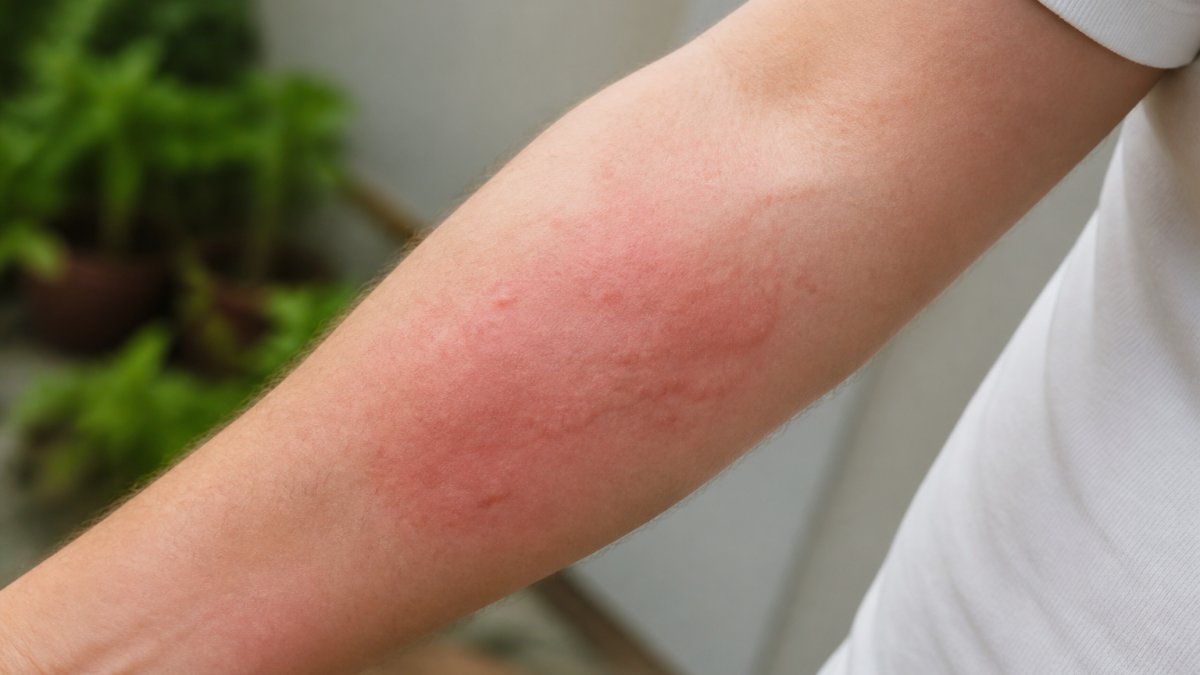
Allergic contact dermatitis is an immune response. Your immune system recognizes an ingredient as a threat and mounts a delayed, type IV cell-mediated reaction, which is why it doesn't appear the instant you apply the product.
Irritant contact dermatitis is direct chemical damage. The ingredient damages the skin barrier itself, stripping lipids, disrupting proteins, or altering pH. There is no immune memory involved.
A practical side-by-side comparison helps:
| Feature | Allergic contact dermatitis | Irritant contact dermatitis |
|---|---|---|
| Mechanism | Immune (delayed hypersensitivity) | Direct barrier damage |
| Timing of first symptoms | Often 24-72 hours after exposure | Minutes to hours |
| Sensitization | Requires prior exposure; can take months or years | No sensitization needed |
| Spread | Can extend beyond application site | Stays where product touched skin |
| Sensation | Itching is prominent | Burning, stinging, tightness |
| Appearance | Redness, swelling, vesicles, oozing | Redness, dryness, cracking, scaling |
| Response to stopping | Improves over 1-2 weeks | Improves within hours to days |
| Future use | Avoid the ingredient entirely | May tolerate lower concentration or less frequent use |
How do you tell the difference in practice? Allergic reactions often spread beyond the application area, itch more than they burn, and follow a delayed timeline. Irritation stays put, stings or burns, and shows up quickly.
The practical difference in response: with irritation, you might tolerate the product at lower concentrations, less frequent use, or over a barrier-repair routine. With allergy, avoid that ingredient entirely, because each re-exposure risks a stronger, longer reaction.
Recognizing Signs and Symptoms of a Skin Reaction
Skin reactions from natural skincare products show up in predictable ways. Spotting them early matters because stopping use immediately prevents the reaction from getting worse.
Early warning signs include:
- Itching that starts within minutes to hours of application
- Mild redness or flushing in the treated area
- Slight burning or stinging sensation
- Dryness or flaking skin
If you ignore these signals, the reaction escalates:
- Intense itching that disrupts sleep
- Visible rash with defined borders
- Swelling of the face, lips, or eyes
- Blistering or oozing
- Skin that feels hot or inflamed
Timing varies: some reactions appear within 15 minutes, others over hours, and some people experience delayed reactions 24-48 hours after application. That delay is why patch testing matters, it gives you time to see a reaction before applying the product to your whole face.
How to Perform Skincare Patch Test Instructions at Home
Patch testing at home is your best first-line defense, but understand what it can and cannot do. A home use test can catch many obvious reactions before you apply a product to your whole face.
With those limits in mind, here is a cautious, step-by-step home approach:
Step 1: Choose a test area. Pick a spot on your inner forearm or behind your ear, where thinner skin approximates facial skin better than your palm or outer arm. Avoid cuts, sunburn, eczema, or existing irritation, since broken skin can produce misleading results.
Step 2: Apply a small amount. Use a dime-sized amount on the test spot and leave it uncovered.
Step 3: Wait 48 to 72 hours. This window catches most delayed allergic reactions. Check the site at 24, 48, and 72 hours; some reactions don't appear until the second or third day, so stopping at 24 hours can miss them.
Step 4: Check for reactions. Look for itching, redness, swelling, burning, or any discomfort. Compare the test spot to the same area on the opposite arm.
Step 5: If there is no reaction, expand gradually. Apply the product to a small area of your face, such as one cheek or the forehead, once daily for 3 to 5 days before expanding to your full routine.
Step 6: Watch for delayed reactions. Even after the initial patch test, monitor your skin for the first one to two weeks of use.
Choosing Hypoallergenic Skincare for Sensitive Skin
Hypoallergenic skincare isn't a legal category, companies can claim it without meeting any standard. But certain choices reduce your risk of reactions.
Look for products with short ingredient lists. Fewer ingredients mean fewer potential allergens. A 5-ingredient moisturizer is safer than a 25-ingredient one.
Avoid fragrance entirely. This is non-negotiable for sensitive skin. Fragrance-free products exist. Use them.
Choose products without essential oils or botanical extracts if you have a history of reactions. These sound natural and healthy, but they're concentrated allergen sources. Simple oils, jojoba, sunflower, sweet almond, are safer choices.
At The Beekeeper's Basket, we create products for sensitive skin by keeping formulas simple. Beeswax, honey, and gentle plant oils do the work. We skip fragrance entirely in our sensitive-skin line.
Patch test even hypoallergenic products. The label doesn't guarantee your skin won't react. Everyone's sensitivities are different.
What to Do If a Natural Skincare Product Causes a Reaction
Stop using the product immediately. Don't finish the application or wait to see if the reaction improves on its own. Wash the product off with cool water and a gentle cleanser.
First 24 hours:
- Avoid all skincare except gentle cleansing and a plain moisturizer
- Use cool (not cold) water to wash your face
- Skip makeup, sunscreen, and any other products
- Resist the urge to scratch, even if itching is intense
- Take an antihistamine if itching is severe
Days 2-7:
- Continue minimal skincare, just cleanser and moisturizer
- Introduce products one at a time, waiting 3-5 days between each
- Avoid anything with fragrance, essential oils, or botanical extracts
- Use sunscreen only if necessary, and choose a mineral option
When to seek medical care:
- Swelling spreads to your eyes, lips, or throat
- You develop blisters or open sores
- The reaction doesn't improve after 48 hours
- You have difficulty breathing (rare, but seek emergency care immediately)
Most reactions resolve within 1-2 weeks once you stop using the product. Your skin barrier heals slowly, so be patient. Rushing back into your full routine restarts the cycle.
Identify what triggered the reaction by reviewing the ingredient list. Look for fragrance, essential oils, botanical extracts, or preservatives you haven't used before. That's your culprit. Avoid it in future products.
Natural skincare can be wonderful for your skin, but only when you choose wisely and test carefully. Allergic reactions are preventable, and patch testing takes time but is faster than treating an inflamed face for two weeks. Start with simple, fragrance-free products and expand slowly. The Beekeeper's Basket creates handcrafted skincare designed for sensitive skin, with minimal ingredients and no fragrance. Our small-batch approach means you know exactly what's going into your products. Explore our collection and find formulas your skin actually loves. LET'S EXPLORE!
Frequently Asked Questions
Can natural skincare products cause allergic reactions?
Yes. Natural skincare can trigger allergic contact dermatitis even though the ingredients come from plants and natural sources. Allergens in natural products include fragrance compounds, essential oils, plant extracts, and preservatives. The source of an ingredient, natural or synthetic, does not determine whether it causes an allergic reaction. Your immune system responds to specific chemical structures, not whether they are labeled 'natural.' If you have a history of skin sensitivity, patch testing before full use is essential.
What natural skincare ingredients commonly trigger allergies?
Common allergens in natural skincare include fragrance and fragrance allergens (limonene, linalool, geraniol), essential oils (tea tree, lavender, peppermint), botanical extracts (arnica, calendula, chamomile), and natural preservatives (balsam of Peru, propolis). Plant-based ingredients can cause delayed reactions; symptoms may appear 24-72 hours after exposure. Always read the ingredient list and patch test unfamiliar plant extracts before applying to your face or body.
How do you patch test a new skincare product at home?
Apply a small amount of the product to clean, dry skin on your inner forearm or behind your ear, areas with thinner, more sensitive skin. Leave the product on for 24-48 hours without washing it away. Check the area every 12 hours for redness, itching, swelling, burning, stinging, or any other sign of irritation or inflammation. If no reaction appears after 48 hours, the product is likely safe for broader use. If a reaction occurs, stop using it immediately and wash the area with gentle soap and water.
How can you tell if a skincare reaction is an allergy or irritation?
Allergic contact dermatitis develops gradually and may appear 24-72 hours after exposure, while irritant contact dermatitis often appears within minutes to hours. Allergic reactions typically cause intense itching and may spread beyond the contact area; irritation usually causes burning or stinging but stays localized. Allergies worsen with repeated exposure to the same ingredient, whereas irritation may improve if you reduce the frequency of use or dilute the product. If you suspect an allergy, stop using the product entirely. If you suspect irritation, try reducing application frequency or concentration before discontinuing completely.