 how-to
Does Colloidal Oatmeal Help Eczema? A 2026 Guide
Table of Contents
- Does Colloidal Oatmeal Help Eczema? What the Evidence Shows
- How to Use Colloidal Oatmeal for Eczema: Step by Step
- Colloidal Oatmeal Bath for Eczema: What to Know Before You Soak
- Colloidal Oatmeal Cream for Eczema: Picking the Right Moisturizer
- Choosing Between Baths, Creams, and Cleansers
- Safety, Allergies, and When to Stop Using Oatmeal
- How Oatmeal Fits Into Standard Eczema Care
- Frequently Asked Questions
Last Updated: October 12, 2026
Does Colloidal Oatmeal Help Eczema? What the Evidence Shows
Colloidal oatmeal is one of the few natural ingredients that dermatologists actually reach for when eczema-prone skin flares up. It is finely ground oat that suspends in water, and it has been used for itchy, irritated skin for generations.
So, does colloidal oatmeal help eczema? The short answer: yes, for many people. It soothes itching, calms redness, and supports the skin barrier. But it is not a cure, and it works best alongside standard eczema care, not instead of it.
What Colloidal Oatmeal Actually Is
Colloidal oatmeal is finely milled oat grain that stays suspended in water, forming a soothing bath or paste. The word "colloidal" refers to those tiny particles floating evenly through liquid rather than sinking to the bottom.
That fine grind matters. Regular rolled oats sit at the bottom of the tub. Colloidal oatmeal coats the skin instead.
The FDA’s over-the-counter skin protectant monograph lists colloidal oatmeal as a recognized skin protectant. That is a meaningful label, not a marketing term.
How It Works on Eczema-Prone Skin
Oat naturally contains compounds that calm and protect irritated skin. When eczema flares, the skin barrier weakens, moisture escapes, and irritants get in. Colloidal oatmeal helps on several fronts:
- Soothes itching and irritation so the urge to scratch eases
- Reduces redness and inflammation for a calmer look and feel
- Forms a protective barrier that shields skin from irritants and allergens
- Softens dry, rough patches so skin feels less tight
- Holds moisture in by supporting barrier function
The anti-inflammatory effect is why oatmeal baths have long been a home remedy for rash, poison ivy, and poison oak. Eczema-prone skin responds to the same calming action.
How to Use Colloidal Oatmeal for Eczema: Step by Step
Using colloidal oatmeal well comes down to temperature, timing, and what you do right after. Hot water and long soaks strip the skin and make itching worse, so keep it lukewarm and brief.
Baths: Frequency, Duration, and Temperature
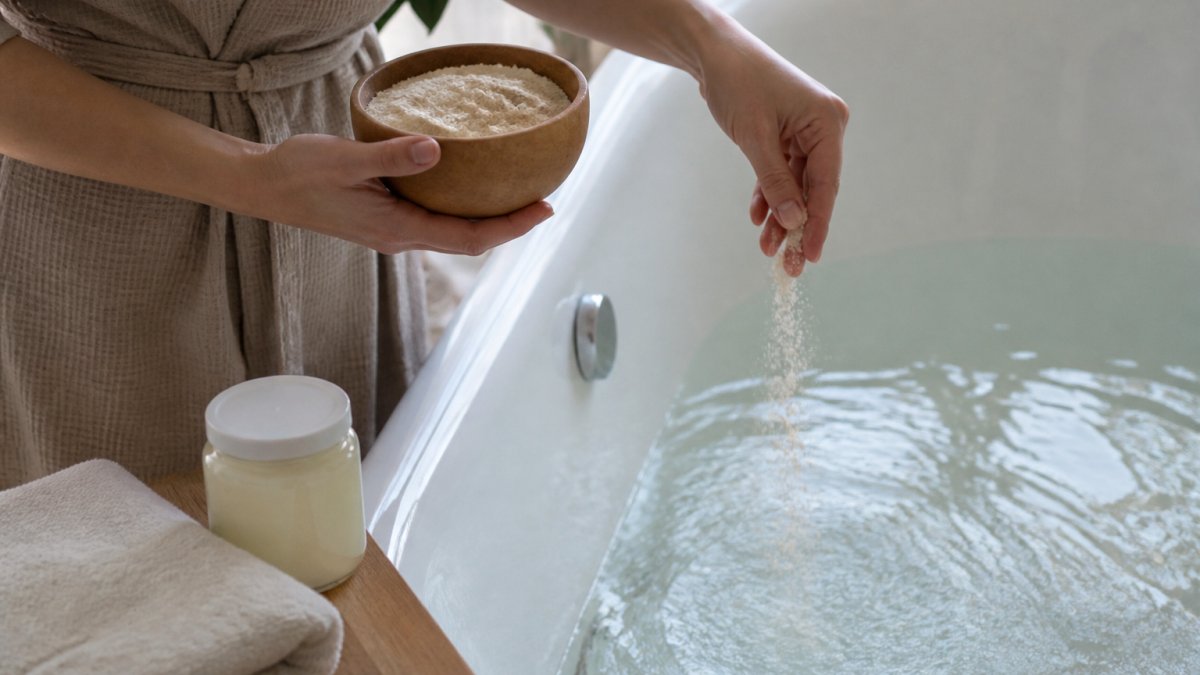
A colloidal oatmeal bath is best for widespread itching or a full-body flare. Here is a step-by-step routine:
- Fill a tub with lukewarm water, aim for about 90-95°F (32-35°C). Hot water feels good momentarily but strips oils and worsens itching.
- Add colloidal oatmeal powder according to the package directions. For a standard tub, most products call for one to two cups. Swirl until the water looks milky and no clumps remain.
- Soak for 10 to 15 minutes. Longer soaks can dry the skin. Set a timer if you tend to linger.
- Pat dry with a soft towel. Do not rub, which can irritate inflamed skin.
- Apply a thick, fragrance-free moisturizer within three minutes, while skin is still damp. This locks in the water the bath just delivered.
- Repeat up to three times a week during a flare, or as your doctor advises. For maintenance, once a week may be enough.
If you have open sores or signs of infection, skip the bath and check with a clinician first.
Creams and Lotions: Daily Application
A colloidal oatmeal cream or lotion is the most practical format for daily use. Apply it after every shower and whenever itching flares. For best results:
- Use a generous amount, about a nickel-sized dollop for each arm or leg.
- Smooth it on in the direction of hair growth to avoid follicle irritation.
- Reapply to hands after washing, since handwashing strips the product.
- For facial eczema, use a lighter lotion to avoid clogging pores.
A common mistake is skipping the moisturizer after a bath or shower. The bath softens skin and opens the door for moisture, but it cannot seal it in. That is the moisturizer's job, and it is the step most people drop.
Cleansers: Washing Without Stripping
Colloidal oatmeal cleansers are designed to clean without disrupting the barrier. Use them as you would any gentle cleanser:
- Wet skin with lukewarm water.
- Apply a small amount and massage gently for 30 seconds.
- Rinse thoroughly and pat dry.
- Follow immediately with a colloidal oatmeal cream or your usual moisturizer.
Avoid cleansers with sulfates, strong fragrances, or exfoliating beads, which can aggravate eczema.
A Sample Weekly Routine
| Day | Format | Notes |
|---|---|---|
| Monday | Cream | After morning shower |
| Tuesday | Cream | Morning and evening |
| Wednesday | Bath | 10-15 minutes, then moisturize |
| Thursday | Cream | Morning and evening |
| Friday | Cream | After morning shower |
| Saturday | Bath | If itching is widespread |
| Sunday | Cream | Morning and evening |
Adjust based on your skin's response. If a bath leaves skin tighter than before, the water was too hot or the soak too long.
Colloidal Oatmeal Bath for Eczema: What to Know Before You Soak
A colloidal oatmeal bath for eczema works best when the water is lukewarm and the soak is short. It calms widespread itching fast, which makes it a good choice during a flare.
Keep these points in mind:
- Use cool or lukewarm water only.
- Skip harsh soaps and bubble baths during the soak.
- Do not scrub the skin.
- Moisturize right after you pat dry.
For babies and infants, keep baths brief and check with a pediatrician first. Infant skin is thinner and more sensitive.
Colloidal Oatmeal Cream for Eczema: Picking the Right Moisturizer
A colloidal oatmeal cream for eczema is the most practical format for most people. You can apply it anywhere, any time, and it doubles as a daily moisturizer.
When you shop, look for:
- Colloidal oatmeal high on the ingredient list
- Fragrance-free formulas for sensitive skin
- A thick, emollient texture that holds moisture
- Few added dyes or harsh preservatives
Fragrance is the ingredient most likely to trigger a reaction in eczema-prone skin. If your skin is reactive, start with an unscented option.
Choosing Between Baths, Creams, and Cleansers
| Format | Best For | How Often | Watch Out For |
|---|---|---|---|
| Bath | Widespread itching, flares | 2-3 times a week | Hot water, long soaks |
| Cream | Daily moisture, spot relief | Twice daily | Fragrance, dyes |
| Cleanser | Washing without stripping | Daily | Sulfates, strong scents |
Baths calm a full-body flare. Creams handle daily upkeep. Cleansers keep skin clean without tearing down the barrier. Many people use all three.
If you are unsure where to start, begin with a cream. It is the easiest to work into a routine and the hardest to get wrong.
Safety, Allergies, and When to Stop Using Oatmeal
Colloidal oatmeal is generally well tolerated, but no ingredient suits every person. Oat allergy is rare but real, and some people with eczema have sensitive skin that reacts to otherwise gentle products. Knowing how to patch test and when to stop can save weeks of discomfort.
How to Patch Test
Before using any new colloidal oatmeal product on a flare, patch test it:
- Choose a small area of skin that is not currently inflamed, the inner forearm is a common choice.
- Apply a small amount of the product and cover it with a bandage or leave it open, depending on the product type.
- Wait 24 to 48 hours. Do not wash the area.
- Check for redness, itching, swelling, or burning. If any of these occur, do not use the product on larger areas.
Patch testing takes a day or two and can prevent a full-body reaction. Test every new product, even one labeled for sensitive skin.
Signs of a Reaction or Oat Allergy
Stop using colloidal oatmeal and seek medical advice if you notice:
- New or worsening rash
- Swelling, hives, or trouble breathing
- Burning that does not settle within an hour
- Signs of infection, such as pus, spreading warmth, or fever
A true oat allergy may cause symptoms beyond the skin, including sneezing, runny nose, or gastrointestinal upset if oats are ingested. If you have a known oat or gluten sensitivity, talk to a clinician before using topical oat products.
When to Discontinue Use
Even without an allergy, colloidal oatmeal may not help everyone. Discontinue use if:
- Symptoms worsen after application
- No improvement is seen after one to two weeks of regular use
- The product causes dryness or tightness
Eczema is a chronic condition with flares and remissions. A product that works during one flare may not work during another. Keep track of what you use and how your skin responds.
When to Seek Medical Advice
Home care with colloidal oatmeal is appropriate for mild to moderate itching and irritation. Seek medical advice if:
- Eczema covers a large area or is severely inflamed
- You see signs of infection
- Symptoms interfere with sleep or daily activities
- A child under 2 years old has eczema, check with a pediatrician before using any new product
The American Academy of Dermatology's eczema guidance stresses that any product causing irritation should be dropped, not pushed through. If you are unsure whether colloidal oatmeal is right for your skin, a dermatologist can help you build a safe routine.
How Oatmeal Fits Into Standard Eczema Care
Colloidal oatmeal is a supporting player, not a replacement for prescribed treatment. Standard eczema care usually includes:
- Daily moisturizing to protect the barrier
- Gentle, fragrance-free cleansers
- Prescription creams or ointments during flares
- Avoiding known triggers like harsh soaps and scratchy fabrics
Oatmeal fits neatly into the moisturizing and soothing steps. It can calm itching between treatments and make skin more comfortable. It cannot replace a steroid cream when skin is badly inflamed.
If your eczema is not improving with home care, see a dermatologist. The National Eczema Association’s treatment overview is a useful starting point for understanding your options.
At The Beekeeper’s Basket, we make small-batch, bee-inspired skin care for people who want gentle, natural options.
Frequently Asked Questions
Can an oatmeal bath help eczema?
Yes, an oatmeal bath can calm itching, redness, and irritation linked to eczema. The FDA recognizes colloidal oatmeal as a skin protectant for minor irritation. For best results, draw a lukewarm bath, add finely ground colloidal oatmeal (not instant oats), soak for 10 to 15 minutes, then pat dry and apply a moisturizer within three minutes to lock in hydration and support the skin barrier.
How often can you use colloidal oatmeal on eczema-prone skin?
Most people can use colloidal oatmeal once or twice daily, and twice-daily use is common in clinical studies of eczema-prone skin. A gentle oatmeal bath works well every other day, while a colloidal oatmeal cream or lotion can be applied morning and night. If your skin starts feeling drier, tight, or more irritated, cut back to once a day and check with a dermatologist about adjusting your routine.
Can colloidal oatmeal cause an allergic reaction?
Reactions are uncommon but possible. People with a wheat or oat allergy, or celiac disease, should check with a doctor before using colloidal oatmeal. Start with a small patch on your inner forearm, wait 24 hours, and watch for redness, swelling, or new itching. Stop using it right away if symptoms appear. Colloidal oatmeal is generally gluten-free, but cross-contact during farming can happen, so verify the label if you avoid gluten.
Is colloidal oatmeal a replacement for prescription eczema treatment?
No. Colloidal oatmeal is a soothing, over-the-counter option that supports the skin barrier and eases itching, but it does not replace prescription care for moderate to severe eczema. Think of it as part of a larger plan: gentle cleansers, thick moisturizers, and any topical medications your dermatologist recommends. If your eczema is not improving or keeps flaring, talk to a doctor about stronger treatment options.
Eczema is stubborn, and finding a routine that calms it takes patience. Colloidal oatmeal can be a gentle, reliable part of that routine, especially when paired with a moisturizer that locks in what the soak leaves behind. At The Beekeeper’s Basket, our small-batch lotions and soaps are made for sensitive, dry skin, with fresh ingredients and no harsh extras. Explore our collection and find a soothing option that fits your daily care. LET'S EXPLORE!