 how-to
How Long Does Skin Barrier Take to Heal
Table of Contents
- Understanding Your Skin Barrier and Why It Matters
- Damaged Skin Barrier Symptoms You Should Recognize
- Skin Barrier Repair Timeline: What to Expect Week by Week
- How to Repair a Damaged Skin Barrier
- Skin Barrier Healing Signs: How to Know You're Recovering
- Factors That Affect How Long Healing Takes
- When to See a Dermatologist About Barrier Damage
- Frequently Asked Questions
Last Updated: October 10, 2026
Understanding Your Skin Barrier and Why It Matters
Understanding how long does skin barrier take to heal starts with knowing your skin barrier is your body's first line of defense. It's the outermost layer of skin that holds moisture in and keeps irritants out.
The skin barrier consists of lipids, ceramides, and proteins that work together like a brick wall. Think of lipids as the mortar holding bricks in place. When this barrier breaks down, water escapes from your skin.
Understanding how your barrier works helps you repair it faster.
A damaged barrier shows up in multiple ways. Your skin might feel sensitive to products that never bothered you before. You might notice redness, stinging, or itching. These aren't character flaws in your skin. They're signals that your barrier needs help.
Damaged Skin Barrier Symptoms You Should Recognize
Recognizing barrier damage early makes repair faster and easier. The sooner you act, the sooner you heal.
Common signs of a damaged skin barrier include:
- Excessive dryness that doesn't improve with moisturizer
- Redness and inflammation across your face or body
- Stinging or burning sensations when applying products
- Itching that feels worse at night
- Flaking or peeling skin
- Tightness, especially after cleansing
- Sensitivity to products you've used for years
- A rough or bumpy skin texture
These symptoms overlap with other skin conditions, so pay attention to when they started. Did they appear after trying a new product? After using an exfoliating acid too often? After a period of stress or poor sleep? The trigger matters because it helps you understand what damaged your barrier in the first place.
Barrier damage can affect your entire face or just specific areas. Many people notice it first around their eyes, where skin is thinnest. Others see it on their cheeks or forehead. Some experience it on their body, especially hands and legs.
Skin Barrier Repair Timeline: What to Expect Week by Week
How long does skin barrier take to heal? The answer depends on how badly it's damaged. Mild damage heals faster than severe damage. Your body's natural repair speed also matters. Some people heal quickly. Others need more time.
Mild Barrier Damage: 2-3 Weeks
Mild barrier damage happens when you've used harsh products for a short time or over-exfoliated once or twice.
With proper care, mild damage typically improves within 2 to 3 weeks. You'll notice less stinging when you apply products. Your skin will feel less tight. Redness will fade gradually.
Week 1: Discontinue irritating products. Start using a gentle cleanser and simple moisturizer. You should feel some relief within a few days.
Week 2: Continue your simplified routine. Add a barrier-supporting moisturizer if your skin still feels tight. Most people see noticeable improvement by now.
Week 3: Your skin should feel significantly better. Redness should be mostly gone. You can begin slowly reintroducing other products if symptoms have resolved.
Moderate Barrier Damage: 3-6 Weeks
Moderate damage develops from consistent use of harsh products, frequent over-exfoliation, or mixing incompatible actives. Your skin feels noticeably uncomfortable. Redness is visible. Dryness is persistent.
Moderate barrier damage typically requires 3 to 6 weeks of dedicated care. Healing takes longer because the damage penetrates deeper into your skin's protective layers.
Week 1-2: Stop all active ingredients immediately. Switch to a gentle cleanser and barrier-supporting moisturizer. Avoid hot water and harsh towels. Your skin will still feel uncomfortable, but inflammation should begin decreasing.
Week 3-4: Continue your simplified routine without variation. You may see improvement in redness and dryness. Stinging should decrease noticeably. Resist the urge to reintroduce products yet.
Week 5-6: Most of your symptoms should be resolved. Your skin feels hydrated and less reactive.
Severe Barrier Damage: 6-8 Weeks or Longer
Severe damage results from prolonged misuse of harsh products, combining multiple damaging ingredients, or ignoring early warning signs. Your skin feels raw.
Severe skin barrier damage can take 6 to 8 weeks or longer to heal completely. Some people need 10 to 12 weeks.
Week 1-2: Stop everything except a gentle cleanser and simple moisturizer. Your skin needs absolute rest.
Week 3-4: Continue your minimal routine. Inflammation should be decreasing, but your skin still feels sensitive. Don't rush.
Week 5-6: Your skin should feel less raw. Redness fades. Dryness improves.
Week 7-8: Most symptoms should be resolved. Your skin feels normal again. Healing is complete or nearly complete. You can begin cautiously testing gentle products.
How to Repair a Damaged Skin Barrier
Repairing your barrier requires a systematic approach. You need to stop the damage, simplify your routine, and rebuild your skin's protective layers.
Step 1: Stop Using Irritating Products
The first step is the most important: stop using products that damage your barrier. This includes harsh cleansers, strong exfoliants, and irritating actives.
Products that commonly damage the skin barrier include:
- Cleansers with sulfates or high pH
- Chemical exfoliants used too frequently (AHAs, BHAs, retinoids)
- Fragrance and essential oils
- Alcohol-based products
- Products with multiple active ingredients mixed together
- Very hot water during cleansing
Remove these immediately. Your barrier can't heal while you're still damaging it. This step alone often brings relief within days.
Step 2: Simplify Your Skincare Routine
During barrier repair, less is more. A complex routine with many products stresses your skin. A simple routine with gentle products lets your barrier heal.
Your barrier repair routine should include only three steps:
- Gentle cleanser, removes dirt without stripping
- Moisturizer, hydrates and protects
- Sunscreen (daytime only), prevents additional damage
That's it. No serums, no essences, no treatments. No exfoliants of any kind. Your skin doesn't need them right now. Your skin needs rest.
Step 3: Use a Gentle Cleanser
A gentle cleanser is the foundation of barrier repair. It removes dirt and oil without disrupting your skin's pH or stripping protective lipids.
Look for cleansers that are:
- Sulfate-free
- pH-balanced (around 5.5)
- Fragrance-free
- Creamy or milky in texture
- Free of alcohol and essential oils
Cream cleansers and micellar waters work well for barrier repair. Avoid foaming cleansers and bar soaps unless they're specifically formulated to be gentle.
Cleanse twice daily with lukewarm water. Use your fingertips, not a washcloth. Pat your skin dry gently instead of rubbing. These small changes protect your barrier while you heal.
Step 4: Apply Barrier-Supporting Ingredients
Once you've stopped the damage and simplified your routine, introduce ingredients that actively support barrier repair. These ingredients help rebuild the protective layers your skin needs.
The most effective barrier-supporting ingredients are:
- Ceramides, replace lipids your barrier lost
- Humectants (glycerin, hyaluronic acid), draw water into your skin
- Occlusives (oils, butters, waxes), seal moisture in
- Niacinamide, supports barrier function and reduces inflammation
- Centella asiatica, calms irritation and supports healing
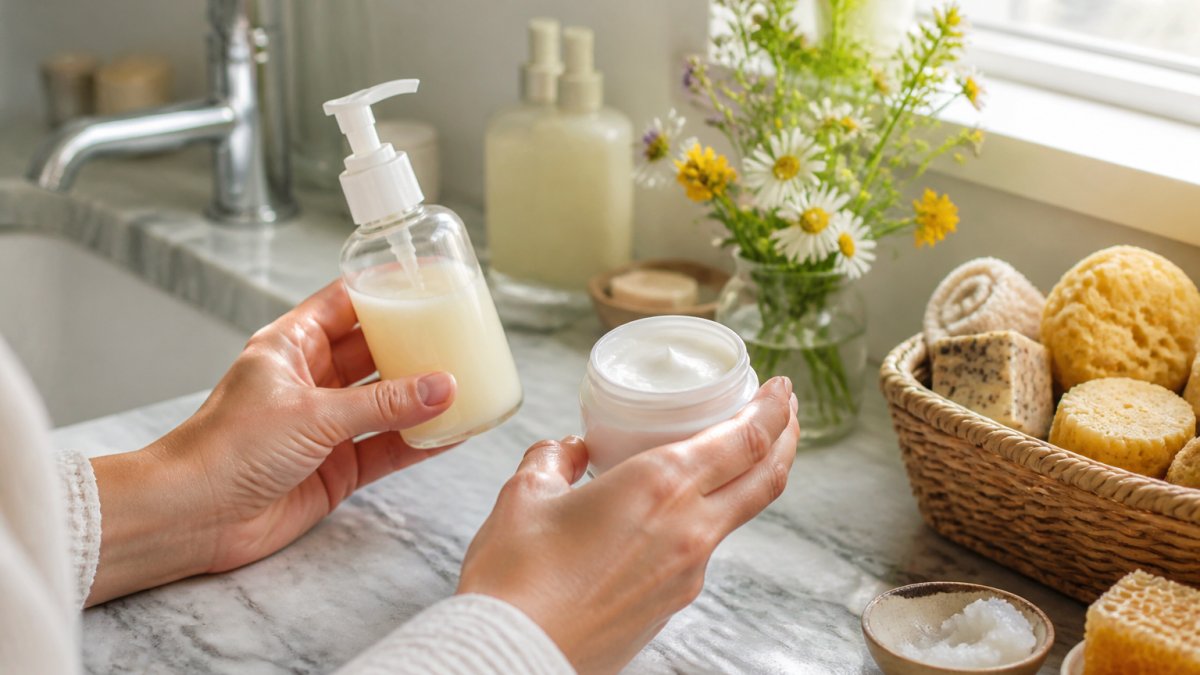
Look for moisturizers containing these ingredients. Many barrier-repair products combine multiple ingredients for maximum effectiveness. Our handcrafted moisturizers include natural ingredients like beeswax and plant oils that support barrier function.
Step 5: Moisturize and Protect
Moisturizing is non-negotiable during barrier repair. Apply moisturizer to damp skin immediately after cleansing. Damp skin absorbs moisture better than dry skin.
Use enough product to coat your entire face. If you're unsure, use more rather than less. Your barrier needs hydration to heal.
During the day, follow with sunscreen. Sun exposure stresses a damaged barrier and can slow healing. SPF 30 or higher protects your skin while it recovers.
At night, consider adding an occlusive layer. Oils, butters, or heavy creams seal in moisture overnight. Your skin heals while you sleep, so nighttime is ideal for intensive moisture.
Skin Barrier Healing Signs: How to Know You're Recovering
Tracking your progress keeps you motivated and helps you know when your barrier is truly healed.
Clear signs of barrier recovery include:
- Redness fading or disappearing
- Reduced stinging or burning sensations
- Less itching, especially at night
- Improved skin texture and smoothness
- Skin feels hydrated without being greasy
- Products no longer cause irritation
- Skin tone looks more even
These improvements don't all happen at once. You might notice reduced stinging first. Redness fades next. Texture improves last. This gradual progression is normal and healthy.
Once your symptoms resolve, test your barrier's readiness by reintroducing one product at a time. Wait 3 to 5 days between introducing new products. If your skin tolerates it without irritation, keep it. If irritation returns, stop and wait longer.
Factors That Affect How Long Healing Takes
Several factors influence how quickly your barrier heals. Understanding these helps you set realistic expectations.
Damage severity is the primary factor. Mild damage heals in weeks. Severe damage takes months.
Your age matters too. Younger skin often heals faster than older skin.
Skin type affects healing speed. Oily skin sometimes recovers faster because it retains moisture more easily.
Overall health influences barrier repair. Sleep, stress, nutrition, and hydration all affect how quickly your skin heals.
Consistency with your routine is crucial. Sticking to your simplified routine every single day accelerates healing.
Climate and environment play a role too. Cold, dry weather stresses your barrier and slows healing.
Underlying skin conditions can complicate barrier repair. If you have eczema, rosacea, or psoriasis, your barrier may take longer to heal.
When to See a Dermatologist About Barrier Damage
Most barrier damage improves with proper home care. However, some situations warrant professional help.
See a dermatologist if:
- Your symptoms don't improve after 8 weeks of consistent care
- Your skin develops signs of infection (pus, severe warmth, spreading redness)
- You experience severe pain or blistering
- Your symptoms worsen despite following repair steps
- You develop new symptoms like hives or severe swelling
- You're unsure whether your damage is barrier-related or a skin condition
A dermatologist can confirm whether you have barrier damage or another condition. They can recommend prescription treatments if needed.
According to the American Academy of Dermatology, persistent skin irritation lasting more than a few weeks should be evaluated by a professional. Don't assume home care will fix everything.
Repairing your skin barrier takes time, but it's absolutely possible. Most people see significant improvement within weeks by stopping irritating products, simplifying their routine, and using barrier-supporting ingredients.
At The Beekeeper's Basket, we create gentle, barrier-supporting products designed for sensitive skin. Our handcrafted soaps and moisturizers contain natural ingredients like beeswax and plant oils that support barrier function.
Frequently Asked Questions
How long does it take for a damaged skin barrier to heal?
Most cases heal within 2-4 weeks with consistent, gentle care. Mild damage may resolve in 2-3 weeks, while moderate damage typically takes 3-6 weeks. Severe barrier damage can require 6-8 weeks or longer, depending on the cause and your skin type. Healing also varies by body area, underlying health conditions, and how strictly you follow a simplified routine.
What are the signs your skin barrier is healing?
Early healing signs include reduced redness and stinging, less itching and tightness, and improved skin texture. As recovery progresses, dryness and flaking decrease, skin feels smoother, and sensitivity to products diminishes. By the end of your healing timeline, redness fades significantly, skin hydration improves noticeably, and you can gradually reintroduce gentle active ingredients without irritation.
What should you stop using when your skin barrier is damaged?
Pause all exfoliating acids, retinoids, vitamin C serums, and other active ingredients immediately. Avoid products with fragrance, alcohol, or essential oils. Stop over-cleansing and switch to a gentle cleanser used once or twice daily. Skip physical exfoliation entirely. Even if these products worked before, they will worsen barrier damage and delay healing. Resume them only after your skin barrier has fully recovered.
When should you see a dermatologist about barrier damage?
Seek professional care if symptoms persist beyond 8 weeks despite consistent gentle care, or if you develop severe redness, oozing, or signs of infection. A dermatologist can rule out underlying skin conditions like eczema or rosacea that may mimic barrier damage. If you're unsure whether your symptoms indicate barrier damage or another condition, professional evaluation ensures you receive appropriate treatment and avoid prolonging discomfort.