 how-to
How to Identify Skin Irritants in Soap
Table of Contents
- Understanding Irritant and Allergic Contact Dermatitis
- Common Soap Ingredients That Trigger Skin Reactions
- Recognizing Soap Allergy Symptoms and Skin Reaction Signs
- How to Read Soap Ingredient Labels for Potential Triggers
- Soap Ingredients to Avoid for Sensitive Skin
- Isolating Your Trigger Through Patch Testing Soap
- Prevention and Recovery After Identifying Your Trigger
- Frequently Asked Questions
Last Updated: October 9, 2026
Understanding Irritant and Allergic Contact Dermatitis
Irritant contact dermatitis and allergic contact dermatitis are two distinct reactions your skin can have to soap and cleansing products. Understanding the difference matters because knowing how to identify skin irritants in soap helps you treat and prevent each one appropriately.
Irritant contact dermatitis occurs when a soap ingredient damages your skin barrier directly. This happens to anyone exposed to the irritant long enough, it's not an allergy, just a chemical reaction. Your skin becomes inflamed because the substance strips away natural oils or disrupts the protective layer.
Allergic contact dermatitis is different. Your immune system identifies a specific ingredient as a threat and mounts an allergic response. Only people sensitized to that particular ingredient will react. Someone else using the same soap may have no problem at all.
The key distinction: irritant dermatitis is dose-dependent (more exposure = worse reaction), while allergic dermatitis can trigger even with tiny amounts once you're sensitized. This matters when you're trying to identify what's causing your skin irritation and how to avoid it in the future.
Common Soap Ingredients That Trigger Skin Reactions
Not every soap ingredient irritates every person, but certain ones appear repeatedly in cases of skin sensitivity. At The Beekeeper's Basket, we formulate with awareness of these common culprits.
The most problematic ingredients fall into a few categories. Some are cleansing agents that work too aggressively. Others are preservatives added to extend shelf life. Still others are fragrances and dyes that serve no cleaning purpose, they're purely aesthetic.
Sulfates and cleansing agents
Sulfates like sodium lauryl sulfate and sodium laureth sulfate are surfactants that create lather and strip away dirt and oil. They're effective cleaners, which is why they're in thousands of products. The problem is they're also effective at stripping your skin's natural protective oils.
When you wash frequently with sulfate-based soaps, especially if you're doing dishes, washing hands multiple times daily, or showering in hard water, your skin barrier weakens. This cumulative irritation shows up as dryness, tightness, redness, or a burning sensation.
Repeated exposure is the key factor here. One wash with a sulfate soap won't harm most people. But daily use, especially on sensitive skin or combined with other irritants, causes visible irritation over days or weeks.
Fragrances and dyes
Fragrance is one of the most common contact allergens. Synthetic fragrances contain dozens of chemical compounds, and your skin doesn't need to recognize the fragrance itself, it can react to one component within the mixture.
Dyes serve no functional purpose in soap. They're added purely for color appeal. Yet they're a frequent cause of allergic reactions. The problem worsens if you have eczema or existing skin sensitivity, which makes your skin barrier already compromised.
Natural fragrances aren't automatically safer. Essential oils smell pleasant and come from plants, but they're still chemical compounds that can trigger reactions. Some people tolerate essential oil-scented soaps well; others develop sensitivity over time with repeated exposure.
Preservatives and parabens
Preservatives keep soap from growing mold or bacteria during storage. Common ones include parabens, methylisothiazolinone, and formaldehyde releasers. These extend shelf life, especially important for mass-produced soaps sitting in warehouses and stores for months.
Parabens are particularly controversial because they're so widely used and because some people develop delayed allergic reactions to them. You might use a product for weeks without issue, then suddenly develop a rash, that's the hallmark of a delayed allergic response.
The irony: preservatives prevent microbial growth, which is good for safety. But for some people, the preservative itself becomes the problem. Small-batch products made fresh in smaller quantities need fewer preservatives.
Recognizing Soap Allergy Symptoms and Skin Reaction Signs
Symptoms of a soap-triggered skin reaction typically appear within minutes to hours of exposure, though allergic reactions can take 24-48 hours to fully develop.
Common signs include:
- Redness or flushed appearance on exposed skin
- Itching that ranges from mild to intense
- Burning sensation, especially on hands or face
- Dryness, flaking, or scaly patches
- Swelling of the skin or, in severe cases, lips or eyelids
- Small blisters or weeping skin
- Cracked skin, particularly on hands or between fingers
The location matters. If you develop a rash only on your hands, suspect a hand soap or dishwashing soap. If it's on your face, think about facial cleansers. Body wash reactions typically show up on the torso or wherever the soap sat longest on your skin.
Pay attention to timing. Did the rash appear right after switching to a new soap? That's a strong signal. Did it develop gradually over weeks of using the same product? That suggests cumulative irritation from repeated exposure rather than an acute allergic reaction.
Severity varies widely. Some people experience mild itching and slight redness. Others develop painful blistering or significant swelling. The intensity doesn't always correlate with how irritating the ingredient is, it depends on your individual skin sensitivity and how much exposure you've had.
How to Read Soap Ingredient Labels for Potential Triggers
Reading a soap label correctly is your first step in how to identify skin irritants in soap. Most people skip this step, but it's where the detective work begins.
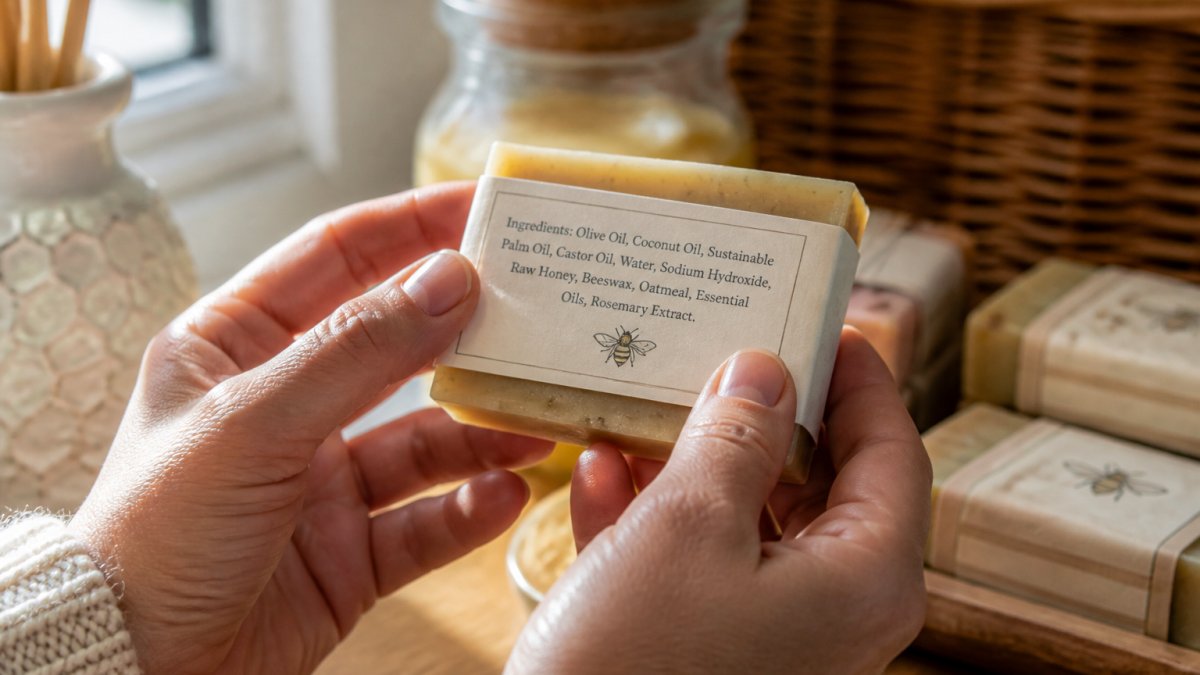
Start with the ingredient list. In the United States, soap ingredients must be listed in descending order by weight. The first few ingredients make up the bulk of the product.
Look for fragrance listed as "fragrance," "parfum," or "essential oil blend." These are often catch-all terms hiding multiple chemical compounds.
Scan for preservatives. Common ones to spot:
- Parabens (methylparaben, propylparaben, butylparaben)
- Methylisothiazolinone (MIT)
- Formaldehyde or formaldehyde releasers
- Sodium benzoate or potassium sorbate
Dyes appear as "CI" followed by numbers (like CI 77891 for titanium dioxide) or color names. If you see multiple color additives, that's a signal the product is heavily dyed.
Check for allergen warnings. Some soaps include statements like "May cause irritation in sensitive individuals", that's useful honesty. Others list specific allergens they've removed.
Compare labels across products you've used. Did the soap that irritated you contain an ingredient the ones that didn't have? That's a clue to your specific trigger.
Soap Ingredients to Avoid for Sensitive Skin
Once you've had a reaction, the next step is knowing which ingredients to avoid going forward. This prevents future irritation and helps you shop more confidently.
If you've reacted to sulfates: Look for sulfate-free soaps. Check labels for "sulfate-free" claims, which are reliable because they're regulated. These soaps use gentler cleansing agents like plant-based surfactants or soap made the traditional way through saponification.
If fragrance triggered your reaction: Choose fragrance-free soaps, not "unscented" ones. Unscented products often contain masking fragrances that hide other scents, they still have fragrance chemicals. Fragrance-free means no added fragrance at all.
If you reacted to dyes: Buy undyed or naturally colored soaps. White, cream, or pale yellow soaps typically contain no synthetic dyes. If a soap is bright blue, hot pink, or forest green, dyes are almost certainly present.
If parabens or other preservatives were the culprit: Seek products with minimal preservatives or those preserved with alternatives like vitamin E, rosemary extract, or citric acid.
The safest approach for sensitive skin is to start simple. A basic soap with few ingredients, ideally just oils, water, and a mild preservative if needed, gives your skin less to react to.
Isolating Your Trigger Through Patch Testing Soap
If you've had a reaction but aren't sure which ingredient caused it, patch testing narrows down the culprit. This is a safe, simple process you can do at home before seeing a dermatologist.
What patch testing reveals
Patch testing shows which specific ingredients your skin reacts to. It's not a diagnosis of allergy versus irritation, it's identification. You apply a small amount of soap or soap ingredient to a patch of skin, cover it, and monitor for a reaction over 24-48 hours.
The test works because you're controlling variables. You're exposing your skin to one suspected ingredient at a time, in a small amount, in a controlled way. If a reaction develops, you've found a likely trigger.
Step-by-step patch testing process
Step 1: Choose your test area. Pick a spot on your inner arm or behind your ear, areas with sensitive skin but not your face. Avoid areas you wash frequently or expose to sun.
Step 2: Prepare the test material. If testing a finished soap, wet it slightly and rub a small amount onto the test area. If testing a specific ingredient, apply a tiny dab.
Step 3: Cover the area. Use a bandage or medical tape to cover the patch. This keeps the substance in contact with your skin and prevents accidental washing.
Step 4: Leave it undisturbed for 24-48 hours. Don't wash the area. Don't scratch it. Note any changes: redness, itching, burning, swelling, or rash development.
Step 5: Remove the patch and observe. Take off the bandage and look at the skin. A reaction might appear immediately or develop over the next few hours.
Step 6: Test one ingredient at a time. If you test multiple soaps or ingredients simultaneously, you won't know which one caused a reaction. Patience here pays off.
If a patch test produces redness, itching, or a rash, you've likely identified a trigger. If no reaction appears after 48 hours, that ingredient is probably safe for you.
Prevention and Recovery After Identifying Your Trigger
Once you know what irritates your skin, prevention becomes straightforward: avoid that ingredient.
Immediate recovery steps:
Stop using the offending soap immediately. Don't assume you'll build tolerance, repeated exposure to an irritant or allergen makes reactions worse, not better.
Switch to a gentle, fragrance-free cleanser with minimal ingredients. Your skin barrier is compromised, so it needs time to heal.
Moisturize regularly. Irritated skin loses water. Apply a fragrance-free moisturizer while your skin is still slightly damp from cleansing, this locks in hydration.
Avoid hot water. Warm or cool water is gentler than hot. Hot water strips natural oils faster and can intensify itching and inflammation.
Long-term prevention:
Read labels before buying new products. You now know what to look for.
Introduce new products one at a time.
Be cautious with fragrance. Even if your trigger wasn't fragrance, fragrances are common irritants. Fragrance-free products reduce your overall exposure risk.
Consider patch testing new products before full use.
Many people with sensitive skin find lasting relief by switching to handcrafted soaps with transparent ingredient lists and minimal additives.
Your skin barrier can heal. Most irritant dermatitis improves within 1-2 weeks of stopping exposure to the trigger.
Identifying skin irritants in soap is essential if you have sensitive skin or have experienced unexplained reactions.
Frequently Asked Questions
What does skin irritation look like from soap?
Soap-related skin irritation typically appears as redness, itching, burning, or a rash on the area exposed to the product. Symptoms may include dry, scaly, or cracked skin, and in some cases, swelling or small blisters. These reactions usually develop within minutes to hours of exposure and may worsen with repeated contact. The affected area is often localized to where the soap touched your skin, such as hands, face, or body.
How can I tell whether a soap reaction is an allergy or irritation?
Irritant contact dermatitis develops from repeated exposure to harsh cleansing agents and typically affects anyone with enough exposure. Allergic contact dermatitis occurs when your immune system reacts to a specific ingredient and may develop after one exposure or years of use. Allergic reactions often spread beyond the initial contact area and cause more intense itching. A dermatologist can perform patch testing to confirm whether you have an allergy to a specific soap ingredient, which is the most reliable way to distinguish between the two.
Which soap ingredients commonly irritate sensitive skin?
Sulfates like sodium lauryl sulfate strip natural oils from your skin and are a major irritant for sensitive skin. Synthetic fragrances, artificial dyes, and parabens are common allergens. Hard water can also amplify irritation when combined with certain cleansing agents. Reading ingredient labels carefully and avoiding products with these components is a practical first step for protecting sensitive skin.
How long does a soap-related skin reaction last?
Most irritant contact dermatitis clears within 1 to 2 weeks after you stop using the offending soap, though severe reactions may take longer. Allergic contact dermatitis can persist for 2 to 3 weeks or more, even after you remove the trigger. Recovery is faster if you moisturize regularly with a gentle, fragrance-free product and avoid further exposure. If symptoms don't improve within 3 weeks or worsen, consult a dermatologist to rule out infection or a more serious condition.