 how-to
How to Soothe Itchy Skin Naturally: 7 Calming Steps
Table of Contents
- Why Your Skin Itches and What Actually Helps
- Step 1: Cool the Skin With a Cold Compress
- Step 2: Take an Oatmeal Bath for Skin Irritation
- Step 3: Moisturize to Rebuild Your Skin Barrier
- Essential Oils for Itchy Skin Safety: What to Use and Avoid
- Choosing Natural Soap for Sensitive Skin
- When to See a Doctor About Persistent Itching
- Lifestyle and Environmental Changes That Help
- Frequently Asked Questions
Last Updated: September 26, 2026
Why Your Skin Itches and What Actually Helps
If you want to know how to soothe itchy skin naturally, the first step is understanding why you're itching in the first place. Itching, or pruritus, is your skin's way of signaling that something is wrong. It could be dryness, an irritant, or inflammation. This guide walks you through calming steps that work with your skin instead of against it.
The problem is that most people scratch first and think later. That instinct backfires.
The Itch-Scratch Cycle and How to Break It
The itch-scratch cycle is a loop where scratching damages your skin barrier, which causes more inflammation, which makes you itch even more. Breaking this cycle is the single most important thing you can do.
Here's what happens:
- Your skin gets dry or irritated
- Nerve endings send an itch signal to your brain
- You scratch, which feels good for a moment
- Scratching damages the skin barrier
- Inflammation increases, and the itch returns stronger
A common mistake is treating the itch only after it starts. Prevention matters just as much as relief.
Step 1: Cool the Skin With a Cold Compress
A cold compress is the fastest natural way to calm itchy skin. Cold temperatures numb nerve endings and reduce blood flow to the area, which lowers inflammation and quiets the itch signal.
Here's how to do it right:
- Soak a clean cloth in cool water
- Wring it out so it's damp, not dripping
- Press it gently against the itchy area
- Hold for 10 to 15 minutes
- Repeat as needed throughout the day
For a stronger effect, wrap a few ice cubes in a thin towel. Never put ice directly on your skin. That can cause a burning sensation and further damage.
Many dermatologists suggest keeping a cool, damp cloth in the fridge during flare-ups. It's simple, free, and works within minutes.
Step 2: Take an Oatmeal Bath for Skin Irritation
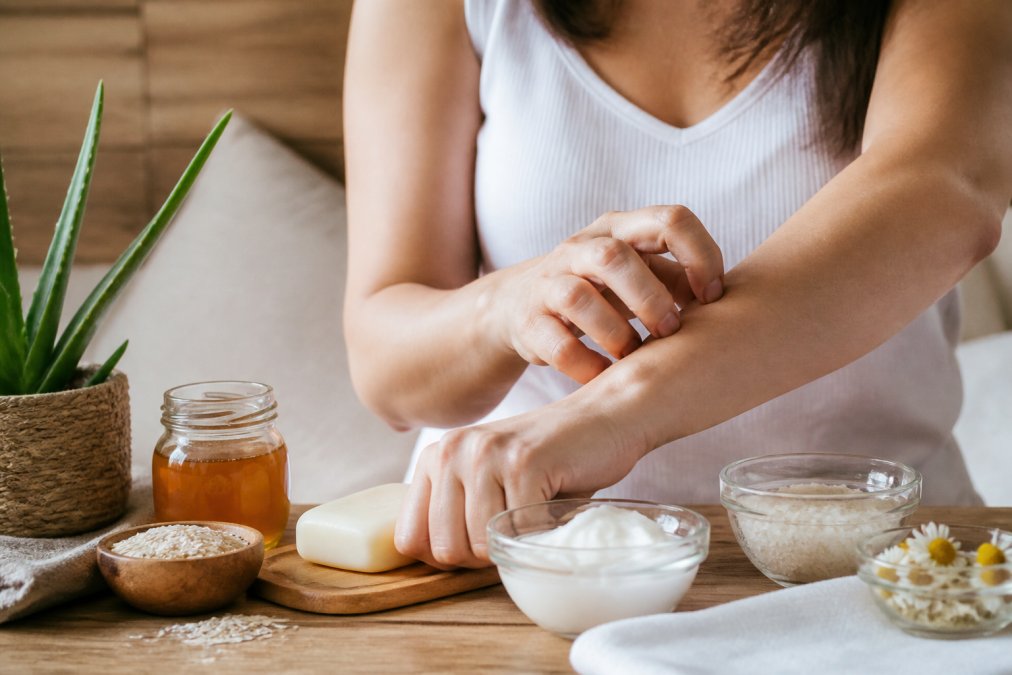
An oatmeal bath for skin irritation is one of the most trusted home remedies, and for good reason. Colloidal oatmeal, which is finely ground oats, contains compounds that reduce inflammation and coat the skin with a protective layer.

To make one:
- Add one cup of colloidal oatmeal to warm, not hot, bathwater
- Stir until the water turns milky
- Soak for 15 to 20 minutes
- Pat dry gently with a soft towel
- Apply moisturizer within three minutes
Hot water strips your skin of natural oils. Warm water is safer. The American Academy of Dermatology's bathing guidance recommends short, lukewarm baths for anyone with dry or sensitive skin.
Step 3: Moisturize to Rebuild Your Skin Barrier
Moisturizing is not optional when your skin itches. A moisturizer locks in hydration and helps repair the skin barrier, the outer layer that keeps irritants out and moisture in.
The best time to moisturize is right after a bath or shower. Your skin is still damp, so the product traps that water.
Look for these qualities:
- Fragrance-free formulas
- Hypoallergenic ingredients
- Thick creams or ointments over thin lotions
- Ingredients like ceramides, shea butter, or beeswax
Apply at least twice a day. During flare-ups, apply more often.
Essential Oils for Itchy Skin Safety: What to Use and Avoid
Essential oils for itchy skin safety comes down to two rules: always dilute, and always patch test. Essential oils are concentrated plant extracts. Used straight, they can burn or irritate skin.
Safe options when diluted in a carrier oil:
- Lavender for calming and mild anti-itch effects
- Chamomile for soothing inflammation
- Peppermint for a cooling, mentholated feel
- Tea tree for its antibacterial properties
Oils to avoid on itchy or broken skin:
- Cinnamon
- Oregano
- Clove
- Citrus oils, which can cause sun sensitivity
Mix 2 to 3 drops of essential oil into one tablespoon of carrier oil, such as jojoba or sweet almond. Then apply a small amount to your inner arm and wait 24 hours before using it more widely.
Choosing Natural Soap for Sensitive Skin
Natural soap for sensitive skin should clean without stripping. The wrong bar can leave your skin tight, dry, and itching within minutes.
Here's what to check on the label:
- Fragrance-free, not just "unscented"
- No sulfates or harsh detergents
- Short ingredient lists
- Oils like olive, coconut, or shea
- Glycerin, which draws moisture to the skin
At The Beekeeper's Basket, our handcrafted soaps are made in small batches with gentle, skin-nourishing ingredients.
A patch test is still smart. Rub the soap on your inner forearm and wait a day. If no redness or burning appears, it's likely safe for the rest of your body.
When to See a Doctor About Persistent Itching
Most itching responds to home care within a week or two. But some cases need a dermatologist or another specialist, because persistent itching can be the first sign of a condition that has nothing to do with your skin.
See a doctor if you notice:
- Itching that lasts more than two weeks despite consistent home care
- No relief from moisturizers, cool compresses, and oatmeal baths
- Itching that disrupts sleep, work, or daily life
- Hives, blisters, open sores, or signs of infection such as warmth, pus, or spreading redness
- Itching across your whole body rather than one area
- Yellowing skin or eyes, extreme fatigue, or unexplained weight change alongside the itch
Conditions that can cause persistent itching
- Eczema (atopic dermatitis) and psoriasis, which cause inflamed, itchy patches
- Allergic contact dermatitis, a reaction to a specific substance such as nickel, fragrance, or a preservative
- Thyroid disorders, both overactive and underactive, which can cause widespread itching
- Liver conditions, where bile salts build up in the blood and cause itching, sometimes before other symptoms appear
- Kidney disease, particularly in advanced stages, which commonly causes generalized itch
- Iron deficiency and other blood disorders, which can trigger itching without a visible rash
- Diabetes, which can cause itching through dry skin and nerve changes
- Medication reactions, including to common drugs, which may cause itching days or weeks after starting
A doctor can also prescribe topical treatments such as corticosteroids or calcineurin inhibitors, or non-sedating antihistamines, if natural remedies aren't enough. For chronic conditions, a referral to a dermatologist or an allergist may be appropriate.
The National Eczema Association's resources offers guidance on managing chronic itchy conditions, and the American Academy of Dermatology's itch resource center provides additional information on when to seek care.
Lifestyle and Environmental Changes That Help
Itching isn't only about what you put on your skin. Your environment and daily habits play a big role.
Try these changes:
- Run a humidifier in dry rooms, especially in winter
- Wear soft cotton instead of wool or synthetic fabrics
- Use fragrance-free laundry detergent
- Avoid skin irritants like harsh cleaners
- Manage stress, which can trigger flares
Frequently Asked Questions
What stops skin itching fast?
A cold compress is the quickest at-home option. Apply a cool, damp cloth to the itchy area for 10 to 15 minutes. The cold numbs nerve endings and reduces inflammation that drives the urge to scratch. A lukewarm colloidal oatmeal bath also calms irritation within minutes. Avoid hot water, which strips the skin barrier and makes itching worse once you dry off.
Can natural oils help soothe dry, itchy skin?
Yes, but choose carefully. Fragrance-free oils like jojoba, sweet almond, and oat oil can soften dry skin and support the skin barrier. Always dilute essential oils in a carrier oil before applying, and do a patch test on your inner forearm first. If you have eczema or hives, ask a dermatologist before using any new oil, since some plant extracts trigger reactions.
When should I see a doctor for persistent itchy skin?
See a doctor if itching lasts more than two weeks, disrupts your sleep, or comes with a rash, swelling, or oozing. Also seek care if you notice yellowing skin, unexplained weight loss, or itching that spreads without a clear cause. A dermatologist can check for eczema, hives, or an underlying condition and recommend a topical treatment if home remedies are not enough.
How does diet affect skin itchiness?
Certain foods can trigger or worsen itching in some people. Common culprits include alcohol, spicy dishes, and high-histamine foods like aged cheese and cured meats. Eating anti-inflammatory foods such as fatty fish, leafy greens, and berries may help calm flare-ups over time. Keep a food diary for two weeks to spot patterns, and talk to your doctor before cutting out major food groups.
Itching that won't quit wears you down, and drugstore products often make it worse. At The Beekeeper's Basket, we make small-batch, bee-inspired soaps and lotions designed for sensitive skin. Every item is handcrafted in New England with fresh, gentle ingredients. With over 20,000 sales and a 5-star rating, our customers trust us to nourish their skin without harsh additives. Get started with The Beekeeper's Basket and find your calm. LET'S EXPLORE!