 how-to
Is It Safe to Use Wax Melts Daily? A Practical Guide
Table of Contents
- Is It Safe to Use Wax Melts Daily? The Short Answer
- Understanding Wax Melt Safety: What the Science Shows
- Are Wax Melts Safe to Breathe During Daily Use?
- How Long to Use Wax Melts: Daily Limits and Best Practices
- Wax Warmer Safety Tips for Daily Use
- Wax Melts Around Pets and Children: What You Need to Know
- Choosing an Approved Wax Warmer and Understanding Ingredients
- Frequently Asked Questions
Last Updated: October 18, 2026
Is It Safe to Use Wax Melts Daily? The Short Answer
Yes, you can use wax melts daily, but safety depends on how you use them. At The Beekeeper's Basket, we believe in helping customers enjoy our handcrafted beeswax melts.
Daily use is generally safe with proper ventilation, limited session length, an approved warmer, and keeping melts away from children and pets.
The real concern isn't wax melts themselves, it's how they're used.
Understanding Wax Melt Safety: What the Science Shows
Wax melts are generally considered safe for daily use when used as directed. The primary concern involves fragrance oils and indoor air quality rather than the wax itself.
Fragrance oils and potential toxicity concerns
Most wax melts contain natural or synthetic fragrance oils that release scent when heated. The concern is whether inhaling these compounds poses health risks.
Quality matters: high-quality fragrance oils in proper concentrations are considered safe for normal use, while lower-quality oils or excessive amounts can create air quality issues.
Look for products that disclose their ingredients. The Beekeeper's Basket uses carefully selected ingredients in our beeswax melts.
Common fragrance concerns include:
- Synthetic versus natural fragrance oils
- Concentration levels in the wax
- Potential irritants in lower-quality products
Indoor air quality and inhalation exposure
When you heat wax melts, fragrance compounds enter the air you breathe. The amount released depends on warmer temperature, room size, ventilation, and session length.
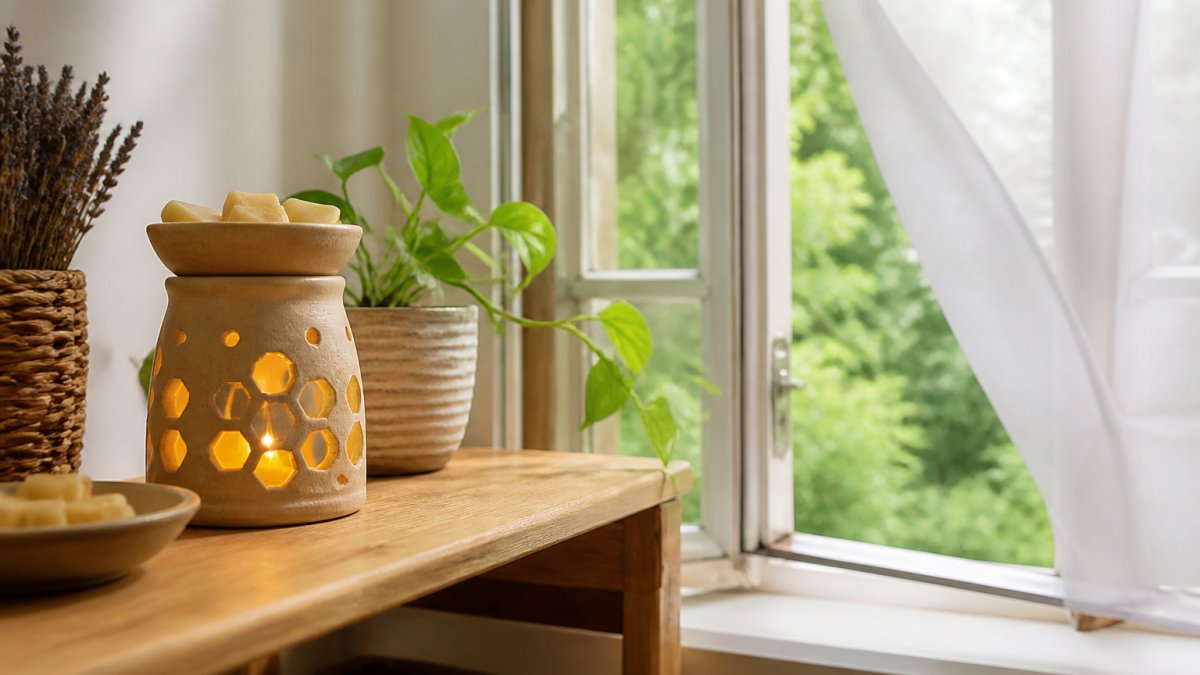
A well-ventilated room handles fragrance release without problems. Poor ventilation lets scent compounds accumulate, and repeated exposure in a sealed space can irritate airways.
The inhalation concern is real but manageable.
Are Wax Melts Safe to Breathe During Daily Use?
Breathing fragrance from wax melts depends on ventilation and individual sensitivity. Most people have no problems; some experience irritation or discomfort.
Ventilation requirements for regular warming sessions
Ventilation is your strongest tool for safe daily use.
What counts as good ventilation:
- Open windows or doors allowing fresh air in
- Ceiling fans or room fans circulating air
- HVAC systems exchanging indoor and outdoor air
Without ventilation, fragrance compounds accumulate, especially in small, sealed spaces like bathrooms or closed bedrooms, significantly increasing inhalation exposure.
A practical rule: if you can smell the fragrance strongly after 30 minutes, ventilation is inadequate. Adjust by opening windows, turning on fans, or shortening your warming session.
People with asthma, allergies, and fragrance sensitivity
Some people react more strongly to fragrance, including those with asthma, allergies, scent-triggered migraines, or general fragrance sensitivity.
These individuals should approach daily wax melt use cautiously:
- Start with shorter sessions (15-20 minutes)
- Use lower-scent-throw melts
- Increase ventilation beyond normal levels
Fragrance sensitivity is real and individual. If you fall into this group, daily use may not be right for you, consider using melts only occasionally or in rooms you can control carefully.
How Long to Use Wax Melts: Daily Limits and Best Practices
Is it safe to use wax melts daily comes down to duration and rhythm. The useful question isn't just "how many hours" but "how many hours, with what breaks, in what space." A cautious, repeatable schedule beats an anecdotal "I leave mine on all day" habit.
A practical daily operating schedule
Warm in short blocks, let the room air out between blocks, and never run a warmer unattended or overnight. A workable daily routine looks like this:
- Session length: 2-4 hours per session. Two to three hours is the sweet spot for scent throw without saturating a room.
- Cool-down gap: at least 2-3 hours between sessions in the same room, with the warmer off and the room ventilated.
- Daily ceiling: treat 4 hours of total warming per room per day as a cautious upper bound, not a target.
A simple way to enforce this is a plug-in timer or a smart plug set to shut the warmer off at the end of each block. That removes the most common failure mode: forgetting the warmer is on.
Electric warmers versus tealight warmers for extended use
| Warmer Type | Temperature Control | Typical Session | Safety Notes |
|---|---|---|---|
| Electric | Consistent, preset or adjustable | 2-4 hours per block | No open flame; safer for scheduled daily use; still switch off between blocks |
| Tealight | Variable, flame-dependent | 2-4 hours | Open flame; must never run unattended; not ideal for a daily routine |
Electric warmers are generally the better fit for daily use because they hold a consistent temperature and eliminate open-flame risk, though the same session-and-cool-down rhythm applies. Tealight warmers work for occasional use but demand active monitoring that's hard to sustain daily.
Troubleshooting symptoms and when to stop
Your body's response is the most reliable indicator of whether your current pattern works:
- Mild headache or throat tickle: end the session, ventilate the room, and shorten the next session by half.
- Coughing, wheezing, or shortness of breath: stop use immediately, move to fresh air, and don't restart in that room until you've spoken with a healthcare professional if symptoms persist.
- Nausea or dizziness: switch the warmer off, open windows, and leave the room until you feel normal.
If symptoms resolve when you stop and return when you restart, daily use isn't a good fit for that room or product. Try shorter sessions, a lower-scent-throw melt, or a better-ventilated space before giving up on wax melts entirely.
Wax Warmer Safety Tips for Daily Use
Safe daily use requires attention to placement, temperature, and monitoring.
Safe placement and fire hazard prevention
Where you place your warmer matters as much as how long you use it.
Safe placement guidelines:
- Keep warmers on stable, heat-resistant surfaces
- Stay at least 3 feet away from flammable objects (curtains, papers, fabrics)
- Avoid placing on shelves above electronics or valuable items
Unattended warmers pose the biggest risk. Don't leave a warmer running when you leave the room or go to sleep. Set a timer to remind yourself to turn it off.
Avoiding overheating and managing the melt pool
Overheating wax causes discoloration, fragrance degradation, and potential burns. Proper warmer selection and monitoring prevent these issues.
Signs of overheating:
- Wax turns brown or dark
- Strong, unpleasant smell replacing the intended fragrance
- Wax begins to smoke
Manage the melt pool by:
- Using warmers with temperature control
- Avoiding warmers that get too hot
- Turning off warmers if wax appears overheated
Don't touch the warmer or wax while hot. Burns happen quickly. If you have young children, consider placing warmers on high shelves completely out of reach.
Wax Melts Around Pets and Children: What You Need to Know
Daily wax melt use requires extra caution when pets or children share the home. Their smaller body size, faster metabolism, and (for pets) different respiratory anatomy mean the same room that feels fine to you can be a different exposure for them. The goal is keeping warmers physically inaccessible and knowing what to watch for.
Why risk varies by animal and by fragrance
There is no single "pet-safe" fragrance list, and claims that one wax or scent is universally safe for animals aren't well supported. Risk depends on several variables:
- Species and size: cats and small dogs have smaller airways and body mass than large dogs, so the same airborne concentration is a larger relative exposure. Birds and other small pets are especially sensitive to airborne irritants.
- Fragrance concentration and type: stronger-throw melts and highly concentrated fragrance oils put more compounds into the air. Individual fragrance ingredients vary in how they affect different animals.
- Proximity and airflow: a warmer in a closed bedroom where a pet sleeps is a very different exposure than one in an open living area with cross-ventilation.
Because labeling rarely discloses full fragrance composition, you often can't fully assess pet risk from the package alone, a reason for caution, not for assuming the worst.
Practical precautions for households with pets
- Keep warmers physically inaccessible. High shelves, gated rooms, and cord management matter more than scent choice. A curious cat or a wagging tail near a hot warmer is the most preventable accident.
- Ventilate the room where the warmer runs. The same ventilation guidance that protects people protects pets.
- Give pets an escape route. Don't run a warmer in a small closed room a pet can't leave.
Signs fragrance is bothering a pet, and what to do
Watch for coughing, sneezing, wheezing, excessive drooling, vomiting, lethargy, or unusual hiding and avoidance. Cats in particular may show subtle signs before obvious distress.
If you notice any of these:
- Switch the warmer off and ventilate the room.
- Move the pet to fresh air and observe.
- Discontinue wax melts in that space until you've spoken with your veterinarian if symptoms persist or recur.
- If you want to keep using melts, restrict them to rooms your pet doesn't access and keep sessions short.
Children: burns, spills, and small parts
For children, the dominant risks are physical rather than respiratory: hot wax burns, spilled melt pools, and small warmer components. Keep warmers on stable surfaces well above a child's reach, route cords where they can't be pulled, and never leave a warmer running in a room where a young child is unattended. Treat the warmer the same way you'd treat a hot stove, because to a small hand, that's effectively what it is.
Choosing an Approved Wax Warmer and Understanding Ingredients
Quality matters when using wax melts daily. The right warmer and quality ingredients make daily use safer and more enjoyable.
What to look for in product instructions and ingredient transparency
Before buying wax melts or warmers, check what the manufacturer recommends. Product instructions tell you the intended use and safety guidelines.
Look for:
- Clear usage instructions (session length, frequency)
- Temperature recommendations
- Ingredient lists (especially fragrance type)
Ingredient transparency is especially important for daily use.
At The Beekeeper's Basket, our handcrafted beeswax melts use carefully selected fragrance oils.
Choose warmers from established manufacturers with good safety records. Look for UL certification or equivalent safety testing.
Frequently Asked Questions
Is it safe to use wax melts every day?
Daily wax melt use is generally safe when done responsibly. Keep warming sessions to 4 hours or less per day, ensure proper ventilation by opening a window or running a fan, and follow your warmer's product instructions. People with asthma, allergies, or fragrance sensitivity should start with shorter sessions and monitor how they feel. If you experience headaches, dizziness, or respiratory irritation, reduce usage or take breaks between warming sessions.
How long should you run a wax warmer at a time?
Most experts recommend limiting warming sessions to 4 hours maximum per session. If you enjoy wax melts throughout the day, use your warmer for 3-4 hours in the morning or evening rather than running it continuously. Electric warmers are safer for extended use than tealight warmers because they maintain more consistent, lower temperatures. Always turn off your warmer before leaving the room or going to sleep, and never leave it unattended.
Are wax melts safe to use around children and pets?
Wax melts themselves are generally non-toxic, but fragrance oils can irritate sensitive airways in children and pets. Keep warmers out of reach of children to prevent burns from hot wax or the heating device. For pets, ensure good ventilation and watch for signs of discomfort like coughing, sneezing, or excessive drooling. Pets with respiratory conditions or asthma need extra caution. Store unused wax in a cool place away from curious hands and paws to prevent accidental ingestion.
Can wax melts affect indoor air quality?
Wax melts release fragrance particles into the air when heated, which can affect indoor air quality if ventilation is poor. In small, enclosed spaces without airflow, fragrance buildup may cause headaches or respiratory irritation in sensitive people. Proper ventilation, opening a window, using a fan, or cracking a door, significantly reduces this risk. The scent throw (how strong the fragrance disperses) varies by warmer type and wax quality, so monitor your comfort level during daily use.
Is it safe to use wax melts daily? Yes, with proper precautions. Use approved warmers, maintain good ventilation, limit session length, and watch for signs that fragrance bothers you or your pets. Start with The Beekeeper's Basket's handcrafted beeswax melts and follow the safety guidelines above. Our small-batch melts are made with care and quality ingredients. LET'S EXPLORE! our collection and find the perfect scents for your daily routine.