 ultimate-guide
Natural Soap Ingredients Guide: Essential Components
Table of Contents
- Essential Fats and Oils for Natural Soap Ingredients
- Understanding Butters and Their Benefits
- Best Natural Soaps for Dry Skin: Selecting the Right Base
- Benefits of Beeswax in Soap Making
- Natural Soap Making Additives: Clays, Herbs, and Botanicals
- Essential Oils and Fragrance in Natural Soap
- Safety Precautions and Ingredient Handling
- Frequently Asked Questions
Last Updated: September 22, 2026
Essential Fats and Oils for Natural Soap Ingredients
The foundation of any natural soap starts with selecting the right fats and oils. These ingredients determine how your soap cleanses, lathers, and feels on skin. Each oil brings distinct properties to the final product based on its fatty acid profile, the specific saturated and unsaturated fats it contains, which directly control hardness, lather, conditioning, and cure time.
Understanding Fatty Acid Profiles
Every oil is composed of different fatty acids, and soap makers who understand these profiles can predict and control their results. Lauric and myristic acids (found in coconut oil) create abundant lather and hard bars but can strip skin if used above 30%. Stearic acid (from cocoa butter and palm oil) hardens the bar and increases longevity. Oleic acid (dominant in olive and avocado oils) provides conditioning and emollient feel but softens the bar, too much (above 50%) results in a mushy soap that takes months to cure. Linoleic and linolenic acids (from sunflower, safflower, and flax oils) are highly conditioning but can cause rancidity if not stabilized with antioxidants like vitamin E or rosemary extract.
A balanced formulation accounts for these interactions. Coconut oil (high in lauric acid) is excellent for lather but must be tempered with conditioning oils to prevent drying. Pairing it with olive oil (high in oleic acid) creates a synergy: the coconut provides cleansing power and lather, while the olive oil conditions and slows the soap's hardening, allowing a longer working time during pouring. Adding palm oil or cocoa butter (high in stearic acid) increases hardness without adding drying properties, because stearic acid contributes to bar longevity without stripping skin the way lauric acid can.
Common Oil Combinations and Why They Work
Coconut oil (25-30% for lather), olive oil (40-50% for conditioning and working time), and palm oil or sustainable alternative (15-20% for hardness) form the classic "trinity" formulation. This ratio balances all three fatty acid families: enough lauric acid for good lather, enough oleic acid for skin feel and workability, and enough stearic acid for a hard, long-lasting bar.
For a softer, more luxurious bar, soap makers increase oleic-acid-rich oils (olive, avocado, hazelnut) to 50-60% and reduce coconut oil to 15-20%. The trade-off is a longer cure time (8-12 weeks instead of 4-6) and a bar that dissolves faster in water, acceptable for premium soaps but not ideal for commercial durability.
For a hard, long-lasting bar optimized for value, increasing stearic-acid sources (cocoa butter, palm oil, tallow if using animal fats) to 25-30% and reducing oleic-acid oils to 30-40% creates a bar that lasts 30-40% longer in the shower. The drawback is reduced conditioning feel and a slightly longer cure time.
Iodine Value and Cure Time
The iodine value (IV) of an oil measures its unsaturation, higher values mean more unsaturated fats, which soften the bar and extend cure time. Coconut oil has an IV of 8-10 (very hard, fast cure), while olive oil is 75-90 (soft, slow cure). Knowing your formulation's blended IV helps predict hardness and cure time before mixing. A blended IV of 40-60 typically yields a bar that cures in 4-6 weeks; below 40 cures faster but feels harder and less conditioning; above 60 requires 8-12 weeks and produces a creamy, luxurious feel.
Sustainability and Sourcing Considerations
Palm oil is efficient (high yield per acre) but linked to deforestation. Sustainable alternatives include palm kernel oil (similar fatty acid profile, from the kernel rather than the fruit), coconut oil (renewable and abundant), and tallow or lard (animal fats with similar hardening properties and zero environmental footprint from dedicated production). Each has trade-offs: tallow and lard are harder to source in some regions and may conflict with vegan positioning; coconut oil production can also involve monoculture concerns; palm alternatives are still emerging at scale.
For eco-conscious formulations, many makers shift to higher percentages of olive, sunflower, and avocado oils, accepting longer cure times and softer bars as the cost of reduced environmental impact. Understanding the fatty acid profile allows this trade-off to be intentional rather than accidental.
Understanding Butters and Their Benefits
Butters add richness and conditioning to natural soap ingredients while improving the bar's texture and skin feel. Unlike oils, butters are solid at room temperature and contribute different fatty acid profiles that enhance moisturizing properties.
Shea butter is renowned for its emollient qualities and vitamin content. It creates a creamy lather and leaves skin feeling soft without residue.
Best Natural Soaps for Dry Skin: Selecting the Right Base
Creating the best natural soaps for dry skin requires prioritizing conditioning oils and butters over cleansing agents, and understanding both what works and what fails. The fatty acid profile becomes critical when formulating for sensitive, dry skin types, but equally important is recognizing common ingredient mistakes that undermine even well-intentioned formulations.
The Foundation: Conditioning Oils Over Cleansing
Superfat: The Critical Dry Skin Parameter
Cost-Benefit: Which Premium Ingredients Are Worth the Expense
Formulation Example: Budget vs. Premium Dry Skin Soap
Curing and Final pH
Benefits of Beeswax in Soap Making
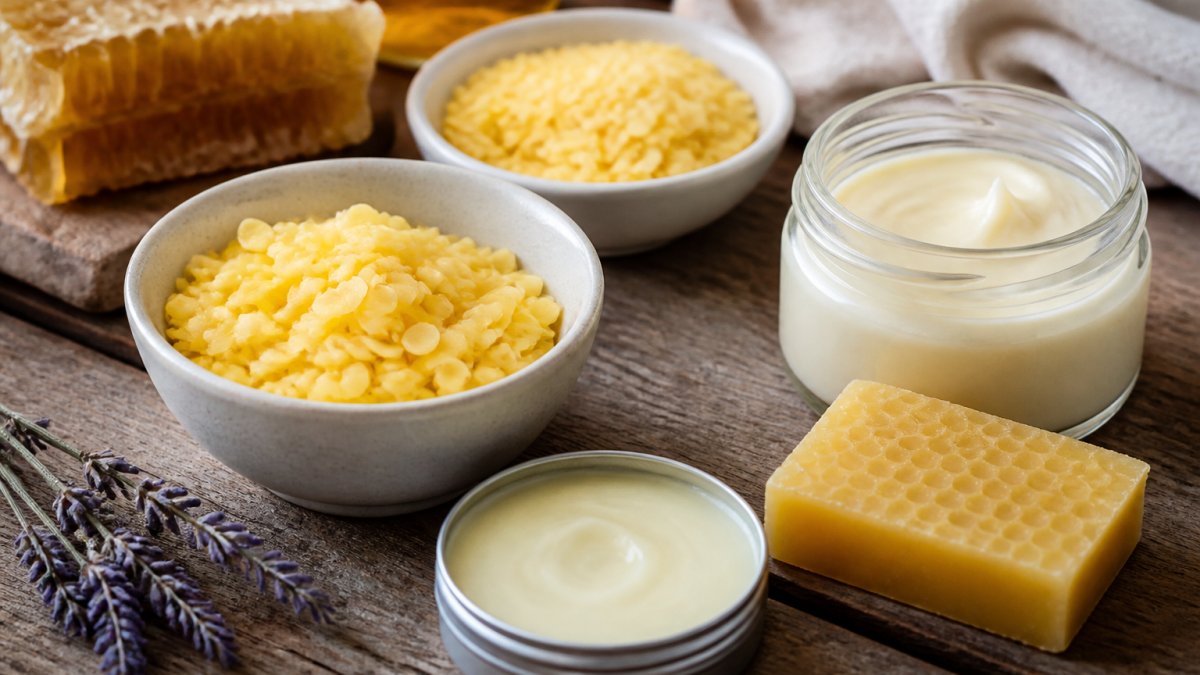
Beeswax transforms soap formulations by adding hardness, creating a longer-lasting bar that resists dissolving quickly in water. The benefits of beeswax in soap extend beyond durability to include protective and conditioning properties.
Natural Soap Making Additives: Clays, Herbs, and Botanicals
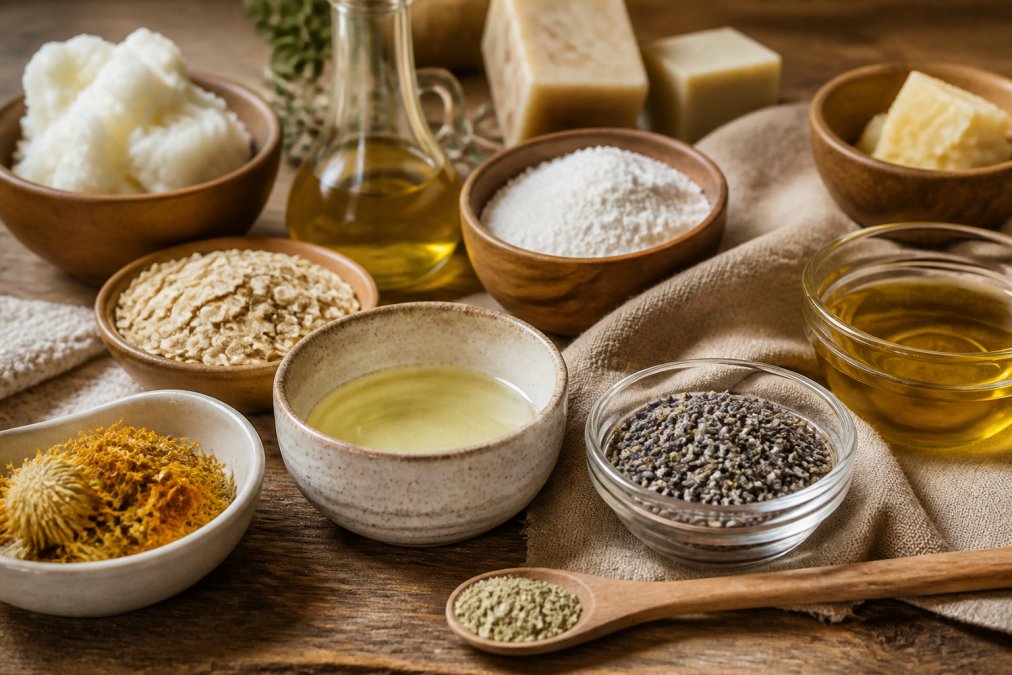
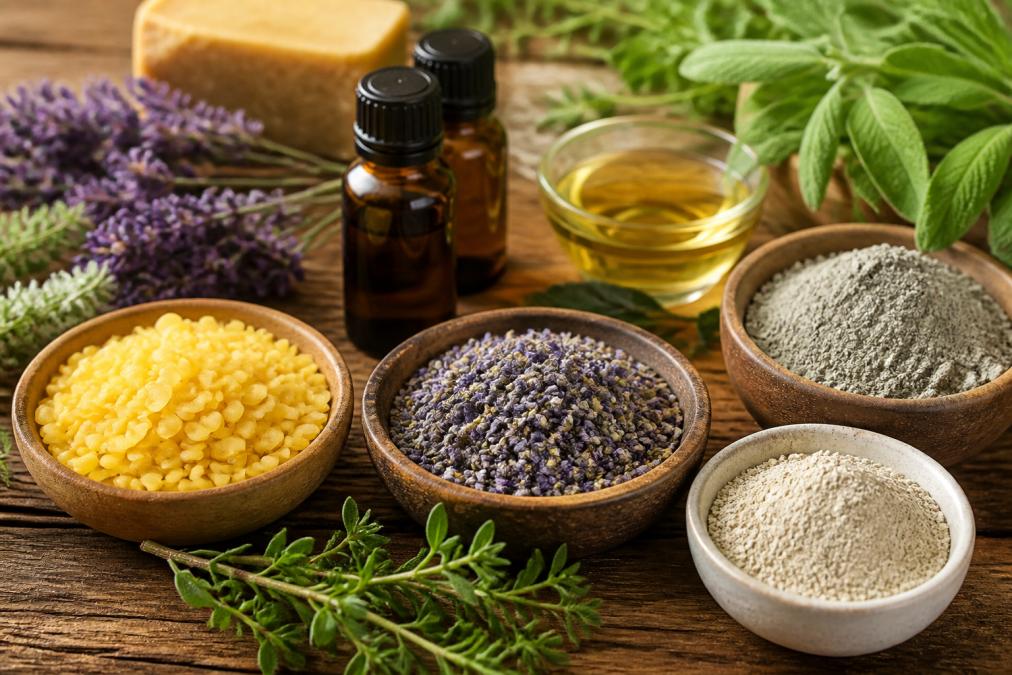
Natural soap making additives elevate formulations beyond basic cleansing, adding color, texture, and therapeutic properties. These ingredients must be chosen carefully to survive the saponification process and provide genuine benefits.
Essential Oils and Fragrance in Natural Soap
Essential oils provide authentic fragrance and therapeutic benefits to natural soap ingredients formulations. Understanding fragrance load, how much essential oil a batch can hold, prevents separation and ensures scent longevity.
Safety Precautions and Ingredient Handling
Working with natural soap ingredients requires respect for caustic materials and proper safety protocols. Lye (sodium hydroxide) is essential for saponification but demands careful handling.
Frequently Asked Questions
What are the best natural ingredients to use for soap?
The foundation of quality natural soap starts with carrier oils (coconut, olive, and palm), butters (shea and cocoa), and a lye solution for saponification. Adding beeswax increases hardness and creates a creamy lather, while essential oils provide fragrance without synthetic chemicals. Natural additives like kaolin clay, calendula, and oatmeal enhance texture and skin benefits. The best formulation balances these ingredients based on your skin type and desired soap properties.
What are the benefits of using beeswax in handmade soap?
Beeswax adds significant value to natural soap by increasing bar hardness, which extends shelf life and reduces waste. It creates a protective barrier on skin, locking in moisture and improving emollient properties. Beeswax also enhances lather quality, creating a creamier, more luxurious feel. Additionally, it contributes natural emollient benefits and helps stabilize the soap's structure during curing time, resulting in a more durable finished product.
How do natural additives like clays and botanicals affect soap quality?
Natural additives serve multiple functions beyond aesthetics. Kaolin and bentonite clays add mild exfoliating properties and can help balance oily skin. Dried botanicals like calendula and chamomile provide skin-soothing compounds and natural colorants. Herbs contribute antioxidant properties that may help prevent rancidity during shelf life. These additives must be measured carefully, too much can affect trace (the point at which soap reaches proper consistency) and curing time, while proper amounts enhance both performance and skin benefits.
Are essential oils better than fragrance oils in natural soap?
Essential oils are plant-derived and contain therapeutic compounds, making them ideal for natural soap formulations. However, they have lower fragrance loads than synthetic fragrance oils, meaning you need more to achieve scent intensity. Essential oils also vary in heat stability and may fade during curing time. Fragrance oils provide consistent scent throw but contain synthetic compounds. For natural soap, essential oils align better with ingredient philosophy, though blending multiple oils helps achieve lasting fragrance without exceeding safe usage rates.
What should I avoid when looking for natural soap ingredients?
Avoid synthetic fragrance chemicals, parabens, and petroleum-derived ingredients that contradict natural soap principles. Be cautious with ingredients claiming to be 'natural' but lacking transparency about sourcing. Skip low-quality carrier oils that may contain additives or processing chemicals. Avoid using lye improperly, always follow strict safety protocols and use food-grade sodium hydroxide. Don't overload soap with additives, which can compromise saponification and create inconsistent batches. Finally, avoid ingredients with unknown iodine values or fatty acid profiles, as these affect hardness and lather quality.
How do I know if natural soap ingredients will work for sensitive skin?
Start by understanding your skin's specific triggers. If you've had reactions to 'natural' products before, identify which ingredients caused the problem, often it's fragrance, certain essential oils, or exfoliants rather than the soap base itself. For sensitive skin, choose soaps made with gentle, well-researched oils like olive and sweet almond, combined with soothing butters like shea. Avoid heavy fragrance loads and exfoliating additives initially. Small-batch, handcrafted soaps allow for ingredient transparency and consistency, reducing the risk of unexpected reactions from batch to batch.
What makes small-batch, handcrafted soap different from commercial alternatives?
Small-batch soaps are made in controlled quantities, allowing artisans to monitor saponification, trace, and curing time precisely. This results in consistent quality and freshness compared to mass-produced soaps that may sit in warehouses for months. Handcrafted soaps use higher-quality carrier oils, butters, and essential oils without fillers or preservatives. The extended curing time (typically 4-6 weeks) allows the saponification process to complete fully, creating a gentler, longer-lasting bar. Small-batch producers can also customize formulations and source ingredients ethically, ensuring both quality and sustainability.