 ultimate-guide
Signs of Synthetic Fragrance Irritation: What to Watch For
Table of Contents
- What Synthetic Fragrance Irritation Actually Looks Like
- Skin Reactions: Contact Dermatitis, Erythema, and Pruritus
- Respiratory and Neurological Symptoms to Track
- Common Fragrance Allergens in Skincare
- Natural Perfume vs Synthetic Fragrance: Reading the Label
- How to Treat Fragrance Contact Dermatitis
- Auditing Your Home and Transitioning to Fragrance-Free Products
- Conclusion
- Frequently Asked Questions
Last Updated: September 18, 2026
What Synthetic Fragrance Irritation Actually Looks Like
Synthetic fragrance irritation is an adverse skin, airway, or nervous system response to petroleum-derived fragrance chemicals. The signs are easy to miss because they build quietly, showing up hours later or after repeated exposure.
Irritation vs. True Allergy: Why the Difference Matters
Irritation and allergy are not the same thing. Irritant contact dermatitis is a direct chemical injury to the skin barrier: anyone exposed to enough of the substance will react. Allergic contact dermatitis is an immune response that develops only after sensitization, so the first exposure may cause no reaction at all.
Skin Reactions: Contact Dermatitis, Erythema, and Pruritus
The skin is where most people first notice a problem. Contact dermatitis is inflammation triggered by direct contact with an irritant or allergen, erythema is the visible redness that follows, and pruritus is the itching that makes it impossible to ignore, the most common clinical picture of fragrance-related skin trouble.
Where Reactions Show Up First
Fragrance reactions follow the product, so the first signs usually appear where you apply the most scented items:
- Neck and behind the ears, from perfume and cologne
- Wrists and inner forearms, from spritzed fragrance and hand lotion
- Underarms, from deodorant and antiperspirant
- Face and eyelids, from facial creams and, indirectly, from fragrance transferred by your hands
- Scalp and hairline, from shampoo, conditioner, and styling products
Respiratory and Neurological Symptoms to Track
Not every reaction shows up on your skin. Fragrance chemicals are volatile, so they release into the air and get inhaled. For some people that triggers nasal congestion, sneezing, a dry cough, wheezing, or chest tightness; others describe a scratchy throat in scented environments.
Headaches, Brain Fog, and Migraine Triggers
The neurological side of fragrance exposure gets less attention than skin reactions, but it is often the symptom people remember most. Headaches, migraine attacks, difficulty concentrating, and brain fog are commonly reported after prolonged exposure to strong synthetic scents, in candle shops, hotel lobbies, or the detergent aisle. Some only connect the dots after switching to scent-free products and realizing the afternoon headaches stopped.
Common Fragrance Allergens in Skincare
A small number of fragrance chemicals account for a large share of reactions, and knowing their names changes how you shop, but label names rarely match patch-test names. Below is a decoding dictionary mapping ingredient-panel names to dermatologist terms and their effects.
The Ingredient Decoding Dictionary
| On the label (INCI name) | Common name / scent role | Where it hides | Why it matters |
|---|---|---|---|
| Limonene | Citrus terpene | Perfume, citrus cleaners, shampoo | Becomes more sensitizing as it oxidizes in the bottle |
| Linalool | Floral terpene | Lavender-style scents, lotions, laundry | Same oxidation problem; a fresh bottle may be fine, an old one may not |
| Geraniol | Rose/geranium note | Perfume, hand soap, candles | One of the most frequently positive patch-test allergens |
| Citronellol | Floral/citrus note | Deodorant, body wash, air freshener | Often paired with geraniol in floral accords |
| Eugenol | Clove/spice note | Toothpaste, mouthwash, dental products | Also a dental-material allergen, not just a cosmetic one |
| Coumarin | Warm, sweet, hay-like | Perfume, candles, fabric softener | Restricted in some markets; a frequent hidden note in "vanilla" blends |
| Cinnamal | Cinnamon note | Lip products, toothpaste, spicy scents | A common cause of lip and mouth reactions |
| Hydroxycitronellal | Lily-of-the-valley note | Floral perfumes, lotions | Classic patch-test allergen |
| Hexyl cinnamal | Jasmine-like note | Perfume, shampoo, detergent | Frequently co-reacts with other floral allergens |
| Phthalates (e.g., diethyl phthalate) | Fixative | "Fragrance" blends, rarely named | Makes scent last longer; almost never disclosed individually |
| Benzyl salicylate | Balsamic, floral | Perfume, sunscreen, lotion | Common in "sunny" and white-floral profiles |
| Isoeugenol | Spicy, clove-like | Perfume, soap | More sensitizing than eugenol in some people |
Two rules make this table useful. First, the same chemical can appear under a natural or synthetic origin, limonene from orange peel and limonene from a lab are the same molecule to your immune system. Second, oxidation changes the risk: limonene and linalool are relatively mild when fresh, but as they sit in a bottle and react with air they form hydroperoxides far more likely to trigger a reaction.
How to Use the Dictionary
- Photograph the ingredient panel of anything that has caused a reaction, and highlight every term from the table above.
- Cross-reference patch-test results against INCI names, not marketing names. A dermatologist may report "positive to linalool" while the label says "lavender oil."
- Treat "fragrance," "parfum," and "aroma" as a black box that may contain any of the above, plus unlisted phthalates.
- Re-check old products. If a bottle has been open for months, oxidation risk is higher.
If you suspect a specific allergen, ask a dermatologist about patch testing, the standard method for identifying which fragrance chemicals trigger your immune response. Bring this table to translate results into shopping decisions the same day.
Natural Perfume vs Synthetic Fragrance: Reading the Label
The natural perfume vs synthetic fragrance debate usually centers on origin, but origin is the wrong question for anyone with reactive skin. The right question is: what is actually in this bottle, and is it disclosed? Under current US labeling practice, “fragrance” or “parfum” can legally stand in for dozens of chemicals with no requirement to name them, the biggest obstacle to label transparency in personal care.
A few practical rules help you read past it:
- Treat “fragrance,” “parfum,” and “aroma” as unknown blends. They are placeholders, not information.
- Look for “fragrance-free,” not “unscented.” Unscented products often contain masking fragrance.
- Check for “phthalate-free” if the brand discloses it, since phthalates rarely appear by name.
- Be skeptical of “hypoallergenic.” It is a marketing term with no binding regulatory definition for cosmetics.
- Search the full ingredient list, not the front label. “Made with essential oils” says nothing about the other 20 ingredients.
How to Treat Fragrance Contact Dermatitis
How to treat fragrance contact dermatitis comes down to three moves: stop the exposure, calm the inflammation, and rebuild the skin barrier.
- Identify and stop the trigger. Switch to fragrance-free soap, lotion, deodorant, shampoo, laundry detergent, and dryer sheets, dryer sheets are the one people forget most often.
- Wash the affected area gently with lukewarm water and a fragrance-free cleanser. Avoid scrubbing, which worsens erythema.
- Apply a plain emollient to support barrier repair. Fragrance-free ointments and thick creams work better than thin lotions.
- Use over-the-counter hydrocortisone for short-term relief of itching and redness, following package directions.
- See a dermatologist if the reaction is spreading, blistering, affecting your face or eyes, or not improving within a week or two.
Auditing Your Home and Transitioning to Fragrance-Free Products
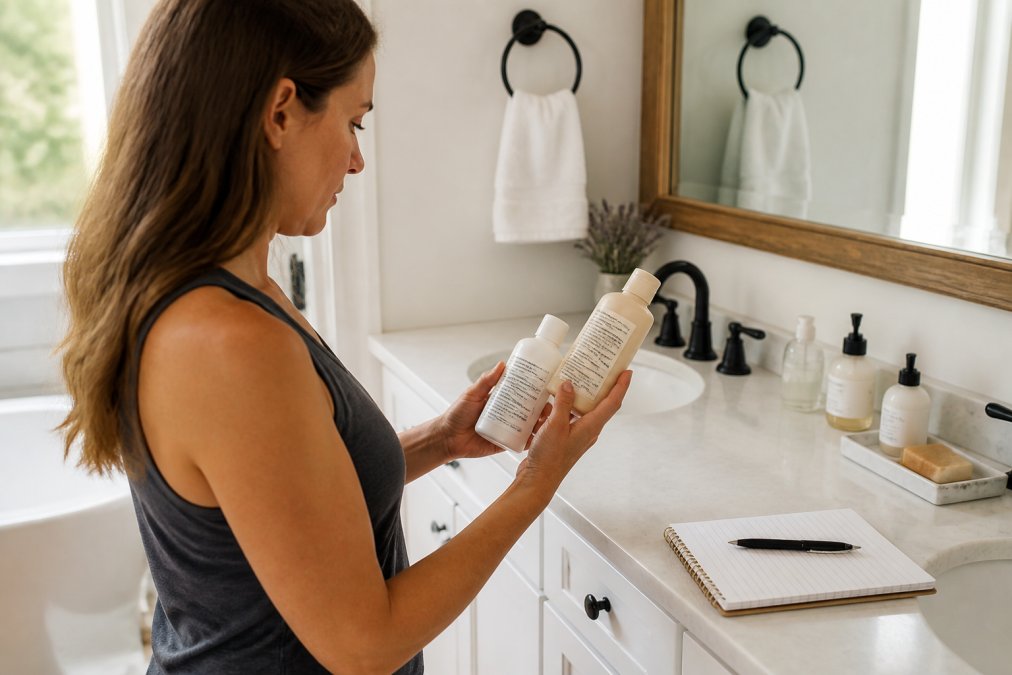
Your skin is not the only exposure route. Home environment auditing catches sources you never think to check, and it is the step most people skip. The average household holds a surprising number of scented products, each adding to your daily chemical load, and reducing that load is often more effective than swapping a single lotion.
A Simple Room-by-Room Checklist
- Bathroom: soap, body wash, shampoo, conditioner, lotion, deodorant, perfume, hair styling products, air freshener
- Bedroom: laundry detergent, dryer sheets, fabric softener, scented candles, plug-in air fresheners, pillow sprays
- Kitchen: dish soap, hand soap, scented trash bags, cleaning sprays
- Living room: room sprays, diffusers, scented candles, furniture polish
- Car: hanging air fresheners, dashboard sprays, scented seat covers
The Transition Protocol (The Part Most Guides Skip)
Swapping everything at once is the fastest way to trigger a flare-up: your skin is already reactive, and a sudden change in multiple products makes it impossible to tell what helped and what hurt. Use a staged protocol instead.
What to Do When You React During the Transition
A flare-up mid-transition is not a failure; it is information. Stop the most recently introduced product, return to the last known-safe routine, and wait for symptoms to settle before resuming. Log the product name, start date, and symptom date, that log is often more useful to a dermatologist than a patch test alone, because it captures real-world timing a clinic cannot reproduce.
Conclusion
The signs of synthetic fragrance irritation rarely announce themselves. They accumulate: a little redness, a recurring headache, congestion that clears the moment you step outside. The work is noticing the pattern, then reducing exposure room by room and product by product, without overhauling everything at once.
Frequently Asked Questions
What are the symptoms of a synthetic fragrance allergy?
Symptoms range from skin reactions like contact dermatitis, redness, and itching to respiratory issues such as sneezing, nasal congestion, and wheezing. Some people also report headaches, migraines, and brain fog after exposure. These signs of synthetic fragrance irritation can appear within minutes or build up over repeated exposure, which is why tracking when and where symptoms start helps identify the trigger.
How can I tell if my skin irritation is caused by synthetic fragrance?
Look at where the reaction appears. If redness, pruritus, or a rash shows up on areas where you apply perfume, lotion, or detergent-scented clothing, fragrance is a likely culprit. A dermatologist can confirm with patch testing, which exposes small patches of skin to common fragrance allergens. Before that, try switching to scent-free products for two weeks and note whether symptoms fade.
How long do symptoms of fragrance irritation typically last?
Mild skin reactions often settle within a few days once you stop using the product. Respiratory symptoms like nasal congestion or sneezing usually clear within hours of leaving the scented environment. If you have a true allergy with sensitization, reactions can last longer and worsen with each exposure. Persistent or severe symptoms, including swelling or breathing trouble, need medical attention right away.
What is the difference between fragrance sensitivity and a true allergy?
Fragrance sensitivity causes symptoms without an immune response, so patch testing comes back negative. A true allergy involves the immune system and shows a positive reaction during patch testing. Both can cause skin irritation and respiratory distress, but only a true allergy carries risks like anaphylaxis. A dermatologist can tell you which one you have and how to treat fragrance contact dermatitis properly.