 blog
Skincare for Men With Sensitive Skin: A 2026 Guide
Table of Contents
- Why Men's Skin Reacts: Triggers, Barrier Damage, and Shaving
- Ingredients to Avoid for Sensitive Skin
- How to Build a Daily Skincare Routine for Men With Sensitive Skin
- Natural Soap for Sensitive Skin: What to Look For
- How to Treat Razor Burn on Sensitive Skin
- Patch Testing and Lifestyle Adjustments That Protect Your Skin Barrier
- Budget Drugstore Picks vs. Small-Batch Skincare for Sensitive Skin
- Conclusion
- Frequently Asked Questions
Last Updated: October 1, 2026
Why Men's Skin Reacts: Triggers, Barrier Damage, and Shaving
Skincare for men with sensitive skin starts with one fact: your skin barrier is thinner and more reactive than you think. That outer layer, called the lipid barrier, holds in moisture and keeps irritants out. When it breaks down, everything stings.
Men face a unique set of triggers. Daily shaving strips away protective oils. Sweat, sun, and hot showers wear the barrier down further. A common mistake is blaming one product when the real problem is a damaged barrier that never gets time to heal.
Typical triggers include:
- Shaving with a dull blade or against the grain
- Hot water and harsh bar soaps
- Fragrance, dyes, and drying alcohols
- Sun exposure and wind
- Stress and poor sleep
The fix is not more products.
Ingredients to Avoid for Sensitive Skin
The fastest way to calm reactive skin is to remove the ingredients causing the reaction. Check labels before you buy anything.
Fragrance, Dyes, and Drying Alcohols
Fragrance is the most common cause of contact reactions in skincare. "Unscented" is not the same as "fragrance-free." Dyes add nothing but color and risk. Drying alcohols, like denatured alcohol, strip the barrier and leave skin tight and red.
Look for fragrance-free, alcohol-free, and hypoallergenic on the label.
Harsh Exfoliants and Sulfate Cleansers
Scrubs with walnut shells or coarse salt tear at already-irritated skin. Sulfates create foam but pull moisture from the barrier. A gentle cleanser that is pH-balanced does the job without the sting.
How to Build a Daily Skincare Routine for Men With Sensitive Skin
A simple three-step routine beats a ten-step one for reactive skin. Fewer products mean fewer chances to react, and fewer variables to untangle when something does go wrong. The goal is not a shelf full of bottles. It is a short, repeatable sequence your barrier can tolerate.
The Morning Routine
- Rinse or cleanse. If you shaved the night before and your skin feels calm, lukewarm water alone is enough. Otherwise, use a gentle, fragrance-free cleanser. Hot water strips the lipid barrier; lukewarm water does not.
- Moisturize while damp. Pat, do not rub, your face dry, then apply moisturizer within about 60 seconds. Look for ceramides, hyaluronic acid, glycerin, and pro-vitamin B5 (panthenol). Ceramides replace the lipids your barrier is missing; humectants like glycerin and hyaluronic acid pull water into the outer layer; panthenol calms redness.
- Protect. Broad-spectrum sunscreen, every morning, even when it is cloudy. For reactive skin, a mineral formula built on zinc oxide or titanium dioxide tends to sting less than chemical filters, though some men find the reverse. This is a personal-variable step, test both.
The Evening Routine
- Cleanse. Same gentle cleanser, same lukewarm water. If you wore sunscreen, cleanse rather than just rinse, mineral filters leave a residue that can clog pores.
- Treat (optional, and only one at a time). If you want to address a specific concern, this is the slot for it. A low-strength niacinamide serum is one of the better-tolerated options for redness and uneven tone. Skip acids, retinoids, and vitamin C until your barrier has been stable for at least two weeks.
- Moisturize. A slightly richer cream at night is fine. If your skin feels tight in the morning, your night moisturizer is too light, or your cleanser is too harsh.
Where Shaving Fits
Shaving is the step most routines ignore, and it is the one that causes the most damage. Shave after your shower, not before, warm water and steam soften the hair and reduce drag. Use a sharp blade, shave with the grain, and rinse with cool water. Apply a fragrance-free post-shave balm, not an alcohol-based aftershave.
The One-Product-at-a-Time Rule
Add one new product, then wait seven to ten days before adding another. If you introduce three products at once and react, you have no way to know which one caused it. This rule feels slow. It is also the only way to build a routine you can actually trust.
Natural Soap for Sensitive Skin: What to Look For
Natural soap for sensitive skin should clean without stripping. That means no synthetic fragrance, no dyes, and no harsh sulfates.
How to Treat Razor Burn on Sensitive Skin
Razor burn is inflammation caused by friction, a dull blade, or shaving too close. The fix is to calm the skin fast and stop the irritation from repeating.
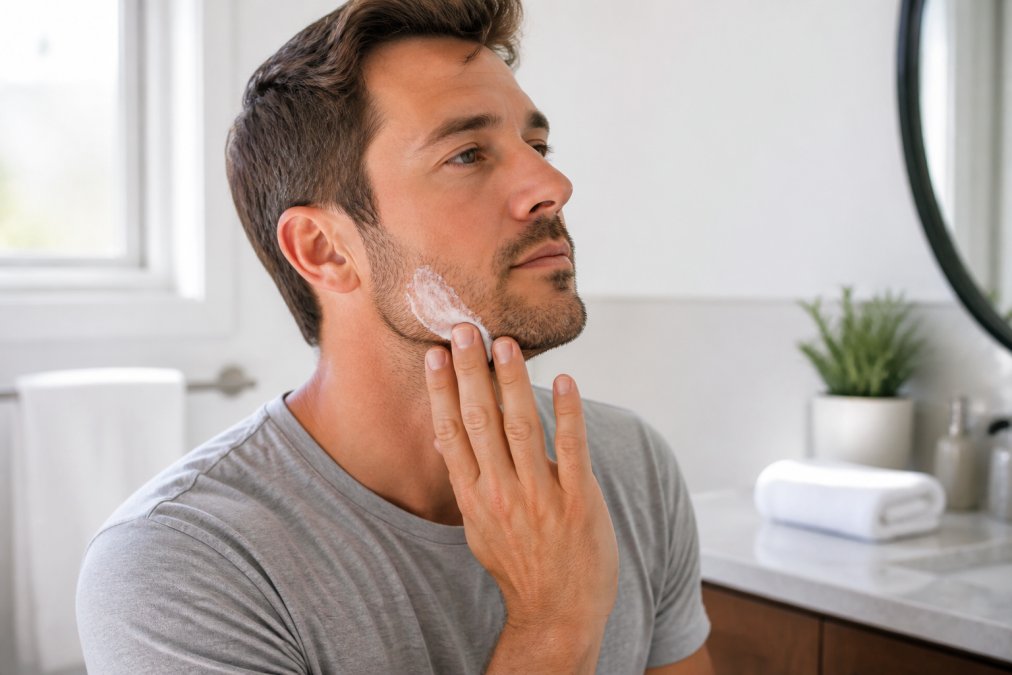
Step-by-Step Recovery Routine
- Cool the skin. Rinse with cool water, not hot.
- Skip the alcohol. Do not reach for aftershave with alcohol. It will burn and dry the skin further.
- Apply a post-shave balm. Choose one with soothing agents like aloe or pro-vitamin B5.
- Leave it alone. No scrubbing or exfoliating for a few days.
- Switch your blade. A sharp, clean razor cuts cleanly and drags less.
Prevention matters more than the cure. Shave with the grain, use warm water, and never shave dry skin.
Patch Testing and Lifestyle Adjustments That Protect Your Skin Barrier
Most guides stop at products. But a reactive barrier is shaped as much by what you eat, how you sleep, and what is in your water as by what is in the bottle. This section covers a real patch-testing protocol, and the lifestyle and environmental levers that quietly drive flare-ups.
A Patch-Testing Protocol That Actually Works
Patch testing is the single step most people skip. It is also the one that saves the most grief. A patch test takes two days. A reaction can take two weeks to heal. The math is simple.
- Pick the right site. The inner forearm is the standard spot, thin skin, easy to keep clean, easy to watch. Do not test on your face first.
- Use a small amount. A pea-sized dab is plenty. Apply it to a roughly quarter-sized area and let it dry.
- Leave it alone for 24 to 48 hours. Do not wash the area, do not cover it with clothing that rubs, and do not scratch it.
- Read the result. Redness, itching, bumps, or a burning sensation all count as a reaction. A mild tingle that fades within a few minutes is usually not. If you see a reaction, wash the product off and stop using it.
- Re-test on the jawline. If the forearm is clear, apply a small amount along the jawline for another 24 hours before using it on your full face. The face is more reactive than the arm, so a clean forearm test is not a guarantee.
Lifestyle and Environmental Triggers Most Guides Ignore
Your skin is the last organ to receive nutrients and the first to show stress. That is why lifestyle changes often do more for a reactive barrier than a new serum.
The Order of Operations
If your skin is currently reactive, fix the environment before you buy another product. Sleep, water, and stress are free. A new serum is not. Most men find that two weeks of better sleep, a humidifier, and a gentler cleanser can be very beneficial.
Budget Drugstore Picks vs. Small-Batch Skincare for Sensitive Skin
Drugstore products win on price and convenience. Small-batch products win on ingredient control and freshness.
| Factor | Budget Drugstore | Small-Batch Skincare |
|---|---|---|
| Price | Lower upfront | Higher per item |
| Ingredients | Longer lists, more fillers | Shorter, often simpler |
| Freshness | Long shelf life | Made in small runs |
| Consistency | Highly standardized | Varies by maker |
| Best for | Simple, proven basics | Reactive skin needing fewer additives |
Conclusion
Managing sensitive skin comes down to a short routine, gentle ingredients, and patience. Most people overbuy and under-wait, then blame their skin when nothing improves.
Frequently Asked Questions
What is the best skincare for men with sensitive skin?
There is no single best product, but the safest formula pattern is short and predictable: a pH-balanced, fragrance-free gentle cleanser, a ceramide or hyaluronic acid moisturizer, and a mineral sunscreen. Add one new product at a time and wait a week before adding the next, so you can tell what caused a reaction. Products labeled hypoallergenic, non-comedogenic, and alcohol-free lower your risk, and a patch test on your inner forearm confirms it before it touches your face.
How can men identify ingredients that trigger skin sensitivity?
Read the full ingredient list, not the front label. The usual suspects are synthetic fragrance, essential oils, drying alcohols, sulfates, and harsh physical scrubs. Keep a simple log: product name, date started, and any redness, itching, or stinging within 72 hours. If two or three products share an ingredient and all three caused a reaction, that is your trigger. A patch test behind the ear or on the inner forearm for 24 to 48 hours catches most problems before they reach your face.
Should men with sensitive skin use fragrance-free products?
Yes, fragrance-free is the safer default. Fragrance is one of the most common causes of contact irritation, and 'unscented' is not the same thing: unscented products can still contain masking fragrance. Look for the words fragrance-free on the label, and check the ingredient list for parfum or fragrance near the end. If you want scent, choose products scented only with a single recognizable botanical and patch test first.
How long does razor burn take to heal, and what helps most?
Most razor burn settles in three to seven days with gentle care. Skip shaving that area, rinse with cool water, and apply a fragrance-free post-shave balm with soothing agents like pro-vitamin B5 or chamomile extract. Avoid alcohol-based aftershaves, which sting and strip the lipid barrier. For the next shave, use a fresh blade, shave with the grain, and keep the strokes short. If redness spreads, blisters, or lasts beyond two weeks, see a dermatologist.