 how-to
What Happens If You Over-Exfoliate Skin
Table of Contents
- What Happens When You Over-Exfoliate Your Skin
- Signs of Over-Exfoliated Skin to Watch For
- Over-Exfoliated Skin Recovery Time: What to Expect
- How to Fix Over-Exfoliated Skin: A Staged Recovery Plan
- How Often Should You Exfoliate Your Face to Stay Safe
- Physical vs. Chemical Over-Exfoliation: Key Differences
- When to See a Dermatologist and Prevention Tips
- Frequently Asked Questions
Last Updated: October 10, 2026
What Happens When You Over-Exfoliate Your Skin
When you over-exfoliate skin, you damage your skin's protective barrier. When you exfoliate too often or too aggressively, you strip away healthy skin cells faster than your body can replace them. This leaves your skin vulnerable to irritation, infection, and dehydration.
The skin barrier is your body's first line of defense. It keeps moisture in and irritants out. When you over-exfoliate skin, you compromise this barrier. What feels like smooth, glowing skin at first becomes raw, inflamed, and hypersensitive within days.
Understanding what happens during over-exfoliation is the first step to fixing it and preventing it in the future.
Over-exfoliation affects everyone differently. Your skin type, the exfoliation method you use, and how often you exfoliate all play a role. Someone with resilient skin might tolerate frequent exfoliation longer than someone with sensitive skin. But push any skin too far, and damage follows.
Signs of Over-Exfoliated Skin to Watch For
Visible Damage and Barrier Breakdown
The first signs of over-exfoliation appear on your skin's surface. Redness and inflammation develop quickly. Your skin may look blotchy or have patches of deeper red. This happens because exfoliation irritates blood vessels beneath the skin's surface.
Dryness and flaking follow soon after. Your skin feels tight. It may peel in visible patches. This occurs because the barrier can no longer hold moisture. Water evaporates from your skin faster than normal, leaving it parched and uncomfortable.
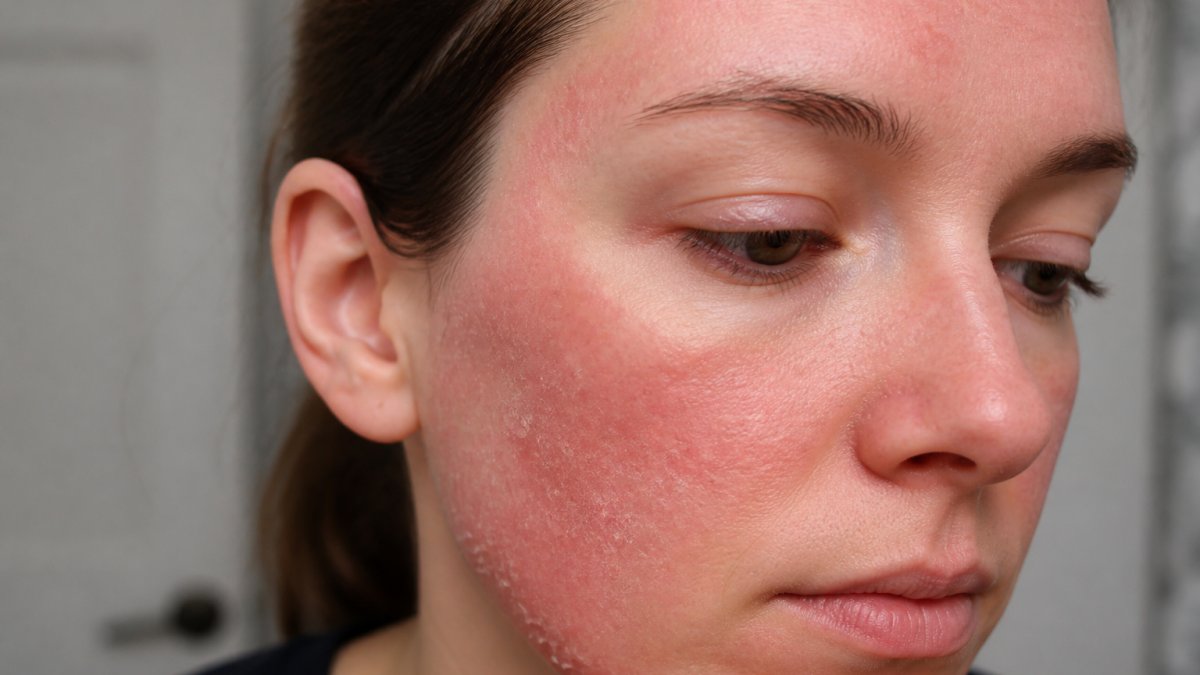
Loss of natural oils compounds the problem. Your skin produces oils to protect and hydrate itself. When you over-exfoliate, you remove these oils along with dead skin cells.
Look for tightness across your face. Your skin may feel like it's pulling. Elasticity decreases temporarily. This is your barrier signaling that it's damaged and needs time to heal.
Sensitivity and Discomfort
Increased sensitivity is one of the most bothersome signs of over-exfoliation. Products that never bothered you before now sting or burn. Your moisturizer might feel like it's on fire. Even water can feel uncomfortable on your skin.
This happens because your barrier is compromised. Without its protective layer, your skin's nerve endings become exposed and reactive. Everything feels like an irritant.
Burning and stinging sensations develop even without applying products. Some people describe their skin as feeling raw. Others say it feels like a sunburn without the sun exposure. These sensations can last for several days or weeks depending on severity.
Breakouts often appear during recovery. You might see small pimples, blemishes, or a rash-like texture. This isn't acne caused by bacteria. Instead, it's inflammation from the barrier damage. Your skin is reacting to the trauma of over-exfoliation.
Itchiness can become intense. You may feel an urge to scratch, but resist it. Scratching will worsen the damage and extend healing time.
Over-Exfoliated Skin Recovery Time: What to Expect
Recovery from over-exfoliation takes time. Most people see improvement within 1-2 weeks. Complete healing of the skin barrier typically takes 3-6 weeks.
The timeline depends on how severely you damaged your skin. Mild over-exfoliation might improve in 7-10 days. Severe barrier damage can take 6-8 weeks to fully resolve.
Your skin heals in stages. The first few days are the worst. Inflammation peaks around day 2-3. Then gradual improvement begins. By day 7, most acute discomfort subsides. But your skin remains sensitive and vulnerable during weeks 2-6.
Signs of healing include:
- Redness fading to pink, then returning to normal tone
- Dryness improving as barrier function restores
- Sensitivity decreasing when you apply products
- Skin feeling less tight and more comfortable
- Natural oil production balancing out
- Breakouts and blemishes clearing
Don't expect perfect skin immediately after the barrier heals. Full restoration of your skin's optimal function takes another 2-4 weeks. Patience is essential.
How to Fix Over-Exfoliated Skin: A Staged Recovery Plan
Recovery requires a deliberate, staged approach. Rushing the process or using the wrong products will extend healing time. Follow these phases for optimal results.
Phase 1: Stop Exfoliation and Soothe (Days 1-7)
Stop all exfoliation immediately. This includes physical exfoliants like scrubs and chemical exfoliants like acids. Don't use washcloths, loofahs, or any textured tools. Let your skin rest completely.
Cleanse gently with lukewarm water. Use a gentle, fragrance-free cleanser. Avoid products with sulfates, alcohol, or fragrance. Pat your skin dry with a soft cloth. Don't rub.
Apply a soothing moisturizer while your skin is still slightly damp. This helps lock in hydration. Look for products with:
- Ceramides (restore barrier function)
- Glycerin (draws moisture into skin)
- Hyaluronic acid (holds water in skin)
- Aloe vera (calms inflammation)
Use products with minimal ingredients. Complex formulations can irritate sensitive skin further. Look for handcrafted moisturizers designed for sensitive skin that skip harsh chemicals and focus on natural soothing ingredients.
Apply sunscreen daily, even indoors. Your barrier is compromised, making UV damage more likely. Use broad-spectrum SPF 30 or higher.
Avoid these during Phase 1:
- Hot showers or baths (use lukewarm water)
- Makeup (if possible)
- Fragrant products
- Acids, retinoids, or vitamin C
- Touching or picking at your skin
- Chlorinated pools
Phase 2: Rebuild the Moisture Barrier (Days 8-21)
By week 2, acute inflammation should decrease. Your skin is still sensitive but improving. Now focus on strengthening your barrier.
Continue gentle cleansing and moisturizing. Introduce a hydrating serum if your skin tolerates it. Look for serums with hyaluronic acid or glycerin. Apply before your moisturizer to boost hydration.
Consider adding a facial oil in the evening. Natural oils like jojoba or rosehip support barrier repair. Apply a few drops to damp skin, then seal with moisturizer.
Maintain strict sun protection. UV exposure delays healing and can cause permanent damage to compromised skin.
Introduce gentle, non-exfoliating masks. Hydrating masks with honey, aloe, or ceramides provide extra moisture without irritation. Avoid clay masks or any exfoliating formulas.
Your skin may still feel dry or tight. This is normal. Consistency matters more than trying new products. Stick with the same routine for at least 2 weeks before evaluating results.
Phase 3: Gentle Reintroduction (Weeks 4-6)
After 3 weeks of barrier repair, your skin should feel significantly better. Redness should fade. Sensitivity should decrease. Now you can cautiously reintroduce active ingredients.
Start with the gentlest options:
- Low-strength chemical exfoliants (2-5% AHA or BHA)
- Mild retinoids or retinol
- Vitamin C serums
Use these once or twice weekly. Never daily. Introduce one new product at a time, waiting 3-5 days between additions to monitor tolerance.
Physical exfoliation can resume, but sparingly. Use gentle scrubs or soft brushes no more than once weekly. Avoid aggressive scrubbing.
Continue hydrating and protecting your skin. Don't abandon the routine that healed your barrier. Maintenance prevents future over-exfoliation damage.
By week 6, your skin should feel normal again. You can gradually return to your regular routine, but with caution. The experience teaches an important lesson: less frequent exfoliation is safer and more effective.
How Often Should You Exfoliate Your Face to Stay Safe
Most skin types benefit from exfoliation 1-2 times weekly. This removes dead skin cells without damaging your barrier. Some people with resilient skin tolerate 2-3 times weekly. Others with sensitive skin do better with once weekly or even less.
Your skin type determines safe frequency:
- Oily skin: 2-3 times weekly (tolerates more frequent exfoliation)
- Combination skin: 1-2 times weekly (balanced approach)
- Normal skin: 1-2 times weekly (moderate frequency)
- Dry skin: Once weekly or less (sensitive to over-exfoliation)
- Sensitive skin: Once weekly or every other week (requires gentle approach)
Chemical exfoliation is gentler than physical exfoliation. You can use chemical exfoliants more frequently than scrubs. But balance matters. Even gentle acids damage your barrier if used daily.
Physical exfoliation removes skin cells through friction. It's harsher on your barrier. Limit physical exfoliation to once weekly maximum. Never scrub aggressively.
Listen to your skin. If you notice any signs of irritation, reduce frequency immediately. Your skin will tell you when you're exfoliating too much.
Physical vs. Chemical Over-Exfoliation: Key Differences
Physical and chemical over-exfoliation cause similar damage but through different mechanisms. Understanding the difference helps you prevent problems.
Physical over-exfoliation happens when you use scrubs, brushes, or washcloths too frequently or too aggressively. You're manually removing skin cells through friction. The damage is immediate and visible.
Physical exfoliation is easier to overdo because you feel it happening. The scrubbing sensation feels productive. But that sensation is actually friction damage.
Chemical over-exfoliation occurs when you use acids (AHAs, BHAs) or other chemical exfoliants too often or at too high a concentration.
Chemical over-exfoliation sneaks up on you. You don't feel it happening in the moment. Damage accumulates over days or weeks.
Both types result in:
- Barrier damage
- Increased sensitivity
- Redness and inflammation
- Dryness and dehydration
- Breakouts and blemishes
The recovery process is identical. Stop the offending method, hydrate, and let your barrier repair.
Prevention is simpler than recovery. Use physical exfoliants gently and infrequently. Use chemical exfoliants at low concentrations and moderate frequencies. Your skin doesn't need aggressive treatment to look healthy.
When to See a Dermatologist and Prevention Tips
See a dermatologist if:
- Your symptoms don't improve after 2 weeks
- You develop signs of infection (pus, increasing warmth, spreading redness)
- Your skin develops severe blistering or open sores
- You experience allergic reactions to products used during recovery
- Over-exfoliation triggers an underlying skin condition like rosacea or eczema
A dermatologist can assess barrier damage, rule out infection, and recommend prescription treatments if needed.
Prevention tips for the future:
Establish a safe exfoliation schedule and stick to it. Most people need exfoliation 1-2 times weekly. Mark it on your calendar.
Invest in quality exfoliants. Quality matters because gentle, effective products reduce the temptation to over-exfoliate.
Choose the right exfoliation method for your skin type. Oily skin tolerates chemical exfoliants well.
Never combine exfoliation methods on the same day. Don't use a scrub and then apply an acid. This compounds barrier damage.
Always follow exfoliation with hydration. Apply moisturizer immediately after exfoliating. This replaces moisture lost during the process.
Watch for warning signs.
Over-exfoliation is temporary but uncomfortable. Your skin can recover fully with proper care.
At The Beekeeper's Basket, we believe healthy skin comes from respecting your barrier, not punishing it. Our handcrafted products are formulated to nourish.
Frequently Asked Questions
How do you know if you're over-exfoliated?
Over-exfoliated skin shows redness, excessive dryness, flaking, and a tight, raw feeling. You may also notice increased sensitivity to products you normally use, stinging or burning sensations, and small bumps or blemishes appearing. If your skin feels uncomfortable after exfoliation or looks inflamed, these are clear signs you've gone too far. Stop exfoliating immediately and focus on soothing and hydrating your skin barrier.
How long does it take for over-exfoliated skin to recover?
Recovery from over-exfoliation typically takes 2 to 4 weeks, depending on severity. Mild irritation may heal in 1 to 2 weeks with proper care, while significant barrier damage can take a full month or longer. During recovery, avoid all exfoliating products, use gentle cleansers, apply hydrating moisturizers, and protect your skin from sun exposure. Patience is essential, rushing back to exfoliation will delay healing.
What should you put on over-exfoliated skin?
Focus on soothing, hydrating products that strengthen your skin barrier. Use gentle, fragrance-free cleansers, hydrating moisturizers with ceramides or hyaluronic acid, and products containing calming ingredients like aloe or oat extract. Avoid all exfoliating acids, retinoids, vitamin C serums, and other potentially irritating ingredients during recovery. Sunscreen (SPF 30+) is critical to protect damaged skin from further harm and prevent post-inflammatory hyperpigmentation.
How often should you exfoliate your face to avoid over-exfoliation?
Most skin types tolerate exfoliation 1 to 2 times per week, though frequency depends on your skin type and the exfoliation method. Sensitive or dry skin should exfoliate no more than once weekly or every other week. Physical exfoliation (scrubs) is more aggressive and suits fewer people than chemical exfoliation (acids). Always start slowly, monitor your skin's response, and reduce frequency if you notice redness, dryness, or irritation. Less frequent exfoliation is always safer than overdoing it.