 Ultimate guide
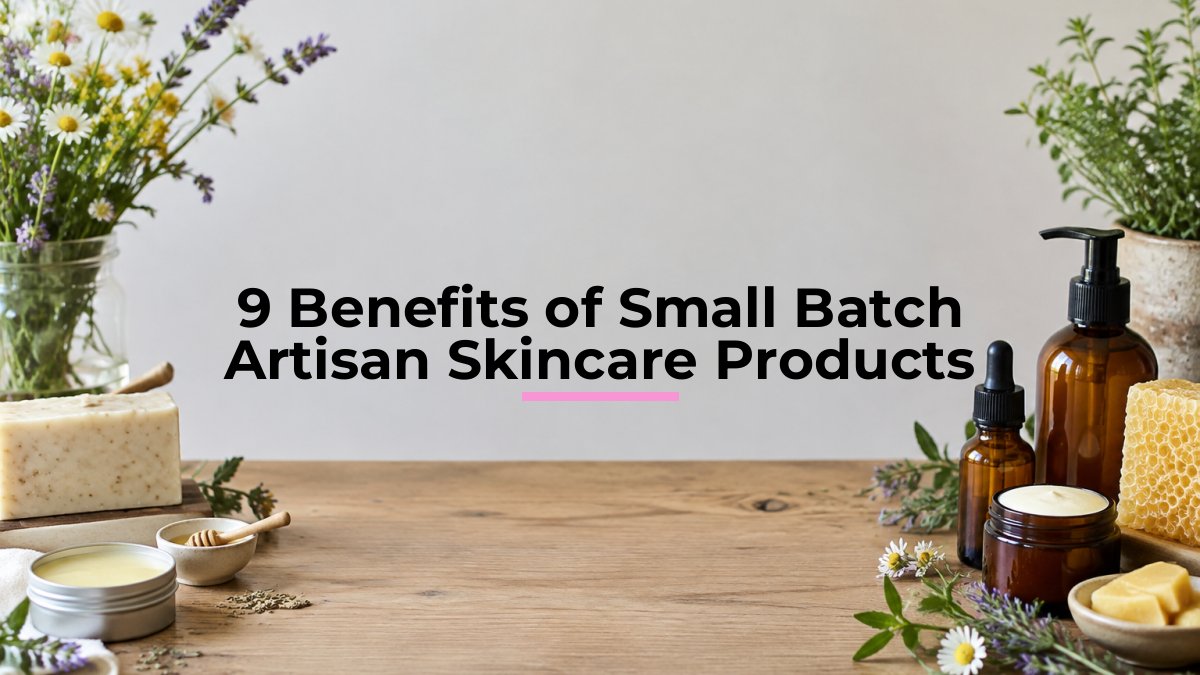
9 Benefits of Small Batch Artisan Skincare Products
Last Updated: November 14, 2026
Quick Summary
The benefits of small batch artisan skincare products include closer quality control, fresher ingredients, and better traceability than mass-produced items. Small makers can adjust recipes between runs, check each batch by hand, and often name where ingredients came from. Small-batch is not a legal term, so judge the maker's process and testing rather than the label alone.
- Small runs let makers adjust recipes and pull batches that do not meet standard.
- Shorter time from production to shipping means less shelf aging for ingredients.
- Small batches can show texture and scent differences between runs.
- Check for a PAO symbol and batch code to judge freshness and shelf life.
- Ask makers what preservative system they use and whether it passed a challenge test.
Table of Contents
- What Small Batch Skincare Actually Means
- Small-Batch vs. Mass-Produced Skincare: What Changes
- Ingredient Freshness, Sourcing and Quality Control
- Natural Skincare for Dry Skin: Benefits and Limits
- Skincare Product Shelf Life: Freshness Versus Expiration
- Safety, Sensitive Skin and Evidence Behind Skin Claims
- Price, Value and Cost Per Use
- Choosing Your Next Small-Batch Product
- Frequently Asked Questions
What Small Batch Skincare Actually Means
Small-batch skincare is product made in limited production runs, often by a small team working by hand, where each batch is checked before it leaves the workshop, and understanding the benefits of small batch artisan skincare products starts with knowing that process. The Beekeeper's Basket makes its bee-inspired soaps, lotions, perfumes and beeswax melts in small batches in New England. "Small-batch" describes how a product is made, not a guarantee of quality on its own, so the label is only a starting point.
The term is informal. It has no legal definition in the United States, and brands use it to describe everything from a kitchen operation to a regional manufacturer. The useful question is what happens inside the batch: who measures the ingredients, how often the product is tested, and how the maker handles variation between runs.
Small-Batch vs. Mass-Produced Skincare: What Changes
A mass-produced product is typically made in large, continuous runs designed for uniform output across thousands of units. A small-batch product trades that scale for closer control. The maker can adjust a recipe between runs, notice a change in texture or scent, and pull a batch that does not meet standard.
The practical differences tend to show up in three places:
- Freshness: Shorter time between production and shipping means less time for ingredients to age on a shelf.
- Consistency: Larger batches can smooth out variation, while small runs can show more batch-to-batch differences in texture and scent.
- Traceability: A small maker can often name where an ingredient came from and when a particular batch was poured.
The trade-off is real. Small runs can show batch-to-batch differences in texture and scent that people who expect identical products every time may notice. Mass-market brands invest heavily in making every unit match, and that consistency has value for shoppers who rely on a precise formula.
Ingredient Freshness, Sourcing and Quality Control
Ingredient quality starts before production begins.
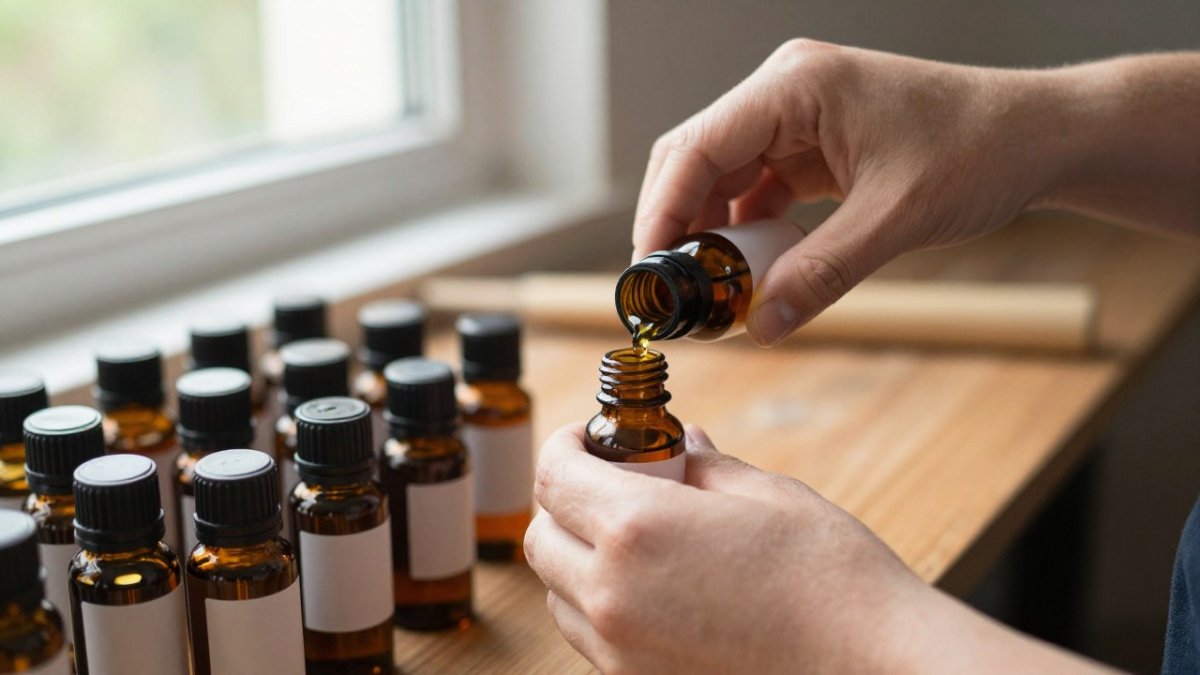
Quality control in a small workshop is usually hands-on. Someone is measuring, pouring and checking appearance, texture and scent by eye and touch, then labeling each batch. That process is only as good as the maker's discipline, which is why transparency matters: a brand willing to say where its ingredients come from and how each batch is checked is giving you something concrete to evaluate.
Natural Skincare for Dry Skin: Benefits and Limits
Dry skin is often a moisture problem, and many people reach for products with plant oils, butters and humectants, ingredients that attract water or slow its loss from the skin.
Natural does not automatically mean gentle or effective. Some botanical ingredients can irritate sensitive skin, and "natural" is not a regulated term on cosmetic labels. If your skin is dry and reactive, test a new product on a small patch first and stop using it if redness or stinging develops. A dermatologist can help you sort out whether dryness comes from the product, the climate or an underlying condition.
Skincare Product Shelf Life: Freshness Versus Expiration
Freshness and shelf life are related but not the same thing, and confusing them is one of the easiest ways to waste money on a product that has already turned. Shelf life is the period a product is expected to remain stable and safe under proper storage; it is set by the formula, its preservation system and its packaging. Freshness describes how recently a product was made, how much of its original character it still has when you first open it.
Read the label for two different dates. Under United States rules, cosmetics are not required to carry an expiration date, but many brands include one of two signals. A period-after-opening (PAO) symbol, an open jar icon with a number and "M" inside, such as 6M or 12M, tells you how many months the product remains stable after you first open it, assuming normal storage. A printed expiration date or "best by" date tells you the end of the product's shelf life in its unopened state. If both appear, the earlier of the two governs.
Storage changes the clock. Heat, direct sunlight and bathroom humidity accelerate degradation of oils, fragrance and preservatives. Store products in a cool, dark, dry place, keep water out of jars (use a clean spatula rather than wet fingers), and close lids tightly. Products in jars are exposed to air and fingers every time they are opened, which is why many formulators prefer airless pumps or tubes for water-based formulas. A product stored on a sunny windowsill can degrade well before its printed date.
Judge the product, not just the date. Signs that a product has turned include a change in color (oils darkening, creams yellowing), an off smell (rancid oils smell like old nuts or crayons), separation that will not remix, a texture that has become grainy or watery, and visible mold or growth. Any of these means stop using it, regardless of the date. Anhydrous products such as balms and oil serums can last longer than water-based creams but are more prone to rancidity once the oils oxidize.
Freshness is a buying advantage only if you can use it. A short production cycle means the product reaches you sooner, which is genuinely useful for products with delicate oils or short PAO windows. But freshness does not extend shelf life, and a large container you cannot finish before it goes off is a worse value than a smaller one you use up.
Safety, Sensitive Skin and Evidence Behind Skin Claims
Small batches are not automatically safer. Safety comes from formulation, preservation, testing and packaging, not from batch size.
Preservation is the core safety issue. Any product containing water, lotions, creams, toners, gel cleansers, needs protection against bacteria, yeast and mold during normal use, when fingers, air and bathroom humidity introduce microbes. Common preservative systems include phenoxyethanol combined with ethylhexylglycerin, sodium benzoate and potassium sorbate blends, and benzyl alcohol systems; some makers use self-preserving approaches that rely on low water activity, high glycerin or sugar content, or anhydrous (water-free) formulas such as balms and oil serums. Anhydrous products generally need less preservation because they do not support microbial growth, but they still oxidize and can go rancid.
Microbial and stability testing are separate questions. A challenge test inoculates the product with known organisms and confirms the preservative system suppresses them over time. Stability testing stores the product under accelerated conditions (elevated temperature and humidity) and checks whether the formula holds its pH, texture, color and scent over its intended shelf life. A maker who can describe both is giving you verifiable information; a maker who says only "we use natural preservatives" is not. Under United States rules, cosmetics are not required to be tested for safety before sale, and the FDA does not approve cosmetic formulas or ingredients, so the burden of asking falls on the buyer.
Separate ingredient evidence from batch-size claims. Some ingredients have well-documented skin benefits: glycerin and hyaluronic acid are humectants that draw water into the upper skin layers; petrolatum and dimethicone are occlusives that slow water loss; colloidal oatmeal is recognized for soothing irritated skin; niacinamide has published support for barrier function and tone. Treat words like "nourishing," "restorative," "youth-preserving" or "detoxifying" as descriptive marketing rather than measured outcomes, and treat specific promises about hyperpigmentation, fine lines or acne as claims that should be backed by ingredient-level evidence or brand testing data.
Sensitive and reactive skin needs a plan. Natural and botanical ingredients are common irritants and allergens: essential oils (lavender, citrus, peppermint), fragrance components, lanolin, propolis and some plant extracts can trigger contact dermatitis in reactive skin. "Natural" is not a regulated term on cosmetic labels and does not mean gentle. If your skin is sensitive, acne-prone or reactive, patch test on the inner forearm for 24 to 48 hours before applying to the face, introduce one new product at a time, and keep a short routine so you can identify the culprit if a reaction appears. Watch out: a product that stings or reddens on first use is not "working", stop using it and, if the reaction persists, see a dermatologist.
Price, Value and Cost Per Use
Small-batch products often cost more than mass-market equivalents. Pricing depends on the product, size and any gift packaging, so check The Beekeeper's Basket's website for current prices rather than relying on a figure from this article.
A better way to compare is cost per use. Divide the price by how many uses you expect to get from the container, then compare that figure across options. A richer product you use sparingly can cost less per application than a cheaper one you apply heavily, and a product you finish before it goes off is worth more than a large bottle that sits unused.
Small-batch products often cost more than mass-market equivalents, so comparing cost per use can help you judge value.
| Factor | What the article says | Note |
|---|---|---|
| Typical price | Often higher than mass-market equivalents | Check current prices on the brand's website |
| Comparison method | Divide price by expected uses | Cost per use, not sticker price |
| Finishing the product | Worth more than a large unused bottle | Avoid sizes you won't finish before spoilage |
| Richer product used sparingly | Can cost less per application | Applies to heavy versus light use |
Choosing Your Next Small-Batch Product
Start with your skin. If it is dry or sensitive, look for a short ingredient list, a clear preservation approach and a patch test plan. If you are buying a gift, choose a size and scent the recipient is likely to enjoy, and consider a set if you want a range of textures.
Then check the basics: where the product is made, how it is packaged and whether the maker explains its batch process. The Beekeeper's Basket is handcrafted in New England, makes its products in small batches and has more than 20,000 sales behind its range, so you can review its collection to find a soap, lotion or perfume that suits your routine. Explore the collection at The Beekeeper's Basket and choose the product that fits your skin and your sense of what matters.
Frequently Asked Questions
Are small-batch skincare products better for sensitive skin?
Not automatically. Small-batch products often use shorter ingredient lists and fewer batches, which can make reactions easier to trace. But small batch does not mean hypoallergenic. Fragrances, essential oils and botanical extracts can still irritate sensitive skin. Check the full ingredient list, look for fragrance-free options, and patch test a new product on the inner forearm for several days before using it on your face. If you have a history of reactions, a dermatologist can help you identify specific triggers.
How long do handmade skincare products last?
Shelf life depends on the formula. Products with water and no effective preservative system can spoil within weeks, while anhydrous products like balms and some oils often last months. Many small makers print a use-by date or a period-after-opening symbol on the packaging. Store products away from heat and sunlight, keep lids closed, and use clean hands or a spatula. When a product smells rancid, changes color or separates unexpectedly, stop using it.
Are small-batch skincare products fresher than mass-produced products?
Often, yes, because small producers typically make and ship orders in shorter cycles, so products spend less time in a warehouse. Freshness is still not guaranteed by batch size alone. Ask when a product was made, how it is stored, and what preservatives it uses. A well-preserved mass-market product can outlast a poorly preserved small-batch one. Look for manufacture dates and clear storage guidance as signs of a transparent producer.
What should you look for in natural skincare for dry skin?
Look for humectants such as glycerin or hyaluronic acid to draw in moisture, and occlusives such as shea butter, squalane or beeswax to help seal it in. Avoid products heavy with alcohol or strong essential oils, which can strip or irritate dry skin. A simple ingredient list with a clear preservation system and a fragrance-free option is usually a better starting point than a long list of botanicals.