 blog
Which Scents Restore Your Senses Best? A Natural Oil Guide
Last Updated: October 30, 2026
Quick Summary
Calming oils like lavender and chamomile suit evening routines, while peppermint, eucalyptus and lemon suit a short alerting refresh. Natural oils support a pleasant scent experience but do not restore a lost sense of smell.
- Lavender and chamomile suit a diffuser session 20-30 minutes before bed.
- Use a 1-2% dilution, about 6-12 drops per ounce of carrier oil.
- Patch test any new oil on the inner forearm and wait 24 hours.
- Lemon and cold-pressed citrus oils can increase sun sensitivity; avoid them before sun exposure.
- See a clinician promptly if a smell change lasts weeks or follows an injury.
Table of Contents
- What Sensory Restoration Really Means for Natural Oils
- Best Essential Oils for Relaxation and Stress Relief
- Natural Oils for Mature Skin: Rosehip, Argan and Jojoba
- How to Dilute Essential Oils for Skin Safely
- Natural Perfume vs Synthetic Fragrance: A Sensory Comparison
- When Scent Loss Needs a Medical Evaluation
- Choosing Your Next Bee-Inspired Scent at The Beekeeper's Basket
- Frequently Asked Questions
What Sensory Restoration Really Means for Natural Oils
The phrase "sensory restoration" means very different things to different people. For some, it means getting back a sense of smell lost to a cold or illness. For others, it is simply the pleasure of a scent that calms the mind and softens the skin at the end of a long day.
This guide focuses on the second meaning, with a clear-eyed look at what natural oils can and cannot do. Sensory restoration is best understood as a comforting, pleasurable experience of scent and touch, not a medical treatment. Natural oils can make a routine feel more restorative, but they do not repair the nerves that carry smell to the brain.
Many people assume that a strongly scented natural oil will "wake up" a dulled sense of smell, but there is little evidence for that. If your sense of smell has changed, the more useful step is to talk with a clinician, as covered later in this guide.
Best Essential Oils for Relaxation and Stress Relief
Many guides list lavender, chamomile, peppermint, eucalyptus and lemon without much further detail. The useful question is not "which oil is best" but "which sensory experience do you want", a slow wind-down, a midday reset, or a focused lift.
A quick note on evidence: aromatherapy is widely used for relaxation, and many people report that familiar scents feel calming. That is a reasonable everyday experience, but it is not the same as clinical proof that an oil lowers stress hormones or treats anxiety. Treat the oils below as sensory tools that can support a routine, not as treatments.
A Sensory Comparison Framework
Use these four dimensions to compare any oil before you buy:
- Aroma profile, floral, herbal, citrus, woody, or resinous. This predicts whether the scent will feel calming or alerting to you.
- Intensity, how quickly the scent fills a room and how long it lingers. Strong oils need shorter sessions.
- Texture and absorption, relevant when the oil is used in a carrier; lighter carriers absorb faster and feel less greasy.
- Intended use, diffuser, warm cloth, massage blend, or bath. The application changes the experience more than the oil does.
Calming Oils: Lavender and Chamomile
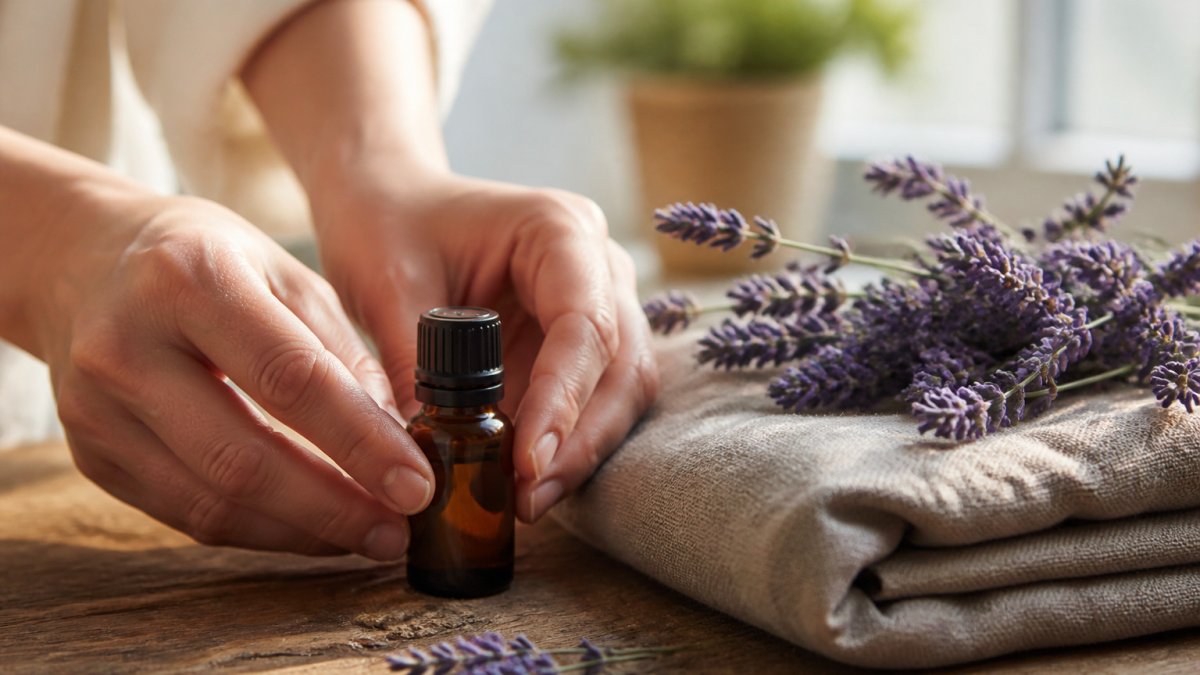
Lavender is a widely recognized relaxing scent, with a soft floral aroma that many people find soothing. Chamomile is sweeter and apple-like, and Roman chamomile is generally gentler in scent than German chamomile. Both suit evening routines.
- Best application: diffuser for 20-30 minutes before bed, or 2-3 drops on a warm (not hot) cloth held near, not on, the face.
- Dilution for skin: a low percentage in a carrier oil, such as 1-2%, which is roughly 6-12 drops per ounce.
- Watch for: lavender is generally well tolerated, but patch test first; chamomile can trigger reactions in people sensitive to ragweed-family plants.
Alerting Oils: Peppermint, Eucalyptus and Lemon
Peppermint is crisp and cooling, eucalyptus is sharp and clean, and lemon is bright and fresh. These suit a short morning or midday refresh rather than a long wind-down.
- Best application: a 10-15 minute diffuser session, or a single drop on a cotton ball in a workspace, not directly under the nose.
- Watch for: strong scents can cause headaches in some people, so keep sessions short and ventilate the room. Peppermint can be irritating even when diluted, and it should not be used on the face of infants or young children.
- Phototoxicity: lemon and other cold-pressed citrus oils can increase sun sensitivity. Never apply them to skin before sun exposure.
What the Evidence Does and Does Not Support
Traditional use and modern aromatherapy both describe calming and uplifting scent experiences, and that is a fair way to frame these oils. What the evidence does not support is the claim that an essential oil restores a lost sense of smell or treats a medical condition. If your goal is a more pleasant, restorative routine, the oils above are well suited. If your goal is to address a change in your sense of smell, see the medical evaluation section below.
The table below summarises how each oil group is typically used and the main caution for each, as described in the section.
| Oil group | Best application | Key caution |
|---|---|---|
| Calming: lavender, chamomile | Diffuser 20-30 min before bed | Patch test first |
| Calming: dilution for skin | 1-2% in a carrier oil | Roughly 6-12 drops per ounce |
| Alerting: peppermint, eucalyptus, lemon | 10-15 min diffuser session | Strong scents can cause headaches |
| Lemon and cold-pressed citrus | Avoid before sun exposure | Can increase sun sensitivity |
| Peppermint | Not for infants or young children | Can irritate even when diluted |
Natural Oils for Mature Skin: Rosehip, Argan and Jojoba
Mature skin often feels drier and less resilient, and many people look to natural oils for extra nourishment. Rosehip oil, argan oil and jojoba oil are among the most commonly used carrier oils for this purpose. Each has a different feel and absorption rate.
Rosehip oil is lighter and is often chosen for facial routines. Argan oil feels silky and is often used on dry areas such as elbows and heels. Jojoba oil resembles the skin's natural oils and is commonly used as an everyday moisturizer.
Patch test any new oil first. Apply a small amount to the inner forearm, wait 24 hours, and watch for redness or itching before wider use.
How to Dilute Essential Oils for Skin Safely
Most guides stop at "dilute before use." The gap they miss is the practical detail: how much, in what, for whom, and when to stop. Essential oils are concentrated plant extracts, and dilution and patch testing matter for avoiding irritation.
Dilution Rates That Actually Work
Dilution is expressed as a percentage of essential oil in a carrier oil. A common adult guideline is 1-2%, which works out to roughly 6-12 drops of essential oil per ounce of carrier oil. For reference, one teaspoon holds about 5 milliliters, and a typical dropper delivers about 20 drops per milliliter, so a 1% blend in one ounce of carrier is about 6 drops.
- 1%, about 6 drops per ounce. A good starting point for facial skin, sensitive areas, and first-time users.
- 2%, about 12 drops per ounce. Suitable for most adult body massage blends.
- 3% and above, reserved for short-term, localized use by experienced users; not a default for daily skin care.
Children, pregnant people, and anyone with sensitive skin should use lower concentrations or avoid essential oils altogether unless a clinician advises otherwise. Peppermint, clove, cinnamon, oregano and thyme are among the oils most likely to irritate even when diluted.
Carrier Oils: Matching Texture to Purpose
Sweet almond, grapeseed and jojoba are common carriers, but they feel different on skin. Grapeseed is light and absorbs quickly, which suits many facial blends. Jojoba resembles the skin's natural oils and is commonly used for everyday moisturizing. Sweet almond is a middle-weight carrier often used for body massage. Patch test the carrier as well as the essential oil, since nut-based carriers can trigger reactions in people with allergies.
Patch Testing: A 24-Hour Protocol
- Apply a small amount of the diluted blend to the inner forearm.
- Cover with a bandage and leave it for 24 hours.
- Check for redness, itching, burning or swelling. If any appear, wash the area and do not use the blend.
- Repeat with each new oil or blend, because sensitivity can develop over time.
When to Stop and When to Ask a Clinician
Stop use and rinse with carrier oil (not water alone) if burning or redness develops. Seek medical advice if a reaction spreads, blisters, or does not settle within a few days. If you have a chronic skin condition, are pregnant, are breastfeeding, or are using prescription skin medications, check with a clinician before adding essential oils to your routine. This is the safety step most listicles skip, and it matters more than any single oil recommendation.
Natural Perfume vs Synthetic Fragrance: A Sensory Comparison
Natural perfume is built from plant and botanical ingredients, while synthetic fragrance is built from lab-made aroma compounds. Many people describe natural scents as more layered and gentle. Synthetic scents are often more consistent and longer-lasting on the skin.
Neither is automatically better. If you have experienced headaches or irritation from strong synthetic scents, a lighter natural blend may feel more comfortable. Read ingredient lists carefully, because "natural" is not a regulated guarantee of safety.
For a closer look at the trade-offs, our guide on whether natural perfume is worth the price walks through cost and performance, and our list of natural perfume ingredients to avoid covers safety considerations.
When Scent Loss Needs a Medical Evaluation
If you notice a sudden or lasting change in your sense of smell or taste, it is worth seeing a doctor or an ear, nose and throat specialist. Scent loss can have many causes, including infections, allergies, sinus problems, medications and head injuries. Natural oils are not a substitute for that evaluation.
Contact a clinician promptly if the change follows an injury, lasts more than a few weeks, or comes with other symptoms such as fever, facial pain or vision changes. The National Institute on Deafness and Other Communication Disorders is a reliable place to learn more about smell and taste disorders.
Choosing Your Next Bee-Inspired Scent at The Beekeeper's Basket
Choosing a scent is personal, so start with the feeling you want: calm, bright, or nourished. Our small-batch range is made in New England, and each item is crafted for freshness. If you are new to natural oils, a gentle, lightly scented product is a good place to begin.
If you are ready to browse, Start your sensory routine today and see which scents feel right for you. Let's explore!
Frequently Asked Questions
What is the most powerful anti-aging oil?
No single oil reliably reverses aging, and claims that one oil is the most powerful should be treated with caution. Rosehip, argan and jojoba oils are commonly used in mature-skin routines because they are rich in fatty acids that help soften and condition the skin's surface. Results are modest and vary by person. Patch test before full use, and if you have persistent concerns about skin changes, a dermatologist can evaluate them properly.
How do you dilute essential oils for skin use?
Essential oils are highly concentrated and are normally mixed into a carrier oil such as sweet almond, jojoba or grapeseed oil before touching the skin. A common starting point for adults is a low dilution, often around 1 percent, meaning about 6 drops of essential oil per ounce of carrier oil. Sensitive skin may need less. Always do a patch test on the inner forearm for 24 hours before wider use.
Is natural perfume better than synthetic fragrance?
Natural perfumes use aromatic compounds from plants, while synthetic fragrances are often built in a lab, sometimes with many ingredients that are not individually listed. Neither is automatically safer, since natural ingredients can still trigger allergies. If you get headaches from strong scents, try lighter concentrations and test a small amount on your wrist before buying.