 blog
Best Natural Soap for Facial Eczema: What to Choose
Quick Summary
The best natural soap for facial eczema is a fragrance-free bar with a mild cleansing base, moisturizing ingredients like glycerin or oils, and a pH close to the skin's natural 5.5. Patch test any new bar on the jawline or inner forearm before using it on your whole face.
- Choose fragrance-free over unscented, since masking fragrances can still irritate.
- Check the first ingredients for mild cleansers rather than strong sulfates like sodium lauryl sulfate.
- Look for a stated pH or pH-balanced claim, ideally close to the skin's natural 5.5.
- Pat your face dry and apply a fragrance-free moisturizer within about three minutes.
- Patch test on the jawline or inner forearm for several days before using a new bar on your whole face.
Table of Contents
- Why Facial Eczema Reacts So Easily to Soap
- Ingredients to Avoid for Facial Eczema
- What to Look for in a Natural Soap for Facial Eczema
- Best Goat Milk Soap for Eczema and Sensitive Facial Skin
- How to Treat Facial Eczema Naturally Beyond Your Cleanser
- Using Natural Soap on Facial Skin Without Triggering a Flare
- Choosing Your Gentle Facial Soap From The Beekeeper's Basket
- Frequently Asked Questions
Why Facial Eczema Reacts So Easily to Soap
Last Updated: November 5, 2026
Facial skin is thinner and more reactive than the skin on your body, so the wrong cleanser can set off a flare within minutes.
Eczema, medically called atopic dermatitis, is a chronic condition that affects the skin's ability to hold moisture and defend against irritants. The National Eczema Association overview of atopic dermatitis describes how a weakened outer layer lets water escape and allows irritants to penetrate more easily.
What Causes Eczema Flare-Ups on the Face
Facial flare-ups usually come from a mix of triggers rather than one cause. Dry air, heat, sweat, stress and cold weather can all push the skin past its tolerance.
A common mistake is assuming that a product labeled "natural" is automatically gentle. Plant-derived ingredients can still irritate, and some people react to botanical extracts. Patch testing a small area of skin before using a new soap on your whole face is a simple habit that prevents many problems.
How Skin Barrier Function and pH Balance Affect Irritation
The outer layer of your skin, often called the acid mantle, sits at a slightly acidic pH. Most healthy skin measures close to 5.5. Harsh cleansers can push this level higher, and the skin barrier then loses some of its protective lipids, including ceramides, which makes dryness and redness more likely.
This is why pH-balanced formulas and gentle surfactants matter. A soap that cleanses without stripping the lipid barrier gives the skin a better chance to recover between flare-ups.
Ingredients to Avoid for Facial Eczema
Reading the ingredient list is the most useful step you can take before buying a soap for sensitive facial skin. Some ingredients are common irritants, and others are simply unnecessary for a basic cleanser. Knowing what to skip narrows your options quickly.
Fragrance, Synthetic Dyes and Essential Oils
Fragrance is one of the most frequent causes of contact irritation in cosmetic products. Synthetic dyes add color but no benefit to skin health, and they are often the first ingredients to remove from a sensitive-skin routine.
Look for labels that say "fragrance-free" rather than "unscented," because unscented products sometimes contain masking fragrances. A fragrance-free soap with a short ingredient list is usually the safer starting point.
Sulfates, Parabens and Harsh Surfactants
Sulfates such as sodium lauryl sulfate create strong foam, but they can strip natural oils from the skin. Many people with eczema find that these surfactants leave their face tight and itchy.
Milder surfactants and a gentle cleansing base usually feel softer on the face. Watch for ingredient lists that start with strong detergents, since those are a good sign the bar may be too harsh for reactive skin.
What to Look for in a Natural Soap for Facial Eczema
Once you know what to avoid, focus on what a gentle facial soap should contain. The best natural soap for facial eczema is usually simple, moisturizing and free of irritating additives. Short ingredient lists are easier to evaluate and easier to patch test. But "short" and "natural" are not the same as "safe for a reactive face," so it helps to know what each category of ingredient is actually doing.
The pH Number on the Label Matters More Than the Word "Natural"
Healthy facial skin sits at a slightly acidic pH, close to 5.5, and that acid mantle is part of how the barrier keeps water in and irritants out. Traditional bar soap is alkaline, and a high-pH bar can raise the surface pH of your face for a while after washing.
A common pattern is that people blame a single ingredient when the real problem is the pH of the whole bar.
Read the First Five Ingredients, Not the Marketing Copy
Ingredient lists are ordered by concentration, so the first five entries tell you what the bar mostly is. A gentle facial bar usually leads with water or a mild cleansing base, then glycerin, then a short list of oils or butters. If the first few entries are strong detergents such as sodium lauryl sulfate or sodium laureth sulfate, the bar is built to foam hard, and that is usually the wrong trade-off for a reactive face.
Look for these features:
- Fragrance-free formulas with no synthetic dyes
- Moisturizing ingredients such as glycerin, oils and butters near the top of the list
- Soothing additives such as colloidal oatmeal
- A short list of recognizable ingredients
- A formula that rinses clean without a tight feeling afterward
- A stated pH or a pH-balanced claim, ideally near the skin's natural 5.5
Match the Cleansing Base to Your Skin, Not to the Label
Goat milk and oat-based soaps are a common style of bar for sensitive skin, and each cleansing base feels different on the skin. None of these is universally safe: individual responses vary, and a bar that works well for one person may still irritate another.
Watch out: a bar labeled "fragrance-free" can still contain essential oils or botanical extracts that act as irritants, so scan the full list rather than trusting the front of the package.
A Quick Label Checklist
Before you buy, confirm four things: the bar is fragrance-free and dye-free, the first ingredients are mild rather than strong sulfates, the formula includes a moisturizer such as glycerin or a butter, and the pH is stated or the bar is described as pH-balanced. If a product cannot answer those four questions, it is not a good candidate for facial eczema skin.
Use this quick checklist when comparing bars for sensitive facial skin.
| Label feature | Why it matters | What to do |
|---|---|---|
| Fragrance-free, dye-free | Fragrance is a frequent contact irritant | Choose "fragrance-free" over "unscented" |
| Mild cleansing base | Strong sulfates can strip natural oils | Check the first ingredients |
| Glycerin, oils or butters | Helps moisturize the skin | Look for them near the top |
| Stated pH or pH-balanced | Healthy skin sits near pH 5.5 | Treat unknown pH as unverified |
| Short ingredient list | Easier to evaluate and patch test | Keep it to recognizable ingredients |
Best Goat Milk Soap for Eczema and Sensitive Facial Skin
Goat milk soap is one style of bar some people choose for their skin.
Goat milk soap is not a treatment for eczema, and results vary from person to person. Choose a bar with a short ingredient list and no fragrance or dye, and stop using it if your skin becomes more irritated. If you have a severe or spreading rash, talk with a dermatologist before adding any new product to your routine.
How to Treat Facial Eczema Naturally Beyond Your Cleanser
A gentle soap is only one part of managing facial eczema. Daily habits and the products you apply after washing often make a bigger difference than the cleanser alone. Many people find that a consistent routine works better than frequent changes. What most guides skip is that facial skin needs a different routine from body skin, the mechanics of washing, drying and layering products on the face are where flares are often won or lost.
A Facial-Specific Cleansing Routine
- Wash with lukewarm water, not hot. Hot water strips lipids faster and is a common trigger for facial redness.
- Lather a small amount of soap on wet fingertips rather than rubbing the bar directly on your face, which concentrates product and friction in one spot.
- Keep the lather off the eyelids and the delicate skin around the mouth, where the barrier is thinnest.
- Rinse thoroughly, then pat, do not rub, with a soft towel, leaving the skin slightly damp.
- Apply a fragrance-free moisturizer within about three minutes, while the skin is still damp, to help seal in water.
- Limit facial washing to once or twice a day. Over-washing, even with a gentle bar, removes the lipids the barrier is trying to rebuild.
Ingredient Interactions With Eczema Medications
This is the part most natural-soap guides leave out. If you use a prescription topical for facial eczema, the order and timing of your cleanser and medication matter. A common pattern is to cleanse, pat dry, wait a few minutes, then apply the prescribed product, and follow with moisturizer if your dermatologist recommends it.
If you are using exfoliating acids, retinoids or strong botanical extracts, check with your dermatologist before combining them with a new cleanser, and introduce one new product at a time.
Daily Habits That Support the Barrier
- Use a humidifier during dry or heated months.
- Avoid scratching; keep nails short and consider cotton gloves at night if scratching is unconscious.
- Choose fragrance-free moisturizers and sunscreens, since fragrance is one of the most frequent contact irritants in facial products.
- Wash pillowcases often and use a mild, fragrance-free detergent.
- Track flares alongside weather, stress and product changes so you can spot your own pattern.
The American Academy of Dermatology guidance on eczema care recommends regular moisturizing and gentle cleansing as core parts of daily management. A consistent, simple routine built around those two habits is a sensible starting point.
Using Natural Soap on Facial Skin Without Triggering a Flare
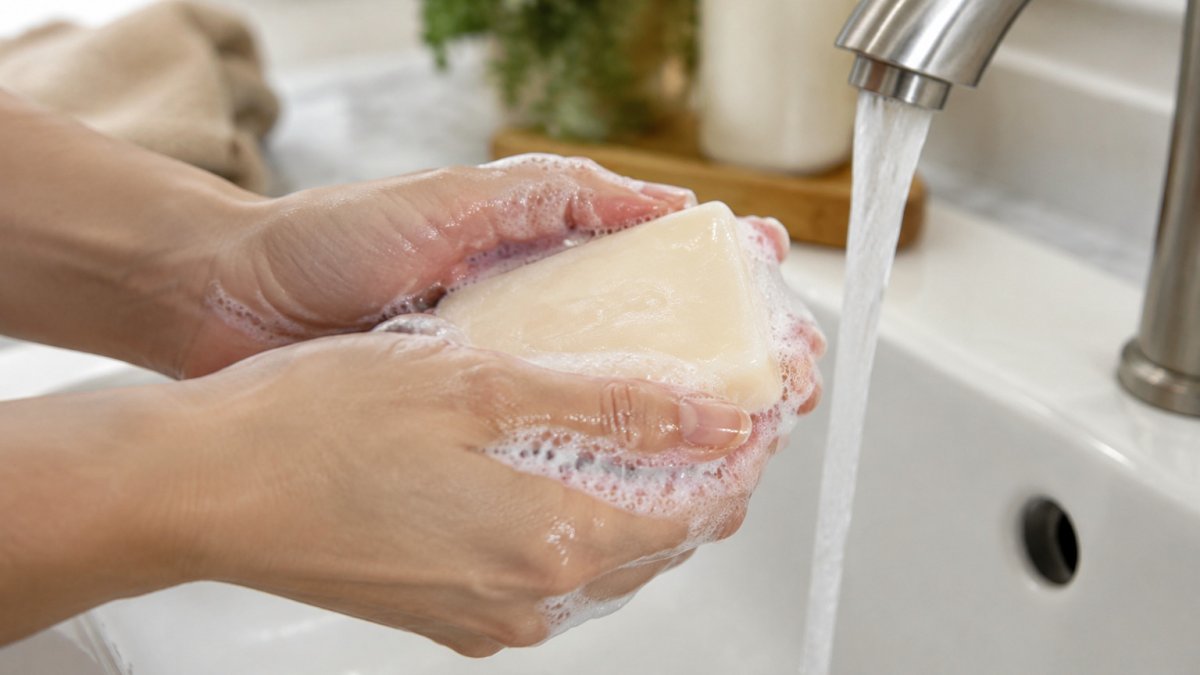
Using soap correctly matters as much as choosing the right product.
Start with a short trial period. Use the new soap once a day for a week, then increase gradually if your skin stays calm.
Choosing Your Gentle Facial Soap From The Beekeeper's Basket
If you are looking for a gentle, bee-inspired option, the glycerin soaps from The Beekeeper's Basket are made in small batches in New England. Our glycerin soaps are one option for readers who want a bee-inspired bar, and we suggest patch testing any new soap first. Visit our site to see the full collection and check ingredient details before you buy. Let's explore the options together and find the soap that suits your skin.
Frequently Asked Questions
Are natural soaps better for facial eczema than medicated cleansers?
Not automatically. Natural soaps can be gentle when they are fragrance-free, low in harsh surfactants and formulated for sensitive skin, but some natural soaps are alkaline and strip the skin barrier just as traditional bar soaps do. Medicated cleansers may be prescribed when a condition is active, and a dermatologist is the right person to decide between them. Read the ingredient list, patch test on a small area of the jawline for several days, and stop using any product that stings, burns or worsens redness.
What ingredients should I avoid in soap if I have facial eczema?
Avoid added fragrance, synthetic dyes, essential oils with high allergen potential, sulfates such as sodium lauryl sulfate, and parabens if you react to preservatives. Strong alcohols and exfoliating particles can also irritate facial skin during a flare. Fragrance is the most common culprit in product sensitivities, so choosing soaps labeled fragrance-free is a practical first filter. Keep a short list of ingredients that triggered reactions in the past and check every new label against it.
Can goat milk soap help with facial eczema?
Goat milk soap is one style of bar some people choose. It does not treat eczema or replace prescribed care. If you try it, choose an unscented version with a short ingredient list, use lukewarm water, and moisturize right after washing. Stop using it if your skin becomes more inflamed.
What should I wash my face with when I have eczema?
Use a mild, fragrance-free cleanser or soap-free wash with a near-neutral pH, rinse with lukewarm water, and pat skin dry rather than rubbing. Follow with a plain moisturizer containing emollients or humectants while skin is still slightly damp. Avoid scrubbing, hot water and frequent washing, which can increase dryness. If redness, cracking or oozing persists, see a dermatologist for a diagnosis and treatment plan.