 how-to
How to Choose the Right Body Lotion for Winter 2026
Table of Contents
- Why Winter Skin Needs a Different Body Lotion
- Body Lotion Ingredients for Dry Skin: What Actually Works
- Body Cream vs. Lotion for Dry Skin: Which Wins in Winter?
- How to Pick the Best Body Lotion for Dry Skin by Skin Type
- How to Moisturize Dry Skin in Winter: A Daily Routine
- Sensitive Skin Precautions and Patch Testing
- When Persistent Dryness Needs Medical Attention
- Conclusion
- Frequently Asked Questions
Last Updated: October 12, 2026
Why Winter Skin Needs a Different Body Lotion
Your summer lotion is not built for winter. That is the short answer to how to choose the right body lotion for winter in 2026. Cold outdoor air holds less moisture.
At The Beekeeper’s Basket, we make small-batch, bee-inspired body care in New England, so we know what a real winter does to skin. The dry indoor season can leave legs itchy, hands cracked, and skin feeling tight by mid-afternoon.
How Cold Air and Indoor Heating Strip Your Skin Barrier
Your skin barrier is the outer layer that holds water in and keeps irritants out. Cold air slows oil production. Indoor heating dries the air around you.
The result: tightness, flaking, and itch. A summer lotion may not be enough. In winter, you want a richer formula that supports the barrier, not just a light splash of moisture.
Body Lotion Ingredients for Dry Skin: What Actually Works
The best body lotion for dry skin pairs three ingredient types: humectants, emollients, and occlusives. Each does a different job. Together, they pull in moisture, soften skin, and seal it all in.
Look for these on the label:
- Humectants: glycerin, hyaluronic acid, sorbitol, aloe
- Emollients: ceramides, fatty acids, linoleic acid, linolenic acid
- Occlusives: beeswax, shea butter, oils that sit on top and lock water in
Humectants, Emollients, and Occlusives Explained
Humectants pull water into the skin. Emollients fill the gaps between skin cells so skin feels smooth. Occlusives form a seal that stops water from escaping.
A good winter lotion uses all three. A product with only humectants can actually dry you out more in low humidity, because it pulls water from deeper layers to the surface.
Ingredients to Avoid If You Have Sensitive Skin
Sensitive skin reacts to more than just "harsh chemicals." Watch for:
- Heavy synthetic fragrance
- Drying alcohols (denatured alcohol, isopropyl alcohol)
- Essential oils in high amounts
Fragrance is the most common trigger. If your skin stings or turns red after applying, stop using the product.
Body Cream vs. Lotion for Dry Skin: Which Wins in Winter?
For most people with dry winter skin, body cream beats lotion. Creams contain more oil and less water, so they seal in moisture longer. Lotions feel lighter but often need reapplication within a few hours.
Here is how they compare:
| Feature | Body Lotion | Body Cream |
|---|---|---|
| Oil-to-water ratio | More water | More oil |
| Texture | Lightweight | Rich, thicker |
| Absorption | Fast | Slower |
| Best for | Normal to slightly dry skin | Dry to very dry skin |
| Winter use | Daytime touch-ups | Morning and night |
Neither is "wrong." If your skin feels tight an hour after lotion, switch to a cream. If cream feels heavy, use lotion in the morning and cream at night.
How to Pick the Best Body Lotion for Dry Skin by Skin Type
Most guides hand you a list of ingredients and wish you luck. A faster approach is to answer three questions in order: how dry is your skin, how does it react, and how do you want the product to feel? Work through them in sequence and you will land on a formula class instead of guessing at labels.
Step 1: Grade Your Dryness
Run a finger down your shin and look at it under good light. Use this rough scale:
- Mild: Skin feels tight after a shower but looks normal within an hour. No flaking.
- Moderate: Visible flaking or a whitish, ashy cast on legs and arms. Itch appears in the evening.
- Severe: Cracking, deep itch, or rough patches that persist all day even after you moisturize.
Mild dryness usually responds to a lotion. Moderate dryness needs a cream. Severe dryness, or any cracking that bleeds, points to a cream or ointment plus a conversation with a clinician (more on that below).
Step 2: Check How Your Skin Reacts
Ask whether your skin has ever stung, turned red, or broken out after a product. If yes, treat yourself as sensitive and start with fragrance-free formulas and short ingredient lists. If no, you have more room to experiment with botanical oils and scented butters.
A useful rule: the more reactive your skin, the shorter the ingredient list should be. Fewer ingredients means fewer chances for a trigger.
Step 3: Decide How You Want It to Feel
This is the step most guides skip, and it is the one that determines whether you actually use the product. Rich formulas leave a film; light formulas disappear fast. Neither is better, they suit different moments.
- If you hate the feeling of product on your skin: choose a mid-weight lotion for daytime and a cream only at night, applied under long sleeves or socks.
- If you do not mind a film: a rich cream or ointment gives the longest protection and the fewest reapplications.
- If you apply on the go: a lotion in a pump bottle beats a tub of cream you have to scoop with clean hands.
The Decision Path, End to End
Putting the three steps together:
- Mild dryness, non-reactive skin, prefers light feel: lotion with glycerin and aloe, reapplied once midday.
- Mild dryness, reactive skin: fragrance-free lotion with colloidal oatmeal.
- Moderate dryness, non-reactive skin: cream with ceramides and shea butter, morning and night.
Lotion, Cream, or Ointment: The Real Difference
These three words are not marketing. They describe how much water is in the product.
- Lotion: mostly water, thin, absorbs fast, needs frequent reapplication.
- Cream: more oil than a lotion, thicker, seals longer, still spreadable.
- Ointment: almost no water, very thick, seals best, feels greasy and is best reserved for hands, feet, and cracked patches.
If your skin feels tight an hour after lotion, move up one step. If cream feels suffocating, move down one step. That single adjustment solves most winter skin complaints.
How to Moisturize Dry Skin in Winter: A Daily Routine
Winter dryness is not one problem. It is four problems stacking on top of each other: cold outdoor air holds less moisture, indoor heating drops the humidity further, hot water strips oil from your skin, and the barrier that normally holds water in gets weaker with each cycle. A routine only works if it addresses all four.
Why Winter Is Different: The Mechanism
Cold air has a lower capacity to hold water vapor, so the air outside pulls moisture from your skin.
Understanding that sequence tells you where to intervene: reduce water loss, replace oils, and stop stripping the barrier in the first place.
The Daily Routine
- Morning: lightweight lotion on arms and legs if you are dressing quickly; a cream if you have time to let it absorb.
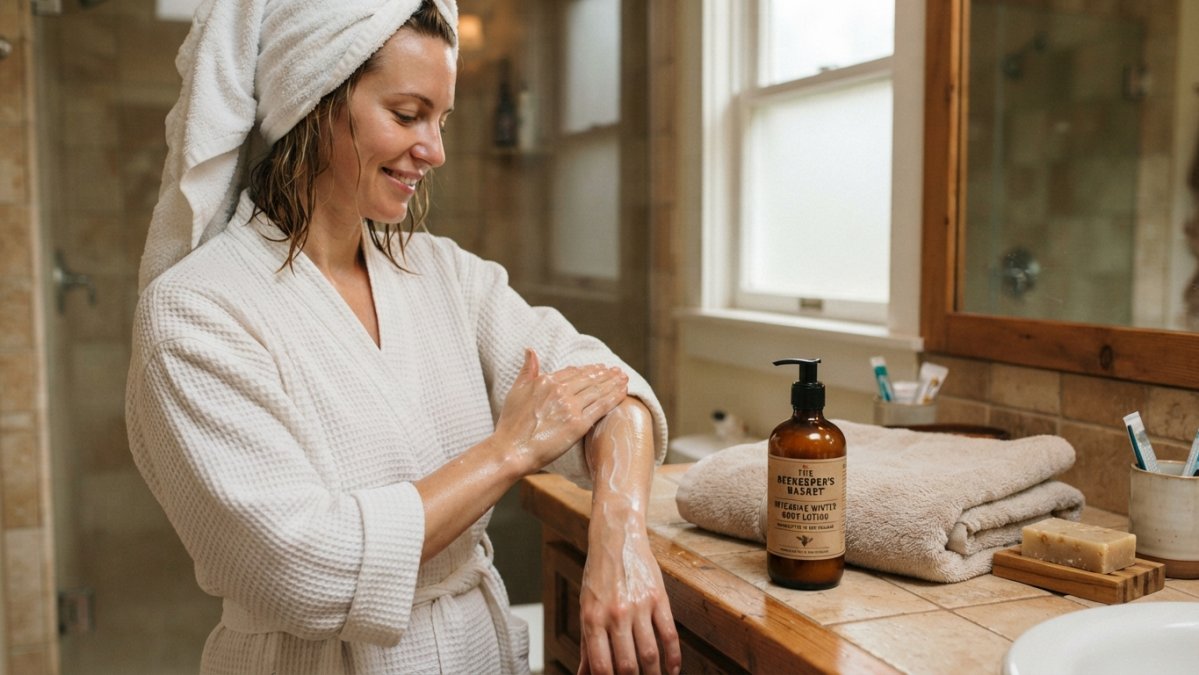
- Post-shower: cream on damp skin, head to toe, within a few minutes of toweling off.
- Before bed: richer cream or ointment on hands, feet, elbows, and any rough patches, then socks and gloves if the feel bothers you.
Bathing Habits That Make Lotion Work Harder
This is the part most routines get wrong. Lotion cannot outrun a hot shower.
- Lower the temperature. Warm water cleans just as well as hot water and strips far less oil. If the water is uncomfortable to hold your hand under, it is too hot for your skin.
- Shorten the shower. Five to ten minutes is enough. Long showers pull oil from the barrier the entire time you are in them.
- Use a gentle, fragrance-free cleanser. Bar soaps and heavily scented body washes leave the barrier more compromised than a mild syndet or cream cleanser.
The Damp-Skin Window
Applying lotion to damp skin is the single highest-leverage habit in a winter routine. Damp skin lets the product trap water that is already there instead of relying on the air around you, and in winter, the air around you is the problem. Towel off lightly, leave a little moisture on the skin, and apply within a few minutes.
Control the Air, Not Just the Skin
You can moisturize from the outside all winter and still lose ground if the room you sleep in is bone dry.
- Run a humidifier in the bedroom. Keeping indoor relative humidity in a comfortable mid-range reduces how much water your skin loses overnight.
- Do not crank the heat higher than you need. Every degree of extra heat pulls more moisture out of the air.
- Keep the bedroom cooler at night. A cooler room with a humidifier beats a hot, dry room for barrier recovery.
A Note on Cost Per Use
Price per bottle tells you very little. A cheap lotion you reapply four times a day can cost more per month than a richer cream you use twice. Compare cost per ounce, then factor in how often you actually reach for it. A product that sits unused because you dislike the feel is the most expensive option on the shelf.
Sensitive Skin Precautions and Patch Testing
Patch testing is the only reliable way to know if a product will irritate your skin. Apply a small amount to your inner forearm.
If nothing happens, test again on a small area of your face or leg. Still clear? You are likely safe to use it widely.
For sensitive skin, choose:
- Fragrance-free formulas
- Short ingredient lists
- Products with ceramides or colloidal oatmeal
If you react to a product, stop using it. Do not "push through" irritation.
When Persistent Dryness Needs Medical Attention
Some dryness is more than dry skin. See a doctor or dermatologist if you notice:
- Cracks that bleed or will not heal
- Severe itching that disrupts sleep
- Red, swollen, or weeping patches
These can point to eczema, psoriasis, or another condition that needs treatment, not just a richer cream. A doctor can tell the difference.
Conclusion
Winter skin needs more than a bigger scoop of your summer lotion. It needs the right ingredients, the right texture, and the right timing.
At The Beekeeper’s Basket, we make small-batch, bee-inspired body care with fresh ingredients and gentle formulas. Our handcrafted lotions and creams are made in New England, with over 20,000 sales and a 5-star rating behind them.
Frequently Asked Questions
What type of body lotion is best for winter?
Thicker formulas with occlusives like shea butter or beeswax work best for winter body lotion because they slow water loss from skin. Look for a cream or rich lotion with ceramides, glycerin, and fatty acids. Lightweight summer lotions often lack enough occlusive ingredients to handle cold air and indoor heating, so switch to a heavier texture from November through March.
Which ingredients should I look for in a body lotion for dry skin?
Prioritize three categories: humectants like glycerin, hyaluronic acid, and sorbitol to pull water into skin; emollients such as fatty acids, linoleic acid, and botanical oils to soften rough patches; and occlusives like beeswax, ceramides, and shea butter to seal moisture in. Urea and aloe also help soothe irritation. Avoid heavy fragrance and alcohol if your skin is reactive.
Is cream or lotion better for winter-dry skin?
Cream is usually better for winter-dry skin because it contains more oil and occlusive ingredients, which form a stronger barrier against cold air and indoor heating. Lotion has higher water content and absorbs faster, making it a good choice for normal skin or daytime touch-ups. If you have flaking, tightness, or cracking, choose a body cream over a lotion.
How often should I apply body lotion in winter?
Apply body lotion at least once daily, ideally within three minutes of showering while skin is still damp. If your skin feels tight by midday, add a second application. People with very dry or mature skin often benefit from twice-daily use, morning and night. Keep a tube near your desk or bedside for quick reapplication on hands and elbows.
Choosing the right body lotion for winter comes down to your skin type, the ingredients, and how you apply it. If you want a handcrafted, small-batch option made with fresh ingredients, The Beekeeper’s Basket has you covered. Explore our bee-inspired lotions and creams, made in New England with care in every batch. LET'S EXPLORE!