 ultimate-guide
Natural Preservatives in Skincare Safety: A 2026 Guide
Table of Contents
- Why Natural Preservatives in Skincare Safety Matter
- Natural Preservatives for Skincare: What Actually Works
- Preservative-Free Skincare Safety: What You Need to Know
- Homemade Lotion Preservatives: A Practical Guide
- Cosmetic Product Microbial Testing and Challenge Tests
- Regulatory Limits and Labeling for Skincare Preservatives
- Conclusion: Making Informed Choices for Safe Skincare
- Frequently Asked Questions
Last Updated: October 15, 2026
Why Natural Preservatives in Skincare Safety Matter
Natural preservatives in skincare safety matter to anyone who makes or buys water-based lotions and creams.
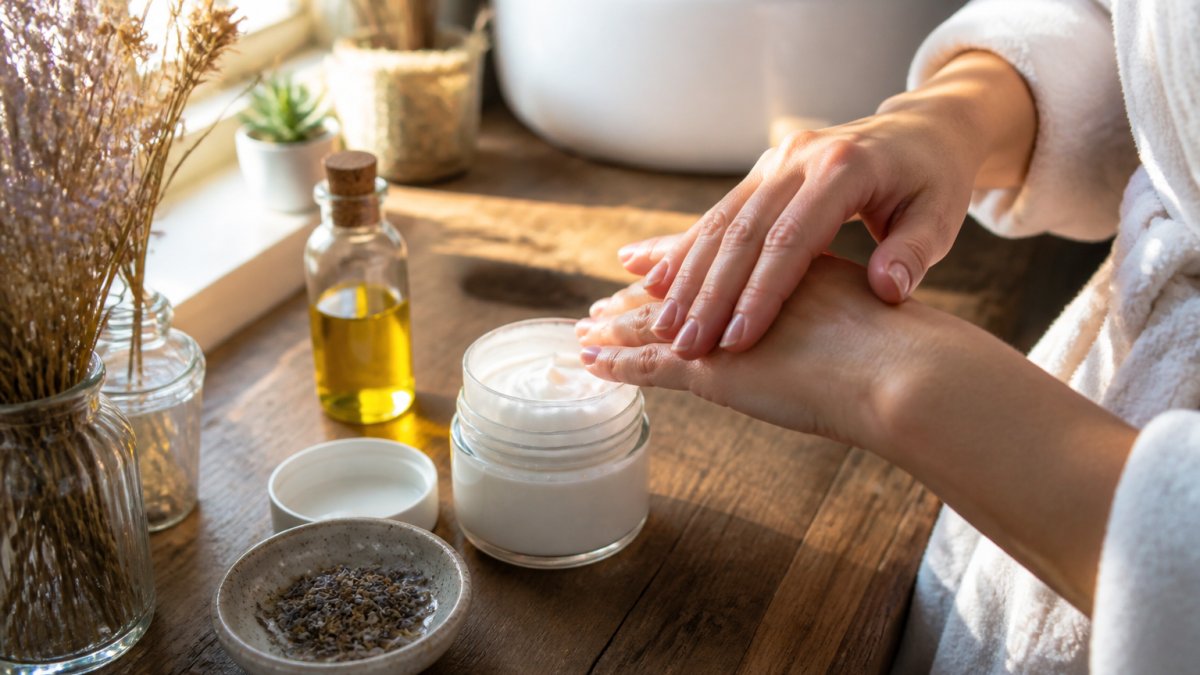
The core tension: a water-containing product can grow bacteria, yeast, and mold.
The FDA guidance on cosmetic safety and labeling treats cosmetics as products that must be safe under normal use, and microbial contamination is one of the reasons.
That is why "preservative-free" is not automatically safer, it is a trade-off, and this guide explains what it costs.
Natural Preservatives for Skincare: What Actually Works
Natural preservatives for skincare fall into two groups: organic acids and salts, and plant extracts or essential oils. Neither is automatically broad-spectrum, meaning neither alone reliably stops bacteria, yeast, and mold at once.
Broad-spectrum protection is the goal; a system that only stops bacteria leaves yeast and mold free to grow.
| Preservative | Type | Works Against | Main Limitation |
|---|---|---|---|
| Potassium sorbate | Organic salt | Mold, yeast | Weak against bacteria |
| Sodium benzoate | Organic salt | Bacteria, yeast | Needs acidic pH to work |
| Phenoxyethanol | Synthetic | Broad-spectrum | Restricted in some markets |
| Vitamin E (tocopherol) | Antioxidant | Oxidation only | Not antimicrobial |
| Rosemary extract | Antioxidant | Oxidation only | Not antimicrobial |
| Grapefruit seed extract | Variable | Inconsistent | Often contains synthetic preservatives |
That table explains why so many "all-natural" lotion recipes fail within weeks.
Organic Acids and Salts
Potassium sorbate and sodium benzoate are the workhorses of natural-leaning preservation. Potassium sorbate fights yeast and mold but is weak against bacteria. Sodium benzoate handles bacteria and yeast but needs an acidic environment, typically below pH 5.
That pH requirement is where most homemade formulas break: a cream drifting above pH 5 can lose most of its preservative activity, even at the correct usage rate.
Plant Extracts and Essential Oils
Plant extracts and essential oils are the most misunderstood category. Vitamin E and rosemary extract are sold as "natural preservatives" but are antioxidants, not antimicrobials: they slow rancidity in oils but do not stop bacteria, yeast, or mold in a water-based product.
Grapefruit seed extract is a separate problem: independent testing has repeatedly found commercial versions often contain synthetic preservatives such as benzethonium chloride, which provides the actual antimicrobial effect, the opposite of what you want if avoiding synthetics.
Preservative-Free Skincare Safety: What You Need to Know
Preservative-free skincare safety depends on water content and packaging. The rule: if a product contains water, it needs preservation or must be used immediately and refrigerated.
Legitimate preservative-free options exist. Anhydrous products, balms, salves, oil-based serums, contain no water and do not support microbial growth like emulsions do, while single-use ampoules and airless packaging limit air and finger contact.
Be skeptical of a water-based lotion in a wide-mouth jar labeled preservative-free with a long shelf life, those three things cannot all be true at once.
For sensitive skin, preservatives are usually not the main irritant, fragrance, essential oils, and certain plant extracts cause more reactions.
Homemade Lotion Preservatives: A Practical Guide
Step 1: Decide if your formula contains water. If it does, you need a preservative system.
Step 3: Check your pH. Aim for your preservative's range, typically below pH 5 for benzoate-based systems.
Step 4: Measure by weight, not drops. Usage rates are given as a percentage of total formula weight.
Step 5: Package to minimize contamination. Airless pumps and narrow-mouth bottles beat open jars every time.
Step 6: Test before you trust. More on this below.
- Confirm the formula contains water
- Select a broad-spectrum preservative system
- Verify pH falls in the effective range
Cosmetic Product Microbial Testing and Challenge Tests
Cosmetic product microbial testing is the only way to know whether a preservative system works in your formula; ingredient lists, pH strips, and smell tests cannot establish protection. A challenge test (preservative efficacy test, or PET) is the standard method, and the gap most natural-preservative guides skip.
How a Challenge Test Works
A laboratory deliberately introduces known strains of bacteria, yeast, and mold into the finished product, then measures whether the preservative system kills them and keeps them from returning. The typical panel includes:
- Bacteria: Staphylococcus aureus, Escherichia coli, Pseudomonas aeruginosa
- Yeast: Candida albicans
- Mold: Aspergillus brasiliensis (formerly A. niger)
Those five organisms represent the contamination risks most relevant to water-based cosmetics: skin flora, fecal-route bacteria, opportunistic water-borne bacteria, and common spoilage yeast and mold. A lab inoculates the product with each, then re-samples at intervals, commonly day 0, 7, 14, and 28, and counts survivors.
What Passing and Failing Actually Mean
Acceptance criteria vary by lab and standard, but the logic is consistent: bacteria must drop sharply within the first days and stay down, while yeast and mold must be reduced and must not increase.
A challenge test is run on the finished formula, not the preservative alone, because performance depends on the whole system: pH, water activity, oil phase, emulsifier, chelators, packaging, and other ingredients.
Why Home Tests Cannot Substitute
A common DIY pattern is to "test" preservation by leaving a jar on the counter and watching for mold. That is not a test: contamination is often invisible, and a spoiled lotion can look, smell, and feel normal while harboring organisms above safe levels. Visible mold is a late-stage signal. No home method substitutes for controlled inoculation and counting.
Cost and Practical Reality
A challenge test from an accredited lab typically runs a few hundred dollars per formula, and many labs offer a lower-priced screening version before a full panel. For a small-batch maker, that is the cheapest insurance available, far less than a recall, a refund wave, or a customer infection. If you reformulate, new preservative, pH, packaging, or oil phase, you generally need to re-test.
What to Look For as a Buyer
If you are buying rather than making, look for brands that speak specifically about their preservative system and testing. Vague claims like "naturally preserved" or "preservative-free" without detail are a yellow flag, especially on a water-based product in a wide-mouth jar with a long shelf life.
FDA's page on cosmetic product safety and the Personal Care Products Council both point formulators toward established safety and testing practices, and the Cosmetic Ingredient Review expert panel publishes the ingredient-level safety assessments that underpin many preservative usage limits.
Regulatory Limits and Labeling for Skincare Preservatives
Regulatory limits and labeling for skincare preservatives vary by market, and getting this wrong can make a product illegal to sell. This is the section most natural-preservative guides skip, and the one that most often trips up small-batch makers selling beyond their home market.
The Framework in the United States
In the United States, the FDA's regulatory information on cosmetics sets the framework, and preservative usage rates are generally governed by the safety assessments published by the Cosmetic Ingredient Review. The FDA does not pre-approve cosmetic preservatives the way it approves food additives or drugs; instead, it holds manufacturers responsible for safety under normal use, and it can act against products that are adulterated or misbranded.
Two practical rules apply almost everywhere:
- Stay within the published usage limit for each preservative. More is not safer; it increases irritation risk and can push a formula out of compliance.
- Label accurately. Ingredients must be listed, and "preservative-free" claims must be true of the formula, not just the marketing.
Concentration Limits Are Ingredient-Specific
There is no single "safe" percentage for preservatives. Each has its own limit, often depending on product type: a preservative permitted at one concentration in a rinse-off product may be restricted to a lower concentration in a leave-on product, because leave-on products stay in contact with skin longer. Copying a usage rate from a forum post or old recipe is risky, the rate may be legal for a body wash and illegal for a face cream.
A few patterns are worth knowing:
- Organic acids and salts such as potassium sorbate and sodium benzoate have established limits, and their effectiveness is pH-dependent, so the limit and the working pH have to be considered together.
- Phenoxyethanol, a common synthetic broad-spectrum preservative, has a defined limit in most markets and is restricted or limited differently depending on product type and market.
- Essential oils and plant extracts used for preservation are not exempt from limits. Many have their own restrictions, and some are restricted for fragrance or sensitization reasons even when used at low levels.
Labeling Rules That Matter
Labeling is where marketing and regulatory language collide. In the United States, ingredients must be declared in descending order of concentration above a threshold, and preservatives must appear even in small amounts. A product cannot hide a synthetic preservative behind a "natural" claim if the ingredient is in the formula.
"Preservative-free" is a claim, not a category. If a product contains water and no preservative, the claim may be technically true but the product still has to be safe under normal use, and a water-based product with no preservation and a long shelf life is a safety problem, not a marketing win.
How Limits Differ Across Markets
The same formula can be legal in one market and non-compliant in another. The European Union maintains a positive list of permitted preservatives with maximum concentrations, and several preservatives allowed in the U.S. are restricted or prohibited there. Other markets keep their own lists and labeling formats. If you sell internationally, check the destination market's rules before you ship.
A Practical Compliance Checklist
- Identify every preservative in the formula, including those hiding inside "natural" extracts
- Confirm the usage rate is within the limit for your product type
- Confirm the working pH is compatible with the preservative's effective range
Conclusion: Making Informed Choices for Safe Skincare
The challenge with natural preservation is that "natural" and "safe" are not the same thing, and neither is "preservative-free." Water-based products need a working, broad-spectrum preservative system, and the only way to confirm yours works is testing.
That is why we make our soaps, lotions, and beeswax melts in small batches in New England, with freshness and quality built into every step, so we can control our formulas closely and tell you honestly what is in them.
If you have sensitive skin and want body care made with care rather than guesswork, explore our collection.
LET'S EXPLORE!
Frequently Asked Questions
What is the safest natural preservative for cosmetics?
There is no single safest option, as efficacy and safety depend on your formulation. Potassium sorbate and sodium benzoate are widely used food-grade preservatives that can work in water-based products when combined with the right pH. Plant extracts like rosemary extract are antioxidants, not broad-spectrum antimicrobials, so they cannot prevent microbial growth alone. Always check that your chosen preservative has a broad-spectrum protection claim and is used at the recommended usage rate for your specific product.
Are natural preservatives as effective as synthetic preservatives?
Natural preservatives can be effective, but they often have a narrower spectrum of activity and may be more sensitive to pH and ingredient compatibility. Synthetic preservatives like phenoxyethanol are designed for broad-spectrum protection against bacteria, yeast, and mold. A well-formulated natural system can pass a challenge test, but it requires careful selection and testing. Efficacy depends on the specific preservative, concentration, and formulation, not just its origin.
Can skincare products without preservatives be safe?
Anhydrous products, which contain no water, are generally safe without preservatives because bacteria, yeast, and mold need water to grow. Water-based products like lotions and creams, however, are at high risk of microbial contamination. Preservative-free skincare safety relies on careful packaging, refrigeration, and short shelf life. For homemade lotions, skipping preservatives can lead to rapid spoilage and potential skin infections. Always assess the water content and storage conditions.
How can you tell whether a natural skincare product is properly preserved?
Check the label for a broad-spectrum preservative system and a challenge test claim, which indicates the product was tested against microorganisms. Look for a PAO (period after opening) symbol, typically 6M or 12M, to know how long it is safe after opening. Signs of poor preservation include changes in color, smell, or texture, or visible mold. Reputable small-batch makers often list their preservative system and testing practices.
What are the risks of using homemade skincare without a preservative?
Homemade lotions and creams made with water, aloe, or hydrosols can become breeding grounds for bacteria, yeast, and mold within days. Contaminated products can cause skin irritation, acne, or serious infections, especially on broken skin. Even refrigeration only slows growth. If you make water-based products, use a tested preservative at the correct usage rate and follow good manufacturing practices. For anhydrous balms and oils, no preservative is needed.
Do oil-based skincare products need preservatives?
No, purely oil-based or anhydrous products do not need preservatives because they contain no water. Without water, bacteria, yeast, and mold cannot grow. However, if you introduce water at any point, such as wet hands or a damp environment, contamination risk increases. Keep oil-based products dry and store them away from humidity. Antioxidants like vitamin E can be added to prevent rancidity, but they are not preservatives.
Can natural preservatives cause skin irritation or allergies?
Yes, some natural preservatives can cause irritation or allergic reactions, especially essential oils and plant extracts. For example, cinnamon and citrus oils are common sensitizers. Even gentle options like potassium sorbate can irritate sensitive skin in higher concentrations. Always patch test new products, and if you have sensitive skin, choose preservatives with a low sensitization profile. The Beekeeper’s Basket formulates with sensitive skin in mind, using gentle ingredients and small batches for freshness.