 blog
blog
Order Small Batch Artisan Soap: 2026 Buying Guide
Table of Contents
- Why Small Batch Artisan Soap Beats Mass-Produced Bars
- The Benefits of Cold Process Soap for Your Skin
- Best Natural Soaps for Dry Skin: What to Look For
- How to Store Handmade Soap So It Lasts Longer
- Ingredient Transparency and Sustainability: What to Check Before You Order
- How to Order Small Batch Artisan Soap: Shipping, Gifting, and Seasonal Drops
- Frequently Asked Questions
Last Updated: September 13, 2026
Why Small Batch Artisan Soap Beats Mass-Produced Bars
When you order small batch artisan soap, you're buying something fundamentally different from a drugstore bar. Mass-produced soap is manufactured months or years before it reaches your shower, often stripped of the glycerin that makes soap gentle. Small batch artisan soap is made in limited runs, cured slowly, and shipped fresh. This guide covers what separates the two, how to match a bar to your skin type, and how to order with confidence.
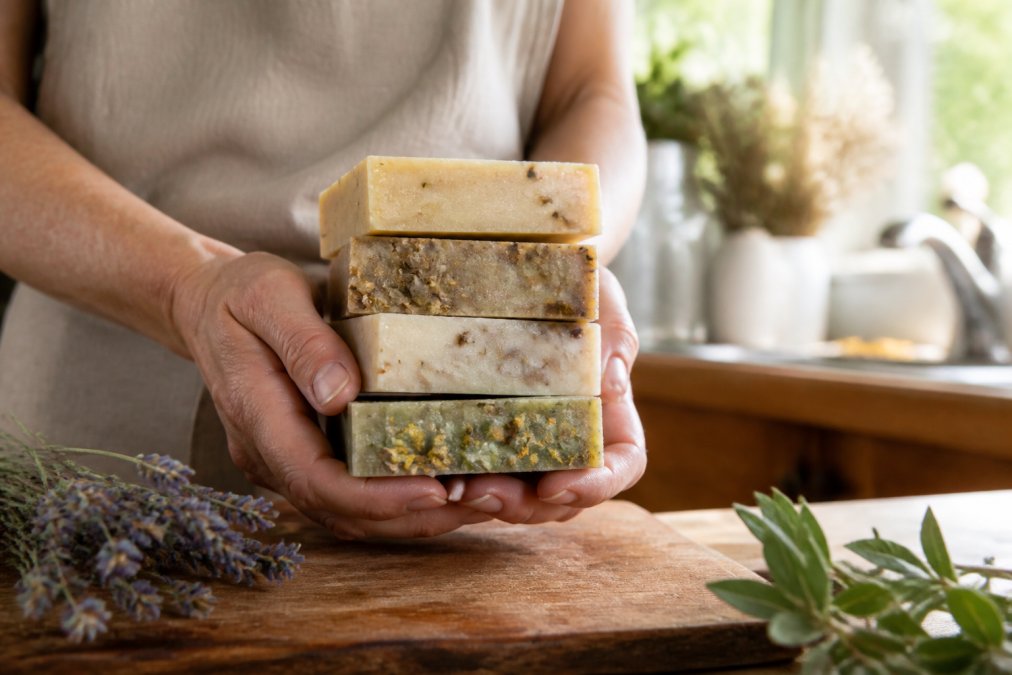
The difference comes down to two things: freshness and what's actually in the bar.
The Freshness Factor: Made in Small Batches
Small batch production means a maker pours a limited number of bars at a time, often by hand, then cures them for weeks before selling. A bar made last month behaves differently on your skin than one warehoused for two years: the scent is brighter, the lather creamier, and the ingredients haven't degraded.
Mass-produced bars prioritize shelf stability over freshness. Artisan bars prioritize the opposite.
What You're Actually Paying For
The higher price of handmade soap reflects labor, quality ingredients, and time. A cold process bar can take four to six weeks to cure before it's ready to sell (soapguild.org). That's weeks of a maker's space, attention, and materials tied up in a product that hasn't earned a cent yet.
You're also paying for real oils and butters instead of the cheapest fat, and for essential oil scent rather than synthetic fragrance. Cheaper bars cut corners on all three.
The Benefits of Cold Process Soap for Your Skin
Cold process soap is made by mixing oils with lye and letting the mixture saponify naturally, without external heat. This slow reaction preserves the natural glycerin that forms during saponification, a moisturizer most commercial manufacturers extract and sell separately. The result is a bar that cleans without stripping your skin.
Glycerin: The Natural Moisturizer
Glycerin is a humectant, drawing moisture toward your skin rather than pulling it away. In cold process soap it stays in the bar as a natural byproduct of the oils-and-lye reaction. Commercial soapmakers often remove it to sell separately, which is why mass-produced bars can leave skin feeling tight.
Saponification and Curing: Why Time Matters
Saponification is where oils and lye convert into soap and glycerin. Once that finishes, bars still need to cure, usually four to six weeks. Curing evaporates excess water, hardens the bar, and produces a milder, longer-lasting soap. Skip it and you get a soft bar that dissolves quickly and can feel harsh.
A properly cured bar lasts noticeably longer in the shower. That's not marketing; it's water content.
Best Natural Soaps for Dry Skin: What to Look For
The best natural soaps for dry skin share a few traits: high proportions of moisturizing oils, no synthetic detergents, and gentle cleansing rather than heavy lather. If your skin feels tight or itchy after washing, the bar is doing too much.
Look at the ingredient list first. Oils and butters should appear near the top.
Key Ingredients: Shea Butter, Olive Oil, and Botanicals
Shea butter and olive oil are the workhorses of dry-skin soap. Shea is rich and creamy, leaving a protective feel; olive oil produces a gentle, low-lather bar favored for sensitive skin. Botanicals like oatmeal, calendula, and honey add soothing properties without harsh additives.
American Academy of Dermatology guidance on bathing and dry skin recommends short, lukewarm showers and gentle, fragrance-free cleansers to protect the skin barrier, which is exactly where a mild cold process bar fits.
Skin Type Matching Guide
Not every artisan bar suits every skin type. Use this quick reference before you order:
| Skin Type | Look For | Avoid |
|---|---|---|
| Dry | Shea butter, olive oil, honey | High-coconut-oil bars |
| Sensitive | Fragrance-free, oatmeal, calendula | Essential oil blends |
| Oily | Charcoal, clay, tea tree | Heavy butters |
| Combination | Balanced olive and coconut oils | Single-oil formulas |
| Normal | Any well-cured cold process bar | Overly stripping bars |
When in doubt, start with an unscented bar and add scent once you know how your skin responds.
How to Store Handmade Soap So It Lasts Longer
Knowing how to store handmade soap is the difference between a bar that lasts three weeks and one that lasts three months. Handmade soap has no synthetic hardeners, so it absorbs moisture and dissolves faster if it sits in a puddle. Keep it dry between uses.
Caring for Your Bars: Tips for Longevity
- Use a draining soap dish so water runs off instead of pooling underneath
- Keep bars away from direct shower spray
- Store unused bars in a cool, dry place, not a humid bathroom cabinet
- Let a new bar air-dry for a few days before first use if it feels soft
- Cut large bars in half and rotate them so one cures while the other is in use
A common mistake is stacking spare bars in a sealed plastic bin. They need airflow, not a sealed container.
Ingredient Transparency and Sustainability: What to Check Before You Order
Transparency is the fastest way to tell a real small-batch maker from a reseller. A genuine artisan soapmaker can tell you what oils are in the bar, where they source them, and roughly when the batch was made. If a shop can't answer, that's your signal.
But transparency isn't just a list of ingredients. It's an explanation of why each one is there. Most soap sites print an INCI list and stop. The makers worth reordering from tell you what each oil actually does in the bar.
A Short Glossary of What's Actually in the Bar
Use this to read any ingredient label like a maker, not a shopper:
| Ingredient | What it does in the bar | Trade-off to know |
|---|---|---|
| Olive oil | Gentle, low-lather, mild on sensitive skin | High percentages make a softer bar that needs a longer cure |
| Coconut oil | Big, fluffy lather and cleansing power | Above roughly 25-30% of the recipe it can feel drying |
| Shea butter | Rich, creamy, protective feel | Can slow trace and soften the finished bar if overused |
| Cocoa butter | Adds hardness and a stable, long-lasting bar | Can feel waxy if it dominates the recipe |
| Castor oil | Boosts lather stability and bubble size | More than a small percentage makes bars sticky |
| Lye (sodium hydroxide) | The alkali that turns oils into soap | None remains after a full cure, it's consumed in saponification |
| Glycerin | Humectant that draws moisture to skin | A natural byproduct, not an added ingredient in true cold process |
| Essential oils | Scent and some aromatherapy properties | More expensive and less stable than synthetic fragrance; can irritate sensitive skin |
| Fragrance oil | Strong, consistent scent at lower cost | Synthetic; some buyers avoid it for sensitivity reasons |
| Oatmeal, calendula, honey | Soothing, exfoliating, or humectant additives | Botanicals can shorten shelf life if not fully dried |
Two things to notice. First, the same oil can be a benefit or a problem depending on percentage, a bar that's 40% coconut oil behaves very differently from one that's 20%. Second, lye appears on every true soap label and is not a red flag; a properly cured bar contains none of it.
Vegan, Cruelty-Free, and Organic Standards
Vegan soap contains no animal-derived ingredients like tallow, honey, beeswax, or milk. Cruelty-free means no animal testing at any stage. Organic refers to how ingredients were grown, a claim worth verifying. Check the label for specific certifications rather than a tagline.
A practical shortcut: if a bar claims vegan but lists honey or beeswax, the claim is wrong. If it claims organic but can't name a certifying body, treat it as marketing.
Sustainability Impact Metrics: What to Actually Compare
Sustainability claims are easy to make and harder to prove. Compare small-batch and mass-produced bars on four measurable dimensions:
- Packaging. Plastic-free options, paper wraps, compostable boxes, or bare bars, keep material out of the waste stream. U.S. Environmental Protection Agency information on reducing household waste outlines how packaging choices affect what ends up in landfills. A bar wrapped in paper and shipped in a paper mailer avoids the plastic film and pump bottles that dominate commercial soap aisles.
- Overstock and waste. Small-batch makers produce to demand, so unsold inventory is limited. Mass-market production runs on forecasts, and unsold bars get discounted, donated, or discarded. Ask a maker how they plan batch sizes.
- Shipping footprint. Concentrated, solid, water-free bars weigh less and take less space than liquid body wash, which is mostly water. That means fewer trucks and lower emissions per wash. Buying several bars in one order spreads the shipping footprint across more uses.
- Ingredient sourcing. Locally or regionally sourced oils cut transport distance. A maker who can name their supplier is usually a maker who has thought about this.
None of these are absolutes, a plastic-wrapped artisan bar can still beat a bottled body wash on total footprint, and a paper-wrapped bar shipped across the country isn't automatically greener than a local commercial one. Compare on specifics, not slogans.
How to Order Small Batch Artisan Soap: Shipping, Gifting, and Seasonal Drops
When you order small batch artisan soap, timing matters more than with mass-market products. Because batches are limited, popular scents sell out and restock on a schedule. Plan ahead to avoid scrambling during the holidays.
Match the Bar to the Person Before You Match the Scent
The hardest part of ordering soap for someone else isn't the scent, it's picking a bar their skin will tolerate. Use this before you add anything to a cart:
| If their skin is... | Order a bar built around... | Skip bars heavy in... |
|---|---|---|
| Dry or flaky | Shea butter, olive oil, honey, cocoa butter | High-coconut-oil recipes |
| Sensitive or reactive | Fragrance-free, oatmeal, calendula | Essential oil blends, strong fragrance oils |
| Oily or breakout-prone | Charcoal, clay, tea tree | Heavy butters like shea at high percentages |
| Combination | Balanced olive and coconut oils | Single-oil formulas |
| Normal | Any well-cured cold process bar | Overly stripping, high-detergent bars |
When you're unsure, order an unscented bar first. Scent is the easiest variable to add later and the hardest to undo if it irritates.
Read the Listing Like a Maker
Before you check out, scan the product page for four things:
- A full ingredient list in order. Oils and butters should appear near the top, not buried under fragrance.
- A cure date or batch date. A maker who dates their batches is a maker who tracks freshness.
- Coconut oil position. If it's the first oil listed, expect a cleansing, potentially drying bar, great for oily skin, rough on dry skin.
- Packaging description. Paper, compostable, or plastic-free tells you the maker thought past the bar itself.
If a listing has none of these, that's information too.
Shipping and Delivery Information
Small-batch shops typically ship within a few business days, but curing schedules affect availability. A bar still in its four-to-six-week cure isn't ready to ship no matter what the listing says. If you need a gift by a specific date, order early and confirm the shop's processing window, for seasonal gifts, buy before the rush.
Two practical notes: solid soap bars ship without the leak risk of liquid body wash, so they travel well; and ordering several bars at once spreads the shipping cost and footprint across more uses.
Seasonal Soap Collections and Gift Sets
Seasonal drops are where small-batch soap shines. Limited-run scents paired with matching lotions or beeswax melts make thoughtful, non-generic gifts, and gift sets solve the hardest part of buying soap for someone else: choosing a scent.
A gift set built around a skin type, a fragrance-free oatmeal bar for a sensitive-skin friend, a charcoal bar for oily skin, lands better than a random assortment of pretty scents. Pair it with a draining soap dish and you've given the two things that extend a bar's life: a good soap and a place to keep it dry.
At The Beekeeper's Basket, our soaps, lotions, and beeswax melts are made in small batches, so what you order is fresh and thoughtfully put together. With over 20,000 sales and a 5-star rating, we've built our shop around freshness and quality.
Frequently Asked Questions
What are the benefits of using small batch artisan soap?
Small batch artisan soap is made in limited quantities, which means fresher bars with natural glycerin retained. The cold process method preserves moisturizing qualities, and ingredients like shea butter and olive oil nourish skin without harsh chemicals. Because each batch is carefully crafted, you get consistent quality and a product that is gentle on sensitive skin.
Is small batch soap better for dry skin?
Yes, small batch soap is often better for dry skin because it retains natural glycerin, a humectant that attracts moisture. Many mass-produced soaps strip glycerin and add synthetic detergents. Look for bars with shea butter and olive oil. If you have sensitive skin, patch-test first and choose unscented or gentle botanical options.
How should you store handmade soap to make it last longer?
Keep handmade soap in a dry, ventilated area away from direct water. Use a draining soap dish so the bar dries between uses. If you buy in bulk, store unused bars in a cool, dark place wrapped in paper or cloth, not plastic. This prevents moisture buildup and helps the soap cure further, extending its life for months.
How can you tell if soap is truly handmade?
Truly handmade soap often has uneven edges, a rustic texture, and may show natural color variations from botanicals. Check the ingredient list for recognizable items like olive oil, shea butter, and essential oils rather than synthetic detergents. Authentic makers share their process and batch dates. If a brand cannot explain its sourcing or production, be cautious.
Buying soap shouldn't feel like a gamble, especially when your skin is sensitive or you're choosing a gift for someone you care about. The Beekeeper's Basket makes it simpler: every bar is handcrafted in small batches, made with skin-nourishing ingredients, and shipped fresh from our New England shop. Explore our collection of artisan soaps, lotions, and beeswax melts, and find a scent that fits your routine. Let's explore.