 ultimate-guide
Why Is Artisan Soap Expensive? The Real Cost Breakdown
Table of Contents
- What Makes Artisan Soap Expensive: The Real Cost Breakdown
- Raw Ingredients: Quality Tiers and Sourcing Costs
- Why Cold Process Soap Costs More to Make
- The Hidden Price of Curing Time and Small Batches
- The Benefits of Natural Handmade Soap for Your Skin
- Regulatory Compliance and the Cost of Safety
- Best Natural Soaps for Dry Skin: Choosing Your Bar
- How to Store Handmade Soap to Make It Last
- Frequently Asked Questions
Last Updated: September 7, 2026
What Makes Artisan Soap Expensive: The Real Cost Breakdown
The question of what makes artisan soap expensive comes down to a fundamental difference: mass-produced bars are manufactured in minutes by machines, while artisan soap is crafted in small batches by hand over several weeks. At The Beekeeper’s Basket, we craft every bar in small batches in New England.
Artisan soap is expensive because the cost of goods sold includes high-quality raw materials, labor-intensive production, extended curing time, and regulatory compliance that commercial detergent bars never face. Below, we break down each cost layer.
Raw Ingredients: Quality Tiers and Sourcing Costs
The ingredient list is where the price gap begins. Commercial soap bars rely on synthetic detergents because they are inexpensive to produce in bulk. Artisan soap makers prioritize skin-friendly oils like shea butter, olive oil, and coconut oil that nourish the skin barrier rather than strip it.
Ingredient quality falls into distinct tiers, and the gap between them is significant.
| Ingredient Tier | Examples | Cost Profile | Skin Impact |
|---|---|---|---|
| Commodity base | Palm oil, tallow | Low | Basic cleansing |
| Premium plant oils | Olive oil, coconut oil | Moderate | Moisturizing properties |
| Luxury butters & oils | Shea butter, avocado oil | High | Deep nourishment |
| Scent source | Synthetic fragrance oils | Low | Potential irritation |
| Natural scent | Pure essential oils | High | Skin-friendly, aromatherapy |
The Price Isn't Just 'Olive Oil', It's the Grade
A common misconception is that all olive oil is the same. In soap making, the grade of oil dramatically changes the cost and the final quality of the bar.
- Pomace Olive Oil: This is the cheapest grade, extracted from the leftover pulp after the first press. It's often used in commercial soaps because it's inexpensive. It produces a bar that cleanses but offers minimal skin benefits.
- Pure or Refined Olive Oil: A mid-tier option that has been processed to remove impurities. It's a step up from pomace and is a common choice for budget-friendly artisan bars.
- Extra Virgin Olive Oil (EVOO): The highest grade, cold-pressed from the first pressing of the olives. It retains more of its natural antioxidants and vitamins. Using EVOO in soap is a premium choice that significantly raises the raw material cost per batch.
The difference between pomace and extra virgin can be several dollars per pound. For a small batch that uses a significant percentage of olive oil, this grade difference alone can shift the cost per bar by a dollar or more.
Sourcing and Supply Chain Realities
Beyond the grade, the sourcing model matters. A large commercial manufacturer buys oils by the railcar, driving the per-pound cost down to pennies. An artisan maker typically purchases from a specialty supplier in 5-gallon pails or 35-pound boxes, paying a premium for smaller quantities.
Many artisan makers also prioritize ethically sourced and certified organic ingredients. These certifications require audits and fees for suppliers, which are passed down the chain, a cost absent from mass-market supply chains.
The Real Cost of Scent
Pure essential oils can cost many times more than their synthetic counterparts. When you see a price per bar that seems high, check the label: natural ingredients and genuine essential oils justify much of that number.
For example, a pound of synthetic fragrance oil might cost $5 to $10. A pound of a high-quality essential oil, like rose otto or sandalwood, can cost hundreds of dollars. Even a more common essential oil like lavender or peppermint will cost $30 to $60 per pound. Because a soap recipe might use 1-2 ounces of scent per pound of oils, the scent cost alone can add $2 to $5 to the cost of a single artisan bar.
Why Cold Process Soap Costs More to Make
The most common method for artisan soap is cold process, which relies on saponification, the chemical reaction between oils and lye that creates soap.
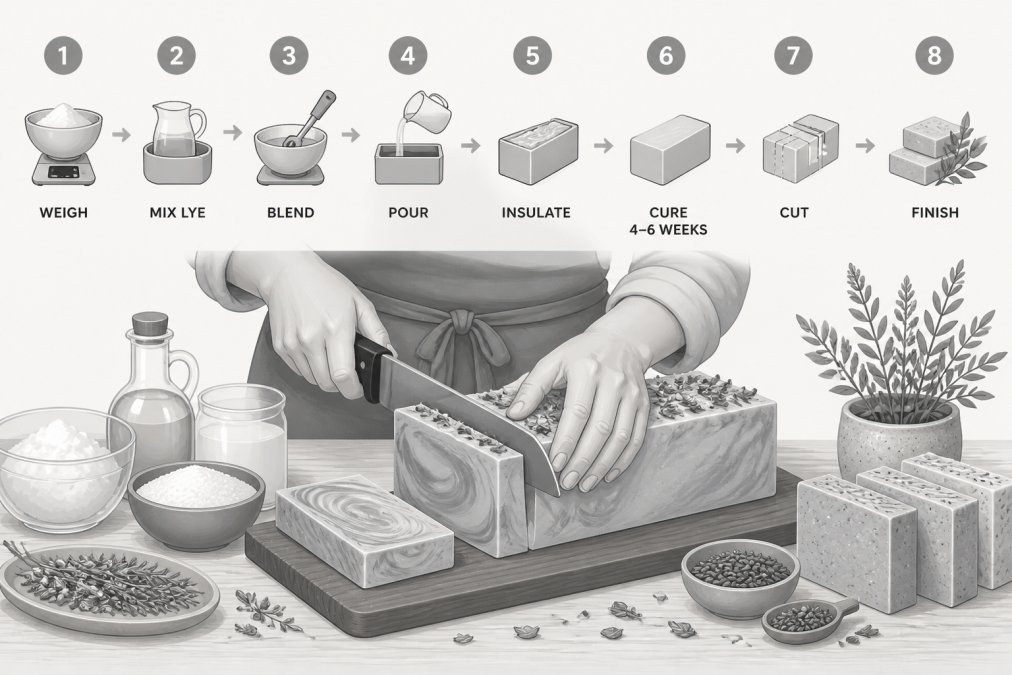
Making cold process soap is labor intensive. The soap maker must weigh every oil precisely, mix the lye solution safely, blend to the proper trace, pour into molds, and cut each bar by hand. A single batch can take hours of active work, and mistakes are costly, if the proportions are off, the entire batch is unusable. This skill is built into the price of every bar.
What most guides miss is the safety component. Working with lye requires protective equipment, ventilation, and careful handling, overhead small-batch makers carry in every production run.
The Hidden Price of Curing Time and Small Batches
Here is the cost that surprises most people: time. Freshly cut soap must cure for four to six weeks, sometimes longer, to allow excess water to evaporate and saponification to complete fully.
This curing time is a direct financial cost. The soap maker has money tied up in ingredients and labor for weeks before a single bar can be sold. A mass-production facility can turn raw materials into finished bars in a single day.
Small-batch production compounds this. Because batches are measured in dozens or hundreds of bars, not thousands, economies of scale never kick in, making the cost per bar inherently higher.
The Benefits of Natural Handmade Soap for Your Skin
The higher price makes sense once you understand what handmade soap does differently. During cold process, saponification naturally creates glycerin, a humectant that draws moisture to the skin. Commercial manufacturers often extract this glycerin to sell separately, leaving their bars harsher and more drying.
Artisan soap retains that natural glycerin, along with the moisturizing properties of the premium oils. For anyone with sensitive or dry skin, this difference is noticeable, natural handmade soap cleanses without stripping the skin barrier.
Many people with sensitive skin who have reacted badly to commercial bars find that genuine handmade soap is gentler, as it avoids synthetic detergents, harsh surfactants, and artificial fragrance blends.
Regulatory Compliance and the Cost of Safety
A cost layer that rarely appears in blog posts is compliance. In the United States, the Food and Drug Administration's guidance on cosmetic labeling requires that cosmetic products, including soap in certain categories, meet specific labeling and safety standards. While true soap falls under the Consumer Product Safety Commission rather than the FDA, any product making cosmetic claims must follow FDA regulations.
This means artisan makers invest in proper labeling, ingredient declarations, and often third-party testing. There is also the cost of liability insurance, which any serious small-batch maker carries, fixed overhead costs that are real and necessary for a legitimate business.
The Consumer Product Safety Commission's regulations on hazardous substances also apply to products containing lye, requiring proper handling and disclosure. Compliance is not optional, and it adds to the final price of every bar.
The Overhead Most Blog Posts Ignore
The vast majority of articles on artisan soap pricing stop at ingredients and labor. They miss the significant, non-optional overhead that separates a legitimate business from a hobbyist: the cost of operating safely and legally.
1. Product Liability Insurance
Any serious maker carries product liability insurance. A single claim can be financially devastating without coverage. A standard policy for a small-batch maker typically costs between $300 and $600 per year, scaling up based on sales volume (iii.org). For a maker producing 1,000 bars a year, that's an added $0.30 to $0.60 per bar.
2. Third-Party Safety Assessments
While a true soap is regulated by the CPSC, the moment a product makes a claim like 'moisturizing' or 'for sensitive skin,' it crosses into cosmetic territory and falls under FDA jurisdiction. Many professional makers commission a Cosmetic Product Safety Assessment from a qualified toxicologist or consultant. These assessments can cost anywhere from $500 to $2,000 per formulation, a one-time cost per recipe, but for a maker with 10 recipes, that's a $5,000 to $20,000 upfront investment.
3. Labeling and Ingredient Naming
Proper labeling requires adherence to the FDA's regulations, which mandate specific placement, font sizes, and the use of INCI (International Nomenclature of Cosmetic Ingredients) names. For example, you cannot just write 'olive oil'; you must list it as Olea Europaea (Olive) Fruit Oil. Ensuring compliance often requires labeling software or a consultant, adding another layer of overhead.
4. Facility and Process Costs
Compliance also extends to the production environment. Many states require a separate license for manufacturing cosmetics or soap, which involves inspections. Makers often need commercial-grade kitchen equipment, stainless steel surfaces, and proper ventilation systems to pass inspections, capital expenditures a legitimate business must absorb.
The True Cost of Legitimacy
When you add up insurance premiums, safety assessments, labeling compliance, and facility costs, the regulatory overhead for a small artisan soap business can easily reach $2,000 to $5,000 or more per year before a single oil is purchased. For a maker producing 2,000 bars a year, that's an additional $1.00 to $2.50 per bar.
This is the cost of safety that is invisible on the ingredient list but is a fundamental part of the price tag. When you pay for artisan soap, you are also paying for the maker's professionalism, their insurance policy, and their commitment to operating within the law.
Best Natural Soaps for Dry Skin: Choosing Your Bar
When shopping for the best natural soaps for dry skin, the label tells the story. Look for bars that list plant oils first, avoid synthetic detergents, and use essential oils rather than fragrance oils. Shea butter and olive oil are strong indicators of a moisturizing formula.
For dry, sensitive skin, the benefits of natural handmade soap are clear: retained glycerin, gentle cleansing, and no harsh surfactants. A bar that costs more upfront often lasts longer because it is harder and denser after a proper cure, narrowing the price gap against commercial bars.
How to Store Handmade Soap to Make It Last
To protect your investment, proper storage matters. Handmade soap is water-soluble and will dissolve quickly if left sitting in a puddle. The trick is keeping it dry between uses.
Use a well-draining soap dish that lifts the bar off the surface. Allow the bar to dry completely after each use, and never store it directly on a wet counter. Keep spare soap in a cool, dry place away from direct sunlight, which can fade colors and degrade essential oils.
With proper care, a quality handmade bar can last several weeks of daily use. A bar that lasts longer and nourishes your skin is often more economical than a cheap bar that dissolves in days.
The real answer to what makes artisan soap expensive is that you are paying for time, skill, and ingredients that respect your skin. Mass-produced detergent bars cut every corner possible. Artisan soap takes the long way around, and your skin barrier is better for it. When you choose a small-batch bar from a trusted maker like The Beekeeper’s Basket, you are supporting a process that prioritizes quality over volume. The higher price per bar reflects a product that cleanses gently, lasts longer, and skips the harsh chemicals found in commercial alternatives. LET'S EXPLORE!
Frequently Asked Questions
What makes artisan soap more expensive than drugstore bars?
Artisan soap costs more because of the ingredients and the process. Small-batch makers use higher-quality oils like shea butter and olive oil, plus essential oils instead of synthetic fragrances. Each batch also requires a 4-6 week curing time before it is ready to sell, which ties up inventory and space. Labor is intensive since bars are cut and finished by hand, and overhead costs are spread over far fewer bars than a factory produces.
Does handmade soap last as long as store-bought bars?
Yes, a well-cured handmade bar often lasts longer than a commercial one. Because artisan soap retains natural glycerin, it does not dissolve as quickly. To maximize its life, store it on a well-draining soap dish between uses and keep it dry. A single bar used for hand washing can last several weeks, making the higher price per bar more reasonable over time.
What is the difference between cold process and melt-and-pour soap?
Cold process soap is made from scratch by mixing oils with lye, which triggers saponification. The maker controls every ingredient and the resulting bar retains natural glycerin, a humectant that draws moisture to the skin. Melt-and-pour is a pre-made base that is melted, colored, and poured into molds. It is faster and easier, but the base often contains extra alcohol and synthetic detergents that can be drying.