 How-to
7 Steps to Switch From Commercial Soap to Handmade
Quick Summary
To transition from commercial soap, start with a patch test on your forearm for three days, then gradually replace your bar over four weeks. Commercial bars are often detergents that can strip skin oils, while handmade soap may keep more natural glycerin and moisture.
- Patch test the new bar on your forearm for three days before full use.
- Use the new bar once daily at night during week one.
- Replace your main commercial soap with the new bar in week three.
- Look for shea butter or sweet almond oil near the top of the ingredients if you have dry skin.
- Stop using a bar if you notice a rash, burning, or stinging that continues after rinsing.
Table of Contents
- How to Transition From Commercial Soap to Handmade Soap
- Why People Switch From Commercial Soap to Handmade
- Commercial Soap vs Handmade Soap: What Actually Differs
- How to Read a Soap Label and Spot a Detergent Bar
- Step-by-Step Transition Plan for Your Skin Type
- Handmade Soap for Dry Skin: Ingredients to Look For
- Troubleshooting Adjustment Problems During the Switch
- How to Store Handmade Soap and How Long Soap Lasts
- Start Your Switch With a Gentle Bar From The Beekeeper's Basket
- Frequently Asked Questions
How to Transition From Commercial Soap to Handmade Soap
Last Updated: November 16, 2026
Switching from commercial soap to handmade soap is easier than most people expect. At The Beekeeper's Basket, we've put together this guide to help you make the change slowly and safely.
Commercial bar soap is often a detergent, not true soap. That matters because detergents can strip oils from your skin. Handmade soap, made in small batches, can keep more of its natural glycerin and moisture than some commercial bars.
Why People Switch From Commercial Soap to Handmade
Many people notice tightness or itching after washing with a standard bar. Others want simpler ingredient lists or fewer synthetic fragrances. Some shoppers simply want a product made close to home.
Common reasons include:
- Dry, tight skin after showering
- Sensitivity to synthetic fragrances
- Interest in shorter, simpler ingredient lists
Commercial Soap vs Handmade Soap: What Actually Differs
Commercial bars are often made with synthetic detergents. Soap is generally made through saponification, a process where oils react with an alkali to form soap.
Glycerin is a humectant. It draws moisture to the skin. Many commercial products remove it during manufacturing and sell it for other uses.
Lather also differs. Commercial bars may foam heavily. Handmade bars may produce a creamier, softer lather than commercial bars.
How to Read a Soap Label and Spot a Detergent Bar
Start with the ingredient list. Soap ingredients are usually oils or butters, water, and an alkali such as sodium hydroxide, which is fully used up in the process.
Watch for these signs of a detergent bar:
- Ingredients like sodium lauryl sulfate or sodium cocoyl isethionate near the top
- A label that says "beauty bar" or "syndet"
- A very long list of synthetic additives
Checking labels takes a minute and helps you choose wisely.
Step-by-Step Transition Plan for Your Skin Type
A gradual switch works better than an immediate swap, especially if your skin has reacted to products before. The plan below gives you a testing protocol first, then a week-by-week schedule you can slow down or repeat at any stage.
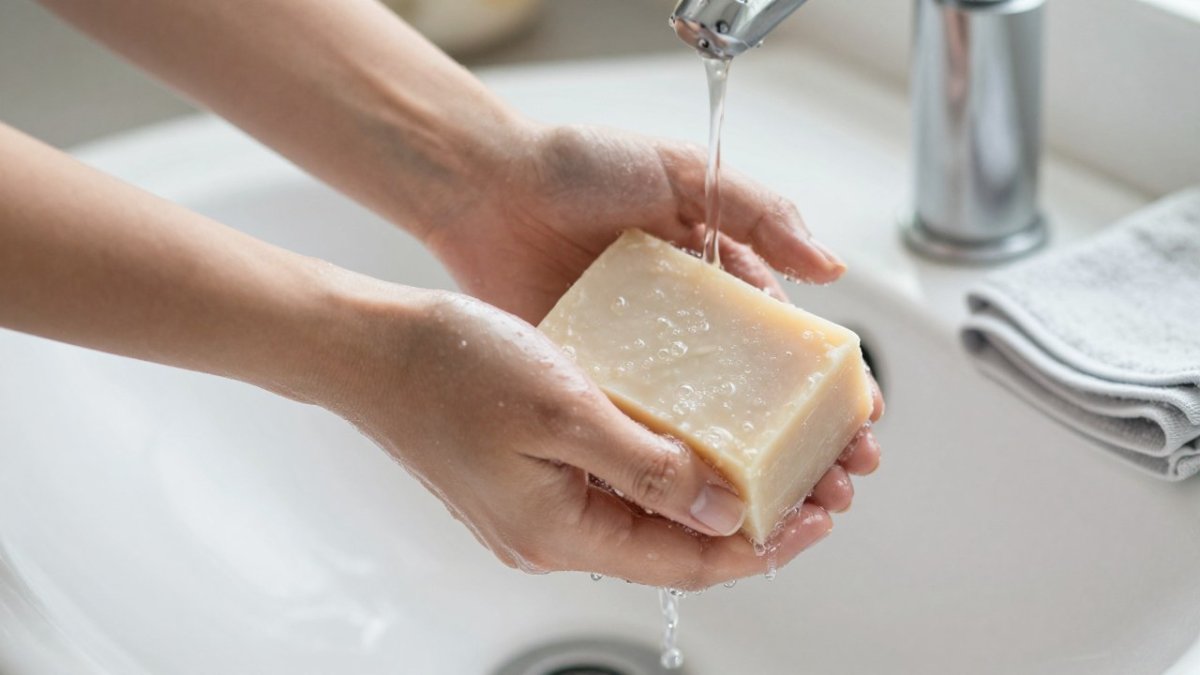
Start With a Patch Test, Not a Full Swap
Before the new bar touches your face or body, run a two-step patch test.
- Day 1: Wet a small area on the inside of your forearm, about the size of a quarter, and work up a light lather with the new bar. Rinse with lukewarm water and pat dry. Leave the area uncovered.
- Day 2: Check the spot at the same time of day. Look for redness, raised bumps, itching, burning, or tightness that wasn't there before. If the area looks and feels calm, repeat the lather on the same spot and check again the next day.
- Day 3: If both checks are clear, the bar passed the patch test. If you saw any reaction, stop using that bar and note the ingredients so you can compare future bars.
A patch test on the forearm doesn't guarantee your face or body will tolerate a bar, but it catches obvious reactions before they spread. Watch out: a reaction can appear up to 48 hours after contact, so don't skip the second-day check just because the first day looked fine.
The Four-Week Gradual Switch
Once a bar passes the patch test, use this schedule. The goal is to keep your usual cleansing routine mostly intact while your skin adjusts to a different lather, rinse feel, and residual moisture level.
- Week 1, One use per day. Use the new bar once daily, ideally at night when you have time to apply moisturizer afterward. Keep your regular soap or body wash for your morning shower.
- Week 2, Two uses per day, if comfortable. If your skin feels calm after week 1, use the new bar morning and night. If you notice tightness or flaking, repeat week 1 instead of moving forward.
- Week 3, Replace your main bar. Make the new bar your primary cleanser and keep the old one only for handwashing or as a backup.
- Week 4, Assess and adjust. Compare how your skin feels now versus week 1. Note any changes in tightness, flaking, oiliness, or scent sensitivity, and decide whether to keep the bar, try a different formula, or alternate between two bars.
You can stretch any week into two. There is no deadline, and a slower switch gives you a clearer signal about which bar suits your skin.
Matching the Bar to Your Skin Type
Use the guidance below to pick a starting formula and to know when to stop.
Dry skin. Look for bars that list shea butter, cocoa butter, sweet almond oil, olive oil, or coconut milk near the top of the ingredient list.
Oily skin. A bar with coconut oil or castor oil tends to produce a slightly richer lather that some oily-skin users prefer.
Eczema-prone skin. Talk with a dermatologist before switching cleansers, especially during a flare.
When to Stop and Try a Different Bar
Stop using a new bar and return to your previous cleanser if you notice any of the following:
- A rash, hives, or swelling that appears within hours of use
- Burning or stinging that continues after rinsing
- Tightness or flaking that doesn't improve with moisturizer within a week
If a reaction spreads, blisters, or lasts more than a few days after you stop using the bar, contact a doctor or dermatologist. Keep the wrapper or a photo of the ingredient list so you can share it with them.
The article's four-week schedule can be summarised like this:
| Week | Schedule | Goal |
|---|---|---|
| Week 1 | One use per day, at night | Let skin adjust to the new bar |
| Week 2 | Two uses per day, if comfortable | Increase use only if skin feels calm |
| Week 3 | Replace your main bar | Make the new bar your primary cleanser |
| Week 4 | Assess and adjust | Compare skin feel and decide next steps |
Handmade Soap for Dry Skin: Ingredients to Look For
For dry skin, look for bars with added oils and butters, such as shea butter, sweet almond oil, or coconut milk.
Avoid bars with heavy synthetic fragrance if your skin reacts easily. A short ingredient list is often a good sign.
Troubleshooting Adjustment Problems During the Switch
Most adjustment problems fall into a handful of patterns. The fixes below are organized by what you're noticing, so you can match the symptom to a next step instead of changing everything at once.
Tightness or Dryness After Washing
A tight feeling right after rinsing is the most common complaint during a switch. It usually means the bar is cleansing more than your skin is used to, or that you're leaving it on too long.
- Shorten the time the lather stays on your skin. Wash, rinse, and move on rather than letting the lather sit.
- Lower the water temperature to lukewarm. Hot water strips oils on its own, and the combination of hot water and a new bar can exaggerate tightness.
- Pat dry instead of rubbing with a towel, then apply a simple moisturizer within a few minutes while your skin is still slightly damp.
If tightness persists for more than a week despite these changes, the bar may be too cleansing for your skin. Try a bar with a shorter ingredient list and more added oils or butters.
Residue or a Film on Skin or in the Shower
Some handmade bars leave a slight film, especially in areas with hard water. The minerals in hard water react with soap and can form a light residue that feels different from the squeaky-clean finish some detergent bars leave.
- Rinse longer than you think you need to, especially on your back and legs.
- Check whether the film appears only in certain sinks or showers. If it does, hard water is the likely cause rather than the bar itself.
- Wipe down the shower or tub more often if you notice a ring or film building up. Soap residue plus minerals can accumulate faster than detergent residue.
Watch out: a slimy or slick feeling that doesn't rinse away after a longer rinse may mean the bar is staying too wet between uses.
Less Lather Than You're Used To
Handmade bars often lather more softly than detergent bars, and that's expected. Lather is not a reliable measure of cleaning.
- Use warmer, not hot, water and rub the bar between your hands for a few seconds longer to build lather.
- Try a washcloth or a soft loofah to help work up lather without using more product.
- If you prefer a foamier feel, look for a bar that lists coconut oil or castor oil near the top of the ingredients.
Don't judge a bar by its first shower. Lather can change as the bar cures and dries between uses.
Scent Sensitivity or Irritation From Fragrance
A reaction to scent often shows up as itching, redness, or sneezing rather than a full rash. Fragrance and essential oils are common triggers.
- Switch to a fragrance-free bar and repeat the patch test before using it all over.
- If you want scent but react easily, look for bars scented only with a single essential oil rather than a blend, so you can identify what bothers you.
- Keep scented bars for hands or for occasional use rather than daily full-body washing until you know your skin tolerates them.
Stop using any bar that causes burning, swelling, or a rash that spreads. If the reaction doesn't settle within a few days, contact a doctor or dermatologist.
Changes in How Your Skin Feels Over the First Month
Some people notice their skin feels oilier, or breaks out in new spots, in the first couple of weeks. A common pattern is that skin overcompensates briefly when it's no longer being stripped by a detergent bar, then settles.
- Give it two to three weeks before deciding the bar isn't working, unless you're seeing a true reaction like a rash or burning.
- Keep the rest of your routine simple during the switch, don't add new lotions, scrubs, or treatments at the same time, so you can tell what's causing a change.
- If new breakouts continue past a month, or appear in areas you don't usually break out, try a different bar or return to your previous cleanser and reintroduce the new bar more slowly.
When to Talk to a Doctor
Contact a doctor or dermatologist if you experience swelling, blistering, a rash that spreads or lasts more than a few days after you stop using the bar, or itching that interferes with sleep. Bring the ingredient list or a photo of the label so they can help you identify the trigger.
How to Store Handmade Soap and How Long Soap Lasts
Keep bars on a draining soap dish so water runs off. Store them in a dry spot between uses. Storage and longevity depend on the bar's size, how often it is used, and whether it is kept dry.
A bar left sitting in water may soften faster.
Start Your Switch With a Gentle Bar From The Beekeeper's Basket
Ready to try a gentler routine? Our handcrafted bars are made in small batches in New England. If you're not sure where to begin, our Worker Bee Honey and Oatmeal Self Care Box gives you a sampling of several bestsellers in one box.
Explore our collection and find a bar that suits your skin. Let's explore!
Frequently Asked Questions
How long does it take for your skin to adjust to a new soap?
Skin can take some time to respond to a new soap, and the adjustment period varies from person to person. During that window, skin may feel tighter or slightly drier as it rebalances. Use lukewarm water, apply a fragrance-free moisturizer after washing, and keep the switch gradual. If redness, itching, or swelling persists beyond a few weeks, stop using the new bar and consult a dermatologist or your healthcare provider.
Should you stop using commercial soap all at once?
A gradual switch is usually easier on skin. Start by using the handmade bar for one wash a day, such as morning or evening, while keeping your usual product for the other. Increase the handmade share over a couple of weeks. Patch-test on a small area of skin for several days before using a new bar on your face or body. This approach lets you spot any reaction early and tells you which product is causing it.
Can handmade soap help with dry skin?
Some people with dry skin look for soaps with added moisturizing oils. Look for soaps with added moisturizing oils and avoid strong synthetic fragrances if you have sensitive skin. Results vary by individual, so pair the bar with a moisturizer and monitor how your skin feels over several weeks.
How do you store handmade bar soap so it lasts longer?
Keep the bar on a draining soap dish so water runs off between uses, since standing water softens the surface quickly. Store it in a dry spot with air circulation, not in a closed bathroom cabinet or sealed container while it is still curing or wet. How long a bar lasts depends on its size and how much water it sits in between uses.