 How-to
What Is the Best Rosacea Cleanser for Dry, Sensitive Skin?
Last Updated: November 21, 2026
Quick Summary
The best rosacea cleanser for dry, sensitive skin is a fragrance-free cream or lotion cleanser built on mild surfactants like glucosides, with glycerin or ceramides near the top of the ingredient list. Avoid foaming washes with SLS or SLES, plus menthol, exfoliating acids, and scrubs, which strip the barrier and trigger tightness and redness.
- Cleanse twice daily at most; very dry or reactive skin may do fine with a morning water rinse.
- Massage cleanser with fingertips for 20 to 30 seconds using lukewarm water, never hot.
- Patch test a new cleanser behind the ear or on the jawline for three to five days first.
- Apply moisturizer within a minute of patting dry, while skin is still slightly damp.
- If a cleanser burns or tightens skin, stop it immediately and skip all actives for several days.
Table of Contents
- Why Dry, Sensitive Skin Needs a Different Kind of Rosacea Cleanser
- Choosing a Gentle Cleanser for Sensitive Skin: Ingredients That Calm and Ingredients to Avoid
- Foaming vs. Cream vs. Gel: Which Rosacea Cleanser Formula Fits Your Skin?
- Finding a Small-Batch Cleanser That Respects Sensitive Skin
- Frequently Asked Questions
Why Dry, Sensitive Skin Needs a Different Kind of Rosacea Cleanser
If you have rosacea and dry skin, the wrong face wash can undo weeks of careful skincare in a single rinse. A rosacea cleanser for dry sensitive skin has one job: remove dirt, sweat, and makeup without stripping the skin barrier or triggering a flush.
Rosacea-prone skin that is also dry needs cleansing agents mild enough for reactive skin and a formula that adds moisture back rather than removing it.
How Cleansing Mistakes Trigger Redness and Tightness
Hot water, harsh detergents, and over-scrubbing are the three most common culprits. Each one damages the skin barrier, the outer layer that holds moisture in and irritants out. When that barrier weakens, skin loses water faster, feels tight, and reacts to products it once tolerated.
A common mistake is reaching for a foaming acne wash because redness looks like breakouts. If you want to understand how soap-induced irritation builds up over time, our guide on avoiding skin irritation from soap walks through the everyday habits that make redness worse.
Choosing a Gentle Cleanser for Sensitive Skin: Ingredients That Calm and Ingredients to Avoid
The best gentle cleanser for sensitive skin is fragrance-free, non-foaming or low-foam, and built on mild surfactants that clean without disrupting the barrier. That one-sentence rule gets you most of the way there. The rest is learning to read a label the way a formulator does, so you can tell a genuinely mild formula from one that merely says "gentle" on the front of the tube.
Start With the Surfactant System
Surfactants are what make a cleanser clean, and they are also what makes a cleanser sting. The mildest classes are nonionic and amphoteric surfactants, look for names like coco-glucoside, decyl glucoside, lauryl glucoside, cocamidopropyl betaine, and sodium cocoyl isethionate.
The harsher classes are the anionic detergents, especially sodium lauryl sulfate (often listed as SLS) and, to a lesser degree, sodium laureth sulfate (SLES).
A practical label test: if the first three ingredients after water are all surfactants, the formula is detergent-forward and better suited to oily skin. If water, glycerin, and an emollient like caprylic/capric triglyceride come first, you are looking at a cream or lotion cleanser built for dry skin.
Ingredients That Calm and Support the Barrier
These are the ingredients worth paying for when your skin is dry and reactive:
- Glycerin, a humectant that draws water into the outer layer of the skin.
- Ceramides, lipids that are part of the skin's natural barrier composition.
- Colloidal oatmeal, an ingredient often used in skin-care formulas for sensitive skin.
Ingredients to Skip During a Flare
- Fragrance and essential oils. Fragrance is a common irritant in leave-on and rinse-off products, and reactive skin may react to both natural and synthetic fragrance. Essential oils such as peppermint, eucalyptus, lavender, and citrus peel oils can function as fragrance and are often left off formulas for sensitive skin.
- Cooling agents. Menthol, peppermint, and camphor produce a tingling sensation that some people find uncomfortable on reactive skin.
- Drying alcohols. Denatured alcohol and alcohol denat. high in the ingredient list speed up water loss. A small amount far down the list in a cream formula is usually tolerable; a high position is a warning sign.
The Label-Reading Shortcut
You do not need to memorize chemistry. Use this order of operations on any new bottle:
- Scan the full ingredient list for the words fragrance, parfum, and any essential oil.
- Find the surfactant names and check whether SLS or SLES appears in the top five.
- Confirm glycerin or a ceramide appears before the preservative cluster (phenoxyethanol, sodium benzoate, potassium sorbate).
- Check for menthol, mint, or cooling agents.
- Confirm there are no acids, enzymes, or scrub particles.
If a formula passes all five, it is a reasonable candidate for dry, rosacea-prone skin, not a guarantee, but a much better starting point than a product chosen on the word "gentle" alone.
Ingredient Checklist: What to Look For and What to Skip
- Fragrance-free and essential-oil-free
- Glycerin or ceramides near the top of the list
- Mild surfactants (glucosides, cocamidopropyl betaine, sodium cocoyl isethionate) rather than SLS or SLES
If you want deeper guidance on picking a natural bar or wash that won't irritate sensitive skin, our article on natural soap for sensitive skin breaks down what to check before you buy.
Foaming vs. Cream vs. Gel: Which Rosacea Cleanser Formula Fits Your Skin?
Texture is the fastest way to narrow a crowded shelf, but the right answer depends on more than dry versus oily. Rosacea-prone skin that is also dry usually does best with a cream or lotion cleanser, yet makeup wearers, people who flare seasonally, and those with combination skin may need a different pick. Use the breakdown below to match formula to your actual situation rather than to a single skin-type label.
Why Cream Cleansers Suit Dry, Reactive Skin
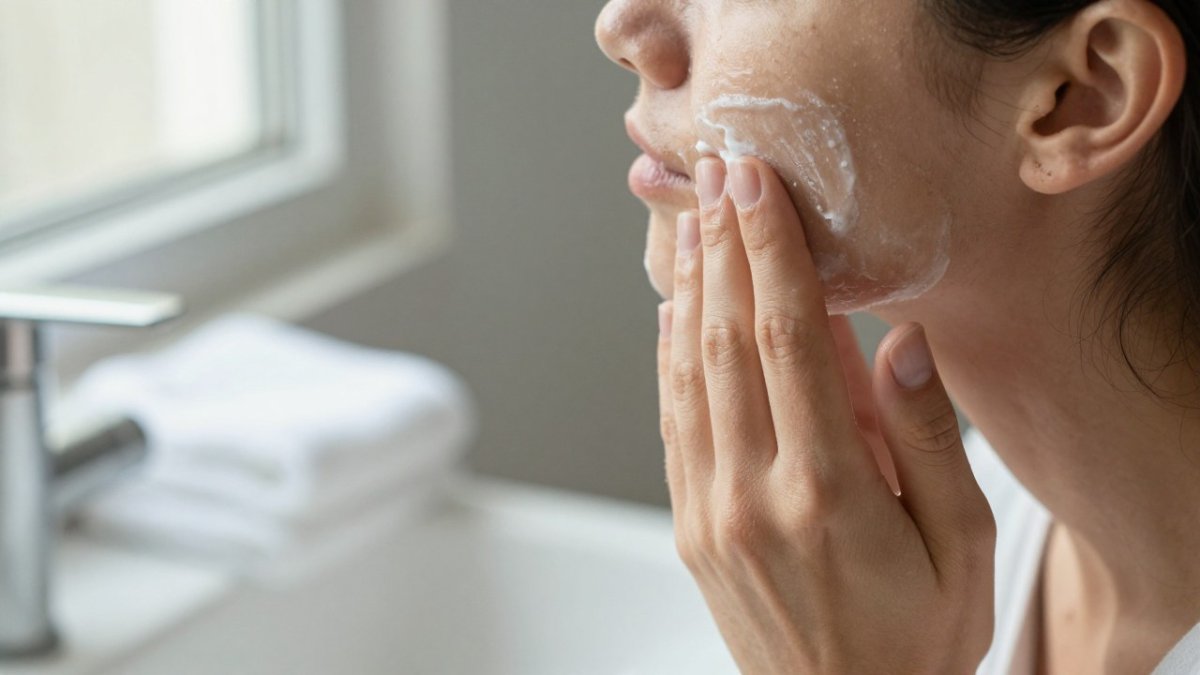
Cream and lotion cleansers contain more emollients and fewer surfactants than foaming formulas. That ratio matters: fewer surfactants means less disruption of the skin's lipid barrier, and the emollients leave a thin conditioning layer behind after rinsing. The result is skin that feels soft rather than squeaky. The trade-off is that cream cleansers can leave a slight film, which is fine for dry skin but can feel heavy on an oily T-zone.
Why Foaming Formulas Are Usually the Wrong First Pick
Foam is produced by surfactants, and more foam generally means a higher concentration of them. For oily, non-sensitive skin that is a feature. For dry, rosacea-prone skin it is usually a bug, the tight, clean feeling after a foaming wash is the sensation of water leaving the skin faster than it should. If you love lather, look for a low-foam formula built on glucosides rather than sulfates.
Why Gel Cleansers Are a Middle Path, With Caveats
Gel cleansers sit between cream and foam. They rinse cleanly and suit combination skin that gets oily in the T-zone but dry on the cheeks. The caveat is that many gels include exfoliating acids or refreshing agents like menthol, both of which can sting during a flare. Read the label before assuming a gel is mild.
Match the Formula to Your Situation
| Formula | Best For | Feel After Rinsing | Watch Out For |
|---|---|---|---|
| Cream | Dry, reactive skin; winter flares | Soft, comfortable | Can feel heavy if skin is oily |
| Lotion (non-foaming) | Very dry, eczema-prone skin | Calm, hydrated | Needs a soft cloth for makeup |
| Gel | Combination skin; humid months | Lightly clean | May sting active flares; check for acids |
| Foaming | Oily, non-sensitive skin | Very clean | Tightness and dryness |
| Cleansing balm or oil | Heavy makeup or sunscreen days | Nourished | Requires a second gentle cleanse |
Three Situations That Change the Answer
- You wear sunscreen or long-wear makeup daily. A cream cleanser alone may not remove everything, and leftover residue can clog pores and irritate skin. Use a cleansing balm or oil first, then a cream cleanser, the "double cleanse", but keep both steps gentle and skip the washcloth scrubbing.
- You are mid-flare. Drop to the mildest formula you own, usually a non-foaming lotion, and use lukewarm water only. Texture changes during a flare are not the time to experiment.
- Your skin is combination rather than truly dry. A gel in the T-zone and a cream on the cheeks is a reasonable compromise, or use a cream cleanser everywhere and blot oilier areas with a clean tissue afterward.
If you want specific product ideas after narrowing down your formula type, our roundup of the best gentle cleansers for rosacea-prone skin covers options by sensitivity level.
(https://blog.thebeekeepersbasket.com/how-long-does-skin-barrier-take-to-heal) explains what recovery looks like week by week.Finding a Small-Batch Cleanser That Respects Sensitive Skin
Small-batch makers may offer shorter ingredient lists, but batch consistency matters when your skin is reactive. Ask how the maker controls fragrance, what oils they use, and whether they list every ingredient.
The Beekeeper's Basket handcrafts soaps and skin-nourishing products in small batches in New England. If you're unsure where to start, our piece on how artisan soap is made shows what small-batch production actually involves.
Cleansing is the step most likely to set off a flare, and it's also the easiest to fix. Start with one fragrance-free cream cleanser, lukewarm water, and a patch test.
Frequently Asked Questions
What is the best cleanser for dry skin with rosacea?
The best rosacea cleanser for dry skin is a fragrance-free, non-foaming cream or lotion cleanser with mild surfactants and added moisturizing ingredients like glycerin or ceramides. Avoid foaming washes with sulfates, alcohol, or exfoliating acids. Look for labels that say gentle, hydrating, and suitable for sensitive skin, and patch test any new product on your jawline for a few days before using it on your full face.
How often should you wash your face if you have rosacea?
Most people with rosacea-prone skin do well cleansing twice daily, morning and evening, with lukewarm water and a gentle cleanser for sensitive skin. If your skin feels tight or stings after washing, reduce to once daily and rinse with water only in the morning. Over-washing strips the skin barrier and can increase redness, so let comfort guide frequency rather than a fixed rule.
Should you use a foaming or cream cleanser for dry, sensitive skin?
Cream and lotion cleansers are usually the safer choice for dry, sensitive skin because they rely on mild surfactants and leave more moisture behind. Foaming cleansers can feel refreshing but often contain stronger detergents that leave skin tight. If you prefer a foam, choose one labeled non-drying and fragrance-free, and follow with a moisturizer within a minute of patting dry.
What cleanser ingredients should people with rosacea avoid?
Common irritants include fragrance, essential oils, alcohol, sulfates like sodium lauryl sulfate, menthol, and exfoliating acids such as glycolic or salicylic acid in a daily wash. These can trigger stinging, burning, or a skin flare. Check labels carefully, since natural and botanical products can still contain sensitizers. A short ingredient list with mild surfactants and soothing agents is generally easier on reactive skin.