 how-to
Can You Use Artisan Soap on Your Face Daily?
Table of Contents
- Can You Use Artisan Soap on Your Face Daily?
- Is Bar Soap Bad for Your Face?
- How Artisan Soap Affects Your Skin Barrier and Acid Mantle
- Best Natural Soaps for Dry Skin
- Moisturizing Ingredients in Artisan Soap
- How to Properly Use Facial Soap Bars in Your Daily Routine
- Choosing the Right Artisan Soap for Your Skin Type
- Conclusion
- Frequently Asked Questions
Last Updated: October 4, 2026
Can You Use Artisan Soap on Your Face Daily?
The answer to whether can you use artisan soap on your face daily is yes, but it depends on your skin type, the soap's ingredients, and how you use it. The right artisan soap can nourish your face when chosen carefully. At The Beekeeper's Basket, we craft handmade soaps with moisturizing ingredients.
The key is whether a particular soap respects your skin's natural balance. Traditional commercial soaps strip away oils and disrupt your skin barrier. Quality artisan soaps, made with natural oils and glycerin, cleanse gently while preserving the protective layer your skin needs.
Is Bar Soap Bad for Your Face?
Bar soap gets a bad reputation because most drugstore soaps contain synthetic detergents and alkaline ingredients that strip your skin, leaving it tight and dry.
Artisan soaps use natural oils, butters, and cold-process methods that preserve glycerin and moisturizing compounds commercial soaps remove.
The problem is pH. Your skin's natural acid mantle has a pH of 4.5 to 5.5, but conventional soaps are often alkaline at pH 8 or higher, disrupting your skin barrier and triggering irritation, dryness, and sensitivity.
Quality artisan soaps maintain a lower pH closer to your skin's natural balance and contain emollients like shea butter and coconut oil that support skin health.
How Artisan Soap Affects Your Skin Barrier and Acid Mantle
Your skin barrier defends against environmental damage, bacteria, and moisture loss. The acid mantle sits on top and keeps it functioning. Harsh soaps compromise both.
Artisan soaps can support your acid mantle by maintaining a pH closer to your skin's natural 4.5 to 5.5 range. Commercial soaps at pH 8 or higher can create significant disruption.
They contain natural surfactants from plant oils that lift dirt without stripping skin. Cold-process methods preserve glycerin, a humectant that draws moisture in. Commercial makers remove glycerin to sell separately; artisan makers keep it, cleansing and moisturizing in one step.
An intact acid mantle lets your skin regulate oil, maintain hydration, and defend against irritants. This is why sensitive skin often improves with artisan soap.
How to Test Your Soap's pH at Home
To verify your soap supports your acid mantle, test its pH using inexpensive test strips (under $10):
- Wet a small piece of the soap bar with distilled water to create a thin paste.
- Press a pH test strip against the paste for 2-3 seconds.
- Compare the color change on the strip to the color chart on the package.
- A reading of 5.5 to 7 indicates a skin-friendly soap. Anything above 8 is too alkaline for daily facial use.
Alternatively, dissolve soap shavings in distilled water and test the liquid for a more accurate reading.
Best Natural Soaps for Dry Skin
Dry skin needs hydrating soap made with oils that support your skin's lipid barrier, the fat layer that holds moisture.
The best natural soaps for dry skin contain:
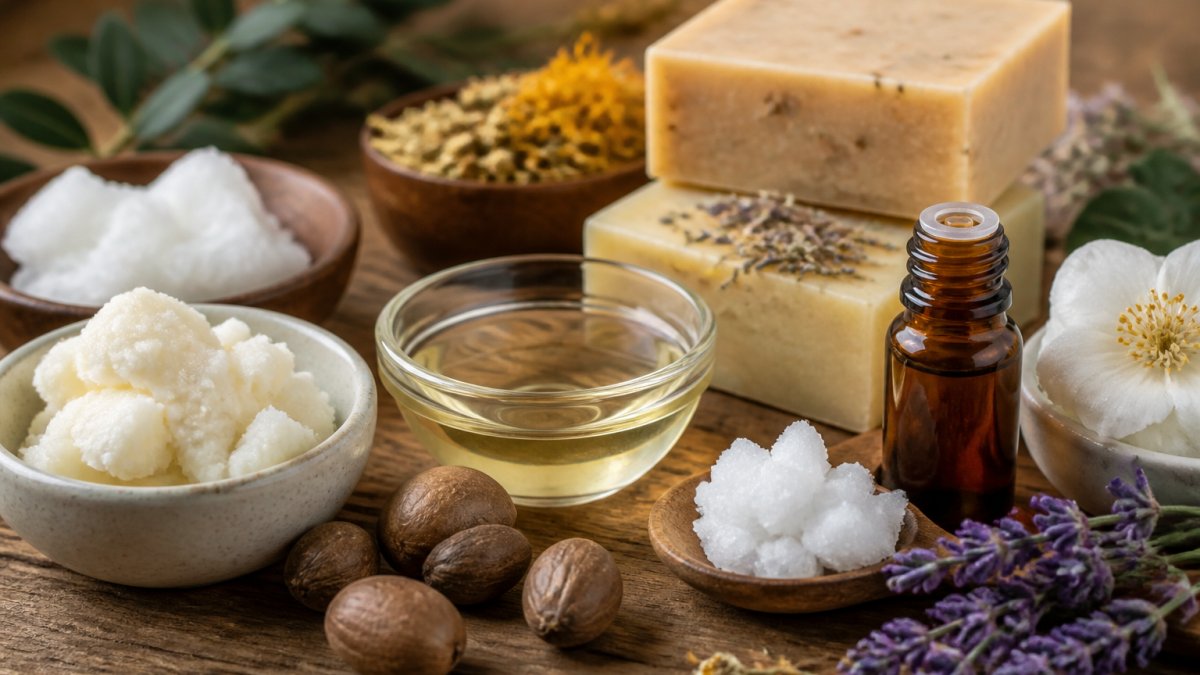
- Shea butter: Rich in fatty acids and vitamins that nourish dry skin
- Coconut oil: Supports the skin barrier and provides gentle cleansing
- Oat: Soothes irritation and reduces inflammation
- Honey: Natural humectant that draws moisture into skin
- Jojoba oil: Mimics your skin's natural sebum and absorbs easily
- Olive oil: High in antioxidants and deeply moisturizing
Avoid essential oils if your dry skin is sensitive, as they can irritate compromised barriers. Unscented soaps work better.
The Beekeeper's Basket creates artisan soaps with these ingredients in small batches, ensuring consistent quality.
Moisturizing Ingredients in Artisan Soap
Moisturizing ingredients fall into two categories: emollients and humectants.
Emollients are oils and butters that soften skin and seal moisture. Shea butter, coconut oil, olive oil, and jojoba oil prevent the tight feeling after washing.
Humectants draw water into your skin. Glycerin, honey, and vegetable glycerin pull moisture in, which is why artisan soaps that retain natural glycerin feel more hydrating.
The best artisan soaps combine both, cleansing with natural surfactants, sealing moisture with emollients, and drawing hydration with humectants.
How to Properly Use Facial Soap Bars in Your Daily Routine
Using artisan soap correctly makes all the difference. Facial bars need a gentler approach than liquid cleansers.
The Cleansing Technique
Step 1: Wet your face with lukewarm water. Avoid hot water, which strips skin and triggers irritation.
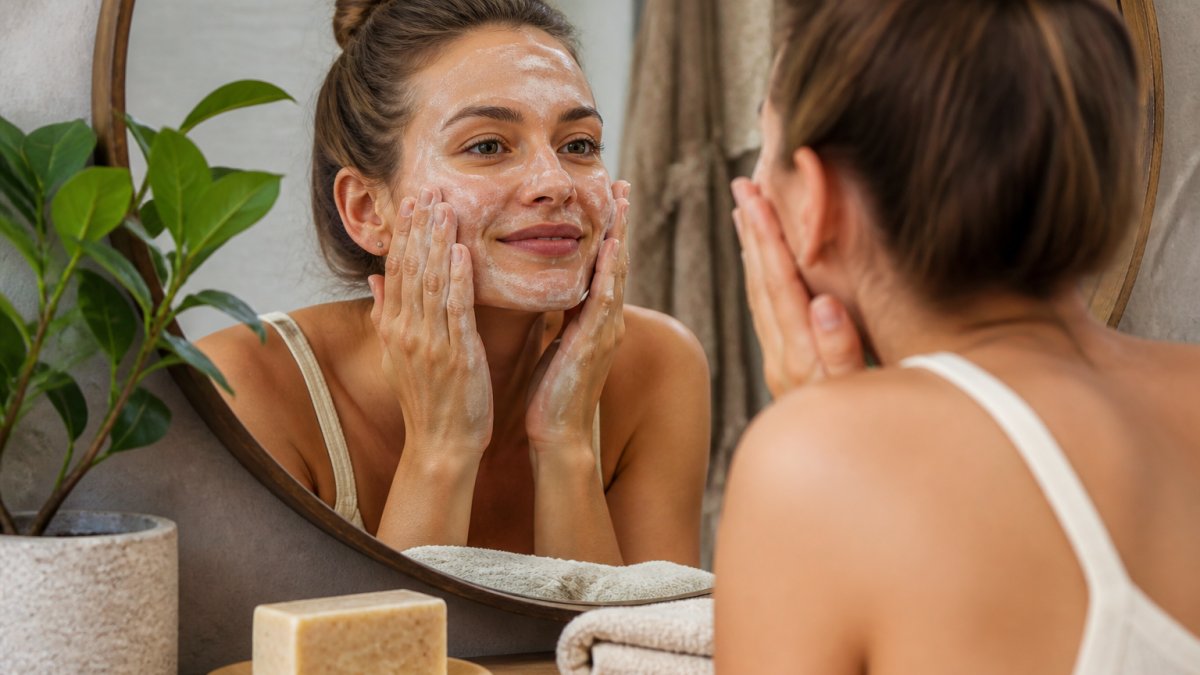
Step 2: Lather the soap in your hands. Don't rub the bar directly on your face; the lather is gentler and more effective.
Step 3: Apply the lather gently. Use your fingertips in circular motions for 30-60 seconds. Don't scrub; gentle pressure is all you need.
Step 4: Rinse thoroughly with lukewarm water. Leftover soap can irritate skin or block moisture.
Step 5: Pat dry gently. Rubbing can irritate sensitive or dry skin.
Step 6: Apply moisturizer while skin is still slightly damp to lock in hydration.
Use twice daily. If your skin feels dry, reduce to once daily.
Water Hardness and Soap Scum: A Hidden Problem
One of the most overlooked reasons people report problems with bar soap is water hardness.
If you live in an area with hard water, you may experience:
- A filmy, sticky feeling on your face after cleansing
- Difficulty rinsing the soap completely
- Increased dryness or irritation despite using a moisturizing artisan soap
- Soap residue that doesn't wash away easily
How to Address Hard Water Issues:
-
Install a water softener or use a shower filter. A whole-house water softener removes minerals before water reaches your bathroom. If that's not feasible, a shower filter (under $30) can reduce mineral content for your face-washing routine.
-
Rinse with filtered or distilled water. After your final rinse with tap water, do a second rinse using filtered water from a pitcher or distilled water from a jug. This removes mineral residue and prevents soap scum buildup.
-
Use a chelating rinse. Some people add a small amount of apple cider vinegar (1 part vinegar to 10 parts water) as a final rinse. The acidity helps dissolve mineral deposits. Test on a small area first if your skin is sensitive.
-
Switch to a liquid cleanser for hard water areas. If you have very hard water and can't install a filter, a gentle liquid cleanser may work better than bar soap for your face, even though you prefer the sustainability of bars.
Storage and Hygiene: Preventing Bacterial Growth
Bar soaps sit in moist bathroom environments, which can promote bacterial growth if not stored properly. This is especially important for facial bars, since your face is more sensitive than your body.
Best practices for soap storage:
-
Use a well-draining soap dish. Avoid solid dishes that trap water underneath the bar. Look for dishes with drainage holes or slats that allow air circulation. Bamboo or wooden soap dishes work well and look attractive.
-
Allow the bar to dry completely between uses. A wet bar breaks down faster and becomes a breeding ground for bacteria. Stand it upright or on its edge so water drains away. In humid bathrooms, consider keeping your facial soap in a less-humid area like a bedroom or linen closet, bringing it to the bathroom only when needed.
-
Replace your soap dish regularly. Soap dishes accumulate bacteria and mold over time. Wash yours weekly with hot water, or replace it every 3-6 months.
-
Keep your soap separate from body soap. Use a dedicated bar for your face and a different bar for your body. This prevents cross-contamination and ensures your facial soap stays free of body bacteria.
-
Trim off the outer layer if it becomes discolored or soft. If you notice dark spots, slime, or a soft outer layer on your bar, these are signs of bacterial or mold growth. Trim away the affected portion with a clean knife before using the rest of the bar.
Choosing the Right Artisan Soap for Your Skin Type
Different skin types need different soaps. Matching your soap to your skin prevents irritation and gets better results.
For oily or acne-prone skin: Look for artisan soaps with charcoal, tea tree, or clay. These ingredients help control excess oil without over-drying. Avoid heavy butters like shea. Coconut oil and olive oil in moderation work well.
For dry or sensitive skin: Choose soaps loaded with emollients like shea butter, jojoba oil, and oat. Avoid essential oils unless your skin tolerates them. Unscented or lightly scented soaps are safest.
For combination skin: You need a balanced soap that cleanses without stripping. Look for artisan soaps with moderate amounts of both oils and natural surfactants.
For sensitive skin: Start with the gentlest option, unscented, fragrance-free artisan soap made with minimal ingredients. Avoid essential oils, botanical extracts, and colorants. Your skin needs simplicity, not complexity.
The Beekeeper's Basket offers handcrafted soaps designed for different skin needs. Because we make in small batches, we can control every ingredient and ensure consistency. You get the same quality every time you reorder.
Conclusion
You can absolutely use artisan soap on your face daily when you choose the right one for your skin type and use it properly. The key is selecting a soap made with natural, moisturizing ingredients that support your skin barrier rather than damage it. Artisan soaps from The Beekeeper's Basket are handcrafted in small batches with shea butter, coconut oil, honey, and essential oils that nourish your skin while cleansing gently. Start with our collection designed for your specific skin type, follow the proper cleansing technique outlined above, and you'll see why so many people have switched from commercial soap to quality artisan alternatives. Explore our full range of handmade soaps today and experience the difference that fresh, thoughtfully crafted ingredients make for your daily skincare routine.
Frequently Asked Questions
Can you use artisan soap on your face daily?
Yes, you can use artisan soap on your face daily if it's formulated for facial skin and matches your skin type. Handmade soaps made with cold process methods preserve glycerin and natural oils that support your skin barrier. The key is choosing a formula without stripping surfactants and testing it first on sensitive areas. Daily use works best when the soap is pH-balanced and contains moisturizing ingredients like shea butter or coconut oil.
What ingredients should you look for in a facial artisan soap?
Look for natural oils (coconut, olive, jojoba), plant-based moisturizers (shea butter, cocoa butter). Avoid synthetic detergents, parabens, and sulfates, which strip the skin barrier. Cold-processed soaps retain more glycerin, which supports hydration.
Does artisan soap dry out facial skin?
Artisan soap doesn't have to dry out your face if it's properly formulated. Traditional soap can strip the acid mantle if it's too alkaline, but handmade soaps made with excess oils and glycerin actually support skin hydration. The difference lies in ingredients: soaps with moisturizing properties and balanced pH are gentler than commercial bars. If you experience dryness, it may signal your soap is too alkaline for your skin type, switching to a formula with more natural oils or lower pH usually resolves the issue.
How often should you wash your face with bar soap?
Twice daily (morning and night) is standard for most skin types using a gentle artisan soap. If you have very dry or sensitive skin, once daily may be sufficient, or you can alternate soap with a non-soap cleanser. Pay attention to how your skin feels, tightness or flaking signals you're cleansing too frequently or your soap is too stripping. Adjust frequency based on your skin's response rather than following a rigid schedule.