 how-to
How to Soothe Sensitive Skin Naturally
Table of Contents
- Understanding Sensitive Skin and Its Triggers
- How to Repair Damaged Skin Barrier Naturally
- Best Natural Ingredients for Sensitive Skin
- Natural Soap for Sensitive Skin: Choosing and Using Wisely
- Step-by-Step Routine to Soothe Sensitive Skin Naturally
- Common Mistakes When Caring for Sensitive Skin
- Frequently Asked Questions
Last Updated: September 3, 2026
Understanding Sensitive Skin and Its Triggers
What Is Sensitive Skin?
Sensitive skin is a condition where your skin barrier function becomes compromised, making it react more intensely to irritants, environmental changes, and certain ingredients. It's not a diagnosis in the medical sense, it's a description of how your skin behaves. When your skin barrier weakens, transepidermal water loss increases, meaning moisture escapes more readily and irritants penetrate more easily.
Sensitive skin doesn't discriminate by age or genetics alone. You can develop it at any point in your life due to environmental stressors, product overuse, or underlying conditions like rosacea or eczema-prone skin. The key is recognizing that sensitivity is your skin's way of signaling distress.
At The Beekeeper's Basket, we craft products for customers who've struggled with reactive skin for years, aiming to provide relief through simplified routines using gentle, natural ingredients. The difference often comes down to understanding what triggers your specific sensitivity and choosing products that support rather than challenge your skin barrier.
Common Symptoms and Causes
Sensitive skin typically shows up as redness, itching, burning sensations, or tightness, often appearing within minutes of applying a product or after sun exposure. Some people experience flare-ups with visible inflammation or a persistent itch that no amount of scratching satisfies. Others notice their skin feels raw or uncomfortable without obvious visible signs.
The causes vary widely. Common triggers include:
- Fragrance and synthetic scents (even in "natural" products)
- Harsh surfactants in conventional cleansers that strip the skin barrier
- Alcohol denat and other drying agents
- Essential oils at high concentrations
- Weather extremes (cold, wind, low humidity)
- Over-exfoliation or using physical scrubs too frequently
- Sudden product changes without patch testing
- Inflammatory ingredients like sulfates and parabens
Environmental factors matter too. Pollution, chlorine exposure, and seasonal changes can all trigger flare-ups in reactive skin. The skin microbiome plays a role as well, when beneficial bacteria are disrupted by harsh products, sensitivity often increases.
How to Repair Damaged Skin Barrier Naturally
Your skin barrier is a lipid-rich layer that acts as your skin's protective shield. When damaged, it can't retain moisture or block irritants effectively. Repairing it naturally takes time and consistency, but the process is straightforward.
The foundation of barrier repair is stopping further damage. This means eliminating harsh cleansers, fragrance-heavy products, and over-exfoliation immediately. Many people continue using the same products that caused the damage while wondering why their skin won't heal, this is the mistake that stalls progress.
Next, focus on hydration and lipid replenishment. Your barrier needs both water (hydration) and fats (emollients) to function. Hydrating ingredients like glycerin and humectants draw moisture into the skin, while oils and butters seal that moisture in. This combination is what allows your barrier to rebuild itself.
Calming inflammation is equally important. Ingredients like colloidal oatmeal, aloe vera, and chamomile reduce redness and soothe irritation while your barrier repairs. These botanical extracts work by reducing inflammatory responses without introducing new irritants.
The timeline for barrier repair varies. Some people see improvement within two weeks of consistent care. Others need four to six weeks. Patience here is essential, rushing the process by adding too many active ingredients or exfoliating again will set you back significantly.
Best Natural Ingredients for Sensitive Skin
Calming Botanical Extracts
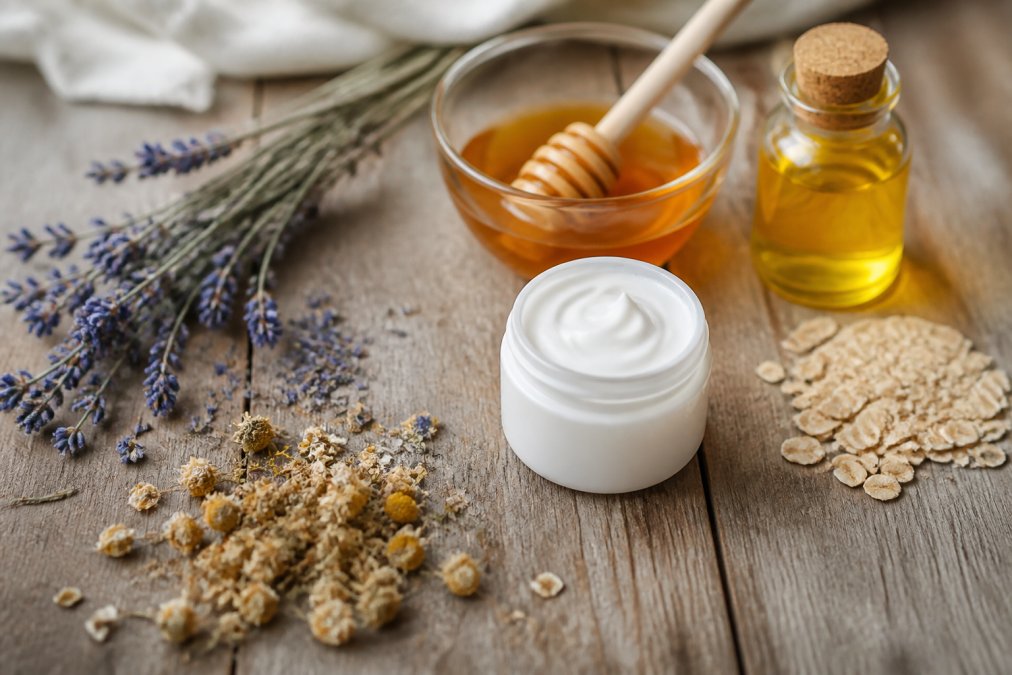
Colloidal oatmeal is one of the most effective natural calming agents for sensitive skin. Unlike regular oatmeal, colloidal oatmeal is finely ground so it doesn't irritate or scratch, it instead creates a soothing barrier on your skin while reducing inflammation. Research consistently shows it alleviates itching and redness without triggering reactions in reactive skin types.
Aloe vera contains compounds that reduce inflammation and support the skin microbiome. It's lightweight, hydrating, and rarely causes irritation even in severely sensitized skin. The key is using pure aloe or products with aloe as a primary ingredient, not as a minor additive.
Chamomile has been used for centuries to soothe inflamed skin. It contains antioxidants and compounds that calm irritation and support barrier function. Chamomile extract in skincare products delivers these benefits without the fragrance intensity of essential oils.
Calendula (also called marigold) is another gentle botanical extract that reduces redness and supports skin healing. It's particularly useful for reactive skin because it soothes without sensitizing.
These ingredients work best in combination. A product containing colloidal oatmeal and aloe vera, for example, addresses both immediate soothing and deeper hydration.
Hydrating and Protective Compounds
Glycerin is a humectant, it pulls water from the air into your skin. For sensitive skin, glycerin is essential because it hydrates without any irritation risk. It's one of the few ingredients that works universally across all skin types and sensitivities.
Plant-based oils and butters like jojoba oil, shea butter, and coconut oil (though some find coconut comedogenic) provide emollients that seal in hydration. These lipids support your skin barrier by replacing lost fats. Jojoba oil is particularly effective because its composition closely mirrors your skin's natural sebum, making it exceptionally compatible with sensitive skin.
Hyaluronic acid (derived from fermentation in natural products) is a humectant that holds up to 1000 times its weight in water. It hydrates intensely without any irritation, making it ideal for dehydrated, sensitive skin.
Ceramides are lipids naturally present in your skin barrier. Using ceramides in skincare directly supports barrier repair. Natural sources include plant-derived ceramides that function identically to skin-native ones.
The most effective sensitive skin products layer these ingredients: a hydrating base with glycerin and hyaluronic acid, followed by occlusive oils and butters to seal everything in. This combination mimics how your skin naturally maintains its barrier.
Natural Soap for Sensitive Skin: Choosing and Using Wisely
What Makes a Soap Gentle for Reactive Skin
Not all soap is created equal, and this is where many people with sensitive skin run into problems. Conventional bar soaps and body washes often contain harsh surfactants that strip your skin's natural oils, leaving your barrier compromised and irritation guaranteed.
A gentle soap for sensitive skin should be soap-free or use minimal surfactants, pH-balanced (ideally between 5.5 and 7.0 to match your skin's natural pH), fragrance-free or scented only with essential oils at safe concentrations, and enriched with hydrating and calming ingredients like oatmeal, aloe, or botanical extracts.
Cold-process soaps, like those handcrafted at The Beekeeper's Basket, retain natural glycerin that commercial soaps strip away. This glycerin is a built-in humectant that keeps your skin hydrated while cleansing. Artisanal soaps made in small batches also allow for precise control over ingredients, you know exactly what's touching your skin, with no hidden fillers or cheap surfactants.
The difference between a mass-produced soap and a handcrafted one for sensitive skin is significant. Commercial soaps prioritize lather and shelf stability over skin health. Small-batch, natural soaps prioritize your barrier function and long-term skin comfort.
Patch Testing Before Full Use
Even with the gentlest soap, patch testing is essential for sensitive skin. A patch test reveals whether a product will trigger a reaction before you use it all over your face or body.
Here's how to patch test properly:
Step 1: Choose a small, inconspicuous area, the inner arm, behind the ear, or a small section of your jaw works well.
Step 2: Apply a small amount of the soap (or lather from it) to the test area and leave it on for 15-20 minutes, then rinse gently.
Step 3: Wait 24 hours. Check the area for any redness, itching, burning, or irritation.
Step 4: If no reaction occurs, you can gradually introduce the product into your routine. Start with using it once daily, then increase frequency over several days.
This process takes patience, but it prevents the frustration of buying a product only to discover it triggers a flare-up. Many people skip patch testing and end up with inflamed, irritated skin that takes weeks to recover.
One insider tip: if you've had bad reactions to "natural" products before, patch test even more conservatively. Some natural ingredients, particularly essential oils and plant extracts at high concentrations, can trigger sensitivity in people with compromised barriers. A slow introduction reveals whether a product is truly gentle for your specific skin.
Step-by-Step Routine to Soothe Sensitive Skin Naturally
A consistent routine is what actually allows your skin barrier to repair and sensitivity to decrease. Random product use or constant switching prevents your skin from stabilizing.
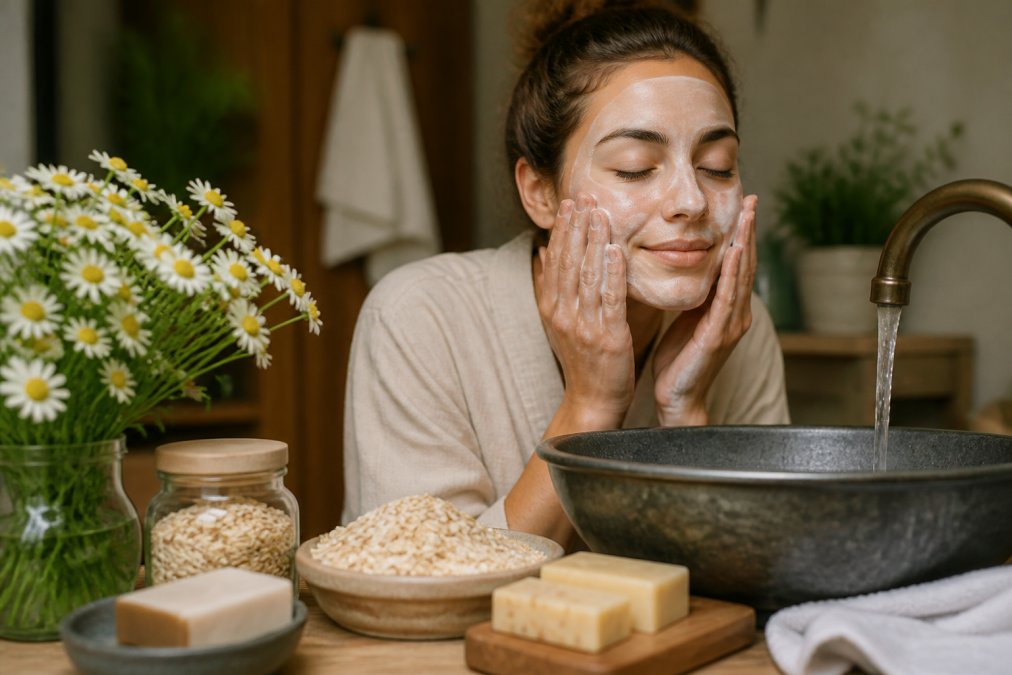
Step 1: Gentle Cleansing
Start with lukewarm water, not hot. Hot water opens your pores and strips oils more aggressively. Lukewarm water cleanses effectively without triggering additional irritation.
Use a soap-free cleanser or a gentle, fragrance-free natural soap. Lather it gently in your hands, then apply with your fingertips using circular motions. Avoid washcloths or loofahs, which create unnecessary friction on sensitive skin.
Rinse thoroughly with lukewarm water. Pat your skin dry gently, don't rub. Aggressive rubbing irritates and damages your barrier further.
Cleanse twice daily: morning and evening. Over-cleansing strips your barrier, so stick to twice daily maximum. If you wear heavy makeup, a gentle oil-based cleanser followed by your regular soap works without stripping.
Step 2: Hydration and Moisturizing
Apply hydrating ingredients while your skin is still slightly damp. This is the critical step most people skip or rush through. Damp skin absorbs hydration more effectively than completely dry skin.
Use a hydrating toner or essence containing glycerin or hyaluronic acid. Apply with gentle patting motions, allowing it to absorb for 30 seconds.
Follow immediately with a moisturizer containing emollients, oils, butters, or ceramides. This seals in the hydration and supports your barrier. For very dry or damaged skin, use a heavier moisturizer at night and a lighter one during the day.
If your skin is severely irritated, consider using a simple moisturizer with minimal ingredients: glycerin, a plant oil, and perhaps colloidal oatmeal or aloe. Fewer ingredients mean fewer potential irritants.
Allow your moisturizer to fully absorb before applying makeup or sunscreen. This typically takes 5-10 minutes.
Step 3: Sun Protection
Sun exposure is one of the most common triggers for sensitive skin flare-ups. UV rays damage your barrier, increase inflammation, and trigger redness. Daily sun protection is non-negotiable for soothing sensitive skin.
Use a mineral sunscreen (zinc oxide or titanium dioxide) rather than chemical sunscreen (the FDA). Mineral sunscreens sit on top of your skin and reflect UV rays, whereas chemical sunscreens absorb into your skin and can trigger irritation in sensitive individuals.
Look for sunscreen labeled hypoallergenic and non-comedogenic. Apply generously, most people apply far too little sunscreen to get adequate protection (the CDC). Use about a quarter-teaspoon for your face, or enough to cover your entire face, neck, and ears.
Reapply every two hours if you're outdoors, or after swimming or sweating. On days when you're mostly indoors, one application in the morning is typically sufficient.
If mineral sunscreen feels too heavy, look for lightweight formulations or sunscreen powders designed for sensitive skin. The key is consistency, daily sun protection prevents flare-ups and supports barrier healing.
Common Mistakes When Caring for Sensitive Skin
The biggest mistake is using too many products at once. People with sensitive skin often try multiple "healing" products simultaneously, then can't identify which one triggered a reaction. Introduce one product at a time, waiting at least one week before adding another. This allows your skin to stabilize and tells you exactly what works.
Over-exfoliation is the second major error. Even gentle exfoliation can damage a compromised barrier. For sensitive skin, exfoliate no more than once weekly, and only with physical exfoliants like finely ground oatmeal or soft brushes, never chemical exfoliants until your barrier is fully repaired.
Skipping moisturizer because your skin feels oily is another common mistake. Oily skin often indicates dehydration, your skin overproduces oil to compensate for moisture loss. Hydrating properly actually reduces excess oil production.
Ignoring ingredient lists and buying products labeled "natural" without checking what's actually inside sets many people up for failure. Natural doesn't automatically mean gentle. Essential oils, botanical extracts, and plant-based ingredients can all trigger sensitivity if present in high concentrations or if you're allergic to them specifically.
Using inconsistent routines prevents your skin from stabilizing. Switching products every few days doesn't give your barrier time to adapt and repair. Commit to a routine for at least three weeks before deciding if it's working.
Finally, many people continue using the same irritating products while adding "soothing" ones on top. This is like trying to heal a wound while continuing to scratch it. Identify and eliminate irritants first, then build a supportive routine.
Sensitive skin doesn't have to mean endless frustration with reactive flare-ups and limited product options. The path forward starts with understanding your specific triggers, choosing genuinely gentle products, and committing to a consistent routine that supports your barrier. The Beekeeper's Basket handcrafts natural soaps and skincare products specifically designed for reactive skin, made in small batches with fresh, calming ingredients like colloidal oatmeal, aloe vera, and botanical extracts that actually soothe instead of irritate. Explore our collection of artisan products formulated for sensitive skin and discover how the right natural ingredients can transform your skin health. LET'S EXPLORE!
Frequently Asked Questions
Q: How can I tell if a natural product will irritate my sensitive skin before using it?
A: Patch testing is essential. Apply a small amount of the product to your inner arm or behind your ear, wait 24-48 hours, and watch for redness, itching, or burning. This simple step prevents full-face reactions. Always test new products, even natural ones, since sensitivity varies person to person. If you have eczema-prone or highly reactive skin, this precaution is especially important before committing to a full-size purchase.
Q: What natural ingredients are best for calming irritated skin?
A: Colloidal oatmeal, aloe vera, and chamomile are among the most effective natural calming agents. Colloidal oatmeal reduces inflammation and soothes itching, aloe vera hydrates and alleviates redness, and chamomile has anti-inflammatory properties. These ingredients work by soothing the skin barrier and reducing flare-ups. Look for products labeled as hypoallergenic and fragrance-free to minimize the risk of additional irritation.
Q: Can a damaged skin barrier repair itself naturally?
A: Yes, but it requires consistent care. Your skin barrier, the lipid barrier that protects against transepidermal water loss, repairs itself when you use pH-balanced, soap-free cleansers and apply emollients and humectants regularly. Stop using harsh products, avoid over-exfoliation, and moisturize daily with natural products containing ingredients like ceramides or plant oils. Most people see noticeable improvement within 2-4 weeks of gentle, consistent care.
Q: How do natural soaps differ from conventional cleansers for sensitive skin?
A: Natural soaps made with gentle, plant-based ingredients and without synthetic fragrances or harsh detergents are less likely to strip the skin barrier. Many commercial soaps contain sulfates and artificial additives that trigger irritation and redness. Natural, handcrafted soaps, especially those made with botanical extracts and emollients, are formulated to cleanse without disrupting your skin's microbiome. Always choose fragrance-free or naturally scented options if you have reactive skin.
This article was written using GrandRanker