 how-to
Natural Soap for Sensitive Skin: How to Choose Right
Table of Contents
- The Role of pH Balance in Skin Comfort
- Ingredients to Look For in Natural Soap for Sensitive Skin
- Ingredients to Avoid in Soap for Sensitive Skin
- Benefits of Goat Milk Soap for Eczema and Dry Skin
- How to Patch Test and Vet Ingredients Like a Dermatologist
- How to Transition to Natural Skincare Without Irritation
- What to Look for When Buying Handcrafted Natural Soap
- Frequently Asked Questions
How Natural Soap for Sensitive Skin Actually Works
Natural soap for sensitive skin is formulated without synthetic detergents, artificial fragrances, or harsh chemical additives, relying instead on plant-based oils, natural fats, and gentle botanicals. At The Beekeeper's Basket, we've spent years crafting small-batch soaps specifically for people whose skin reacts to commercial products.
A soap can call itself natural and still damage sensitive skin if the pH is off, the fragrance load is high, or the saponification process destroys beneficial compounds. Below, we'll show you what separates a genuinely skin-safe formula from one that merely looks the part on the label.
The Role of pH Balance in Skin Comfort
Healthy skin sits in a mildly acidic range, roughly between 4.5 and 5.5, which supports the skin microbiome and maintains the acid mantle that keeps irritants out and moisture in. Most traditional bar soaps sit at a much higher pH, stripping the acid mantle and leaving sensitive skin feeling tight, itchy, or inflamed.
A well-formulated natural soap uses superfatting, where excess oils remain unsaponified in the final bar, helping to buffer the pH and leave a conditioning film on the skin rather than stripping it bare. This is why pH-balanced natural soap performs differently on sensitive skin, it actively supports your skin barrier.
Cold-Process Soap Making and Why It Matters
Cold-process soap making combines oils and lye at low temperatures, allowing saponification to occur slowly without applied heat. This preserves heat-sensitive compounds like glycerin, vitamins, and emollients naturally present in oils such as olive oil and shea butter.
Commercial hot-process manufacturing typically extracts the glycerin for resale, leaving a harder, more drying bar. Cold-processed soap retains that glycerin, where it acts as a humectant, drawing moisture to the skin during washing. For eczema-prone or reactive skin, this distinction is significant.
Ingredients to Look For in Natural Soap for Sensitive Skin
The biggest mistake when choosing natural soap for sensitive skin is focusing only on what's been removed. The positive ingredient list matters equally. Genuinely nourishing bars are built around specific oils, butters, and botanicals chosen for their emollient, anti-inflammatory, and skin-barrier-supporting properties.
Moisturizing Natural Oils and Emollients
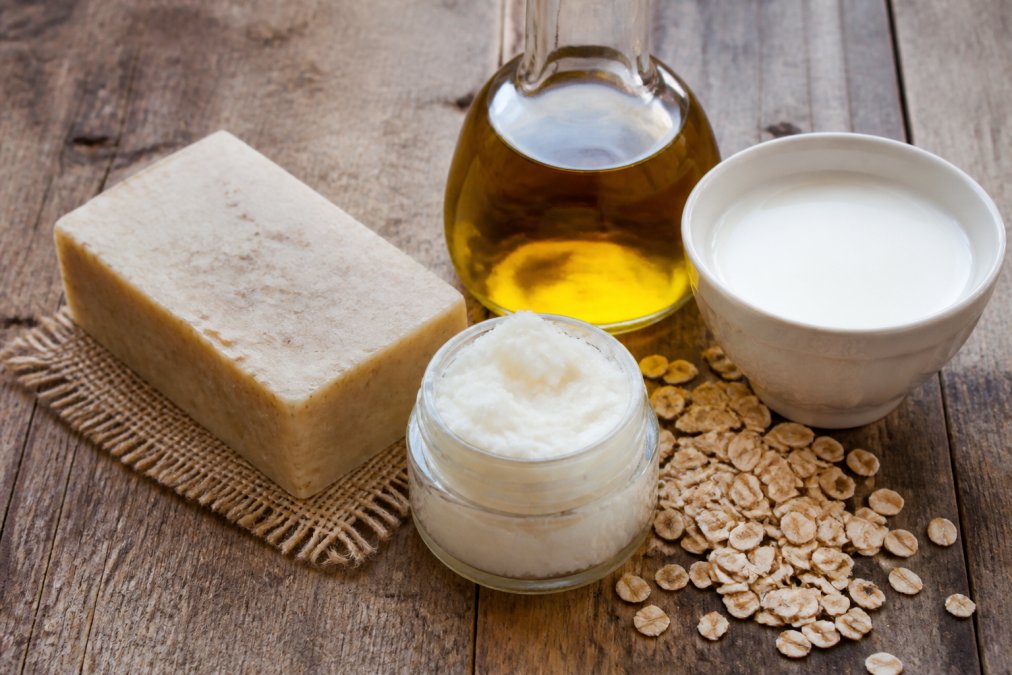
The best natural soaps for dry or reactive skin are built on a base of oils with a high proportion of oleic acid, which penetrates deeply and supports moisture retention without clogging pores.
Key oils to look for:
- Olive oil: Rich in oleic acid, squalene, and polyphenols. Deeply conditioning and well-tolerated by most sensitive skin types.
- Coconut oil (at low percentages): Adds lather and cleansing power, but must be balanced carefully to avoid drying sensitive skin.
- Castor oil: A small addition dramatically improves lather quality and adds a soothing, non-comedogenic film.
- Sweet almond oil: High in vitamin E and fatty acids, making it an excellent emollient for dry, itchy skin.
According to the National Eczema Association's ingredient guidance, emollient-rich formulas are a front-line recommendation for managing eczema-prone and sensitive skin daily.
Goat Milk, Shea Butter, and Other Skin-Barrier Supporters
Goat milk and shea butter are two of the most effective functional ingredients in natural soap for sensitive skin, working through different mechanisms.
Shea butter is an emollient and occlusive agent packed with triglycerides and cinnamic acid, which has documented anti-inflammatory properties. In superfatted soap, a measurable conditioning layer remains on the skin after rinsing.
Goat milk contains lactic acid, a gentle alpha-hydroxy acid that softens the skin's surface layer without aggressive exfoliation. Its fat content contributes to a creamy, hydrating lather that rarely triggers sensitivity.
Ingredients to Avoid in Soap for Sensitive Skin
Knowing what to avoid is more immediately useful than knowing what to seek. Many products presented as gentle or natural still contain compounds that commonly trigger allergic reactions, contact dermatitis, or skin barrier damage.
Synthetic Additives That Trigger Allergic Reactions
The following ingredients appear frequently in commercial soaps and even some products marketed as natural:
- Parabens: Preservatives linked to skin sensitization in some individuals.
- Sulfates (SLS/SLES): Aggressive surfactants that strip natural oils and disrupt the acid mantle.
- Phthalates: Often used as fragrance fixatives, frequently unlisted on labels.
- Synthetic dyes: Artificial colorants serve no functional purpose and commonly trigger contact dermatitis.
- Formaldehyde-releasing preservatives: Ingredients like DMDM hydantoin slowly release formaldehyde, a known allergen.
As the Environmental Working Group's Skin Deep database documents, many of these compounds carry hazard scores reflecting their potential for skin sensitization or allergic reaction.
Why Fragrance-Free Formulas Make a Difference
Fragrance is the single most common cause of allergic contact dermatitis from personal care products. This applies to both synthetic fragrance blends and essential oils, which are often assumed safe because they're natural.
A fragrance-free formula contains no added scent compounds. This differs from "unscented," which can mean fragrance has been added to mask other odors. For reactive skin, only truly fragrance-free products eliminate this risk entirely.
Benefits of Goat Milk Soap for Eczema and Dry Skin
Goat milk soap has become a go-to recommendation for eczema and dry skin for solid reasons. The lactic acid in goat milk acts as a gentle chemical exfoliant, helping remove dead skin cell buildup without aggressive abrasion that worsens inflamed skin.
The fat molecules in goat milk are small enough to penetrate the outer skin layer, delivering moisture directly rather than just coating the surface. For people managing eczema, goat milk soap doesn't foam aggressively, doesn't strip the skin's lipid barrier, and when formulated without synthetic additives, doesn't introduce fragrance or preservative allergens that commonly trigger flares. The American Academy of Dermatology's eczema care guidelines consistently emphasize gentle, non-stripping cleansers as a cornerstone of daily eczema management.
| Ingredient | Benefit for Sensitive Skin | Best For |
|---|---|---|
| Goat milk | Lactic acid exfoliation, hydrating lather | Eczema, dry skin, reactive skin |
| Shea butter | Anti-inflammatory, occlusive emollient | Dry patches, barrier repair |
| Olive oil | Deep conditioning, oleic acid-rich | All sensitive skin types |
| Castor oil | Lather quality, soothing film | Combination sensitive skin |
| Oat extract | Calming, anti-itch properties | Inflamed or itchy skin |
How to Patch Test and Vet Ingredients Like a Dermatologist
Patch testing is the most reliable way to identify whether a product will cause a reaction before applying it to your face or body. The process is simple, takes less than 48 hours, and eliminates most guesswork.
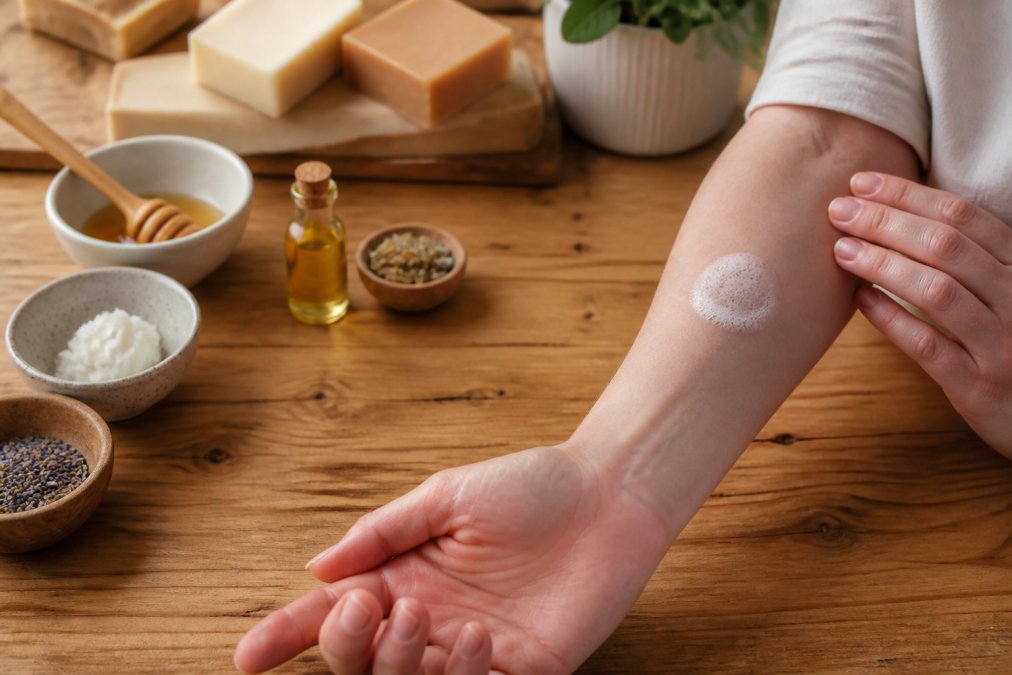
Standard patch test protocol:
- Apply a small amount of lather to the inside of your forearm or behind your ear.
- Leave it on for two to five minutes, then rinse.
- Wait 24 hours and check for redness, itching, swelling, or raised skin.
- If no reaction occurs, repeat on a slightly larger area and wait another 24 hours.
- A clean result across both rounds signals the formula is compatible with your skin.
Beyond patch testing, vet an ingredient list by cross-referencing it against known sensitizers. A short ingredient list is good, but what matters is whether each ingredient is appropriate for reactive skin. Look for clearly identified oils and butters by botanical names, no "fragrance" or "parfum" entries, and minimal preservatives beyond vitamin E or rosemary extract.
How to Transition to Natural Skincare Without Irritation
Transitioning to natural skincare often fails because people switch too many things at once and can't identify what caused a reaction. Introduce one new product at a time and use it exclusively for at least two weeks before adding another.
Expect these changes during transition:
- Lather differences: Natural cold-processed soaps produce creamier, less voluminous lather than sulfate-based soaps. This is normal.
- Skin adjustment period: Some experience brief increased oiliness or dryness as skin recalibrates after years of over-stripping. This usually resolves within two to four weeks.
- Scent sensitivity: Fragrance-free natural soaps may initially seem bland, but most people find their sensitivity to synthetic fragrance actually increases once they've been away from it.
Choosing soaps with biodegradable natural fats and organic ingredients also reduces environmental load, as many synthetic surfactants and preservatives don't break down cleanly in wastewater systems.
What to Look for When Buying Handcrafted Natural Soap
Not all handcrafted soaps are created equal. Knowing what to look for matters.
Transparency on ingredients: A reputable maker lists every ingredient by its proper name. Vague terms like "proprietary blend" are red flags. Full INCI (International Nomenclature of Cosmetic Ingredients) labeling is standard.
Freshness and batch size: Small-batch production means shorter time between manufacture and use. Natural soaps don't contain aggressive preservatives that give commercial products multi-year shelf life.
Cure time: Properly made cold-processed soap needs four to six weeks to cure after pouring. This allows excess water to evaporate, hardens the bar, and mellows the pH.
Superfatting percentage: A superfatting rate between five and eight percent is the sweet spot for sensitive skin, enough free oils to condition without making the bar go rancid quickly.
The Beekeeper's Basket handcrafts every bar in small batches in New England, with over 20,000 sales and a 5-star rating reflecting consistent quality. Every ingredient is chosen with sensitive skin in mind, and formulas don't rely on synthetic additives, artificial fragrances, or harsh surfactants.
Frequently Asked Questions
Q: What makes a soap truly natural and safe for sensitive skin?
A: A genuinely natural soap for sensitive skin uses plant-based fats, oils, and botanicals with no synthetic fragrances, parabens, sulfates, or phthalates. Look for short ingredient lists you can actually read. Cold-processed, handmade bars tend to retain glycerin, a naturally occurring humectant that supports moisture retention. Reading the ingredient panel yourself is the most reliable check.
Q: Is goat milk soap good for sensitive skin and eczema?
A: Goat milk soap is widely recommended for sensitive skin and eczema-prone skin because goat milk contains lactic acid, which gently exfoliates without disrupting the skin barrier. Its natural fat content also makes it deeply hydrating and soothing. People with dermatitis often report less redness and tightness compared to conventional soap. Because it is fragrance-free and free of harsh surfactants when made traditionally, it is one of the gentler options available for daily cleansing.
Q: What ingredients should I avoid in soap if I have hypersensitive skin?
A: Avoid synthetic fragrances, sulfates (like sodium lauryl sulfate), parabens, phthalates, artificial dyes, and alcohol-based preservatives. These are the most common triggers for allergic reactions, contact dermatitis, and skin irritation. Even some essential oils, such as citrus or cinnamon, can cause reactions in very sensitive individuals. If your skin is highly reactive, fragrance-free and unscented formulas with minimal ingredients are the safest starting point.
Q: How often should I wash sensitive skin to protect the moisture barrier?
A: Washing sensitive skin once or twice daily is generally enough. Over-washing strips the skin microbiome and natural oils that keep the skin barrier intact, which can worsen dryness and irritation. Use lukewarm water rather than hot, pat dry gently, and follow with a fragrance-free moisturizer. If you notice tightness or redness after cleansing, that is a signal to reduce frequency or switch to a milder, hypoallergenic bar.
Choosing the right natural soap for sensitive skin takes more than reading "gentle" on a label. The real work is in understanding pH, cold-process methods, ingredient function, and your own skin's specific triggers. The Beekeeper's Basket makes that process easier with small-batch, bee-inspired soaps formulated for people who've been let down by "natural" products before. Explore our handcrafted collection and find a formula your skin will actually thank you for.
This article was written using GrandRanker