 ultimate-guide
Benefits of Beeswax for Skin: A 2026 Guide
Table of Contents
- What Beeswax Actually Is (and Why Your Skin Loves It)
- Top Benefits of Beeswax for Skin Health
- Beeswax for Sensitive Skin: Dermatitis, Psoriasis, and Irritation
- Is Beeswax Comedogenic? What the Rating Actually Means
- Beeswax vs Shea Butter for Skin: Which One Do You Need?
- How to Use Beeswax in Skincare: Formulas, Ratios, and Application
- Beeswax vs Petroleum-Based Products: A Petroleum-Free Alternative
- Sustainability, Ethical Sourcing, and What to Look For
- Frequently Asked Questions
Last Updated: August 31, 2026
What Beeswax Actually Is (and Why Your Skin Loves It)
Beeswax is a natural wax produced by honeybee secretions, formed when worker bees metabolize honey and secrete wax from glands on their abdomen. It is rich in long-chain fatty acids, hydrocarbons, and esters that make it extraordinarily compatible with human skin. Many people think of beeswax as a simple thickener, but it functions simultaneously as an occlusive agent, an emollient, an antimicrobial barrier, and an antioxidant delivery system.
The composition of beeswax is roughly 70% esters of fatty acids and long-chain alcohols, with the remainder split between hydrocarbons, free fatty acids, and trace compounds including vitamin A. That vitamin A content supports skin cell turnover and maintains the integrity of the lipid barrier, which is why beeswax has been used in medicinal salves and balms for centuries. According to the National Center for Biotechnology Information's review of natural waxes in cosmetics, beeswax remains one of the most widely studied natural waxes in cosmetic science, valued for its film-forming properties and skin compatibility.
Top Benefits of Beeswax for Skin Health
The benefits of beeswax for skin fall into three distinct categories: barrier protection, therapeutic properties, and structural support.
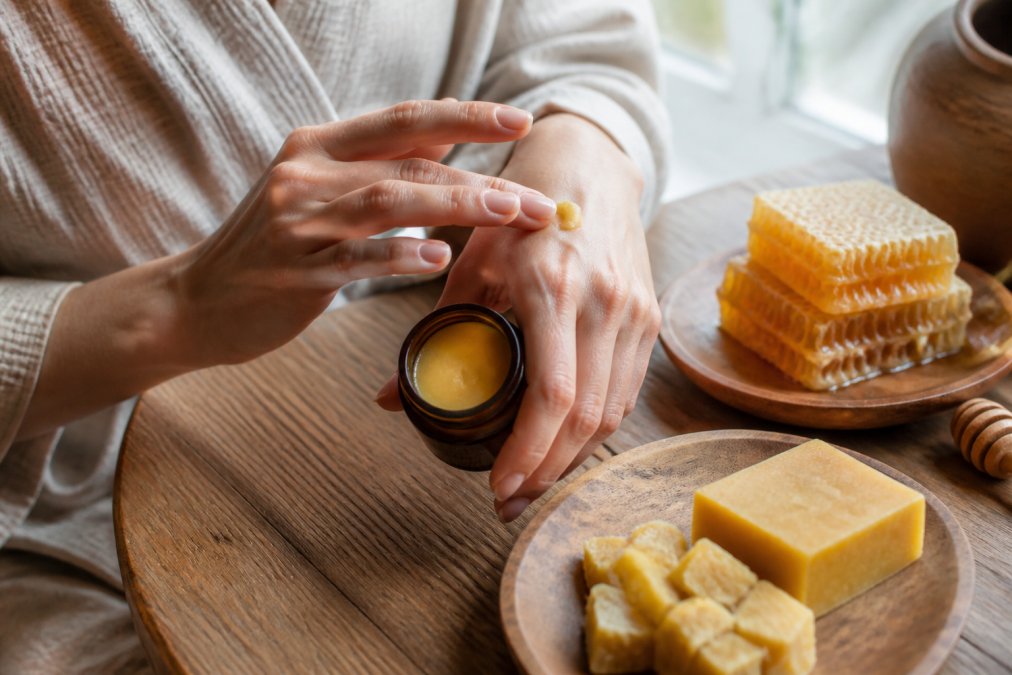
Here is what the evidence and practical experience support:
- Occlusive moisture retention - Beeswax forms a breathable protective film over the skin surface, reducing transepidermal water loss without fully blocking oxygen exchange.
- Anti-inflammatory activity - Compounds in beeswax, particularly certain long-chain alcohols, show measurable anti-inflammatory properties in cutaneous tissue.
- Antimicrobial protection - Beeswax creates an environment inhospitable to many common skin pathogens, supporting wound healing and infection prevention.
- Antioxidant delivery - The vitamin A and trace compounds in raw beeswax contribute antioxidant support that protects skin cells from oxidative stress.
- Skin elasticity support - Regular use of beeswax-based balms and lotions helps maintain skin suppleness by reinforcing the lipid barrier.
- Hypoallergenic profile - Beeswax is generally well-tolerated by sensitive skin types, with a low incidence of contact reactions compared to many synthetic emollients.
Occlusive Protection and Moisture Retention
The most clinically significant benefit of beeswax is its occlusive function. An occlusive agent slows the evaporation of water from the skin surface, a process measured as transepidermal water loss. High transepidermal water loss is associated with dry skin, eczema, psoriasis, and barrier dysfunction.
What separates beeswax from heavier occlusives like petroleum jelly is breathability. Beeswax forms a semi-permeable protective film rather than a completely sealed barrier, allowing skin to exchange gases and perspire normally. This makes beeswax better suited for daytime use and for sensitive skin that reacts poorly to fully occlusive products.
Beeswax also functions as an emollient, filling microscopic gaps between skin cells and softening dry, rough skin. This dual action makes it an effective base for salves, balms, and lip care products.
Anti-Inflammatory and Antimicrobial Properties
Research published through PubMed's database of dermatological studies has documented that beeswax demonstrates inhibitory activity against common skin pathogens including Staphylococcus aureus and Candida albicans, both implicated in atopic dermatitis and seborrheic dermatitis.
The anti-inflammatory effect is nuanced. Beeswax itself is not a pharmaceutical anti-inflammatory, but the fatty acid profile and certain wax esters appear to modulate the skin's inflammatory response at the surface level. For everyday skin irritation, minor abrasions, and chronic low-grade inflammation associated with dry or sensitive skin, that level of intervention is often exactly what is needed. The antimicrobial properties make beeswax particularly valuable in wound care salves and healing balms.
Antioxidant Support and Skin Elasticity
Raw, minimally processed beeswax contains naturally occurring vitamin A, which supports keratinocyte health and collagen maintenance. Skin elasticity depends on a healthy extracellular matrix and adequate hydration of the stratum corneum. Beeswax supports both by reducing transepidermal water loss and delivering emollient fatty acids, helping maintain the plumpness and flexibility of skin that tends toward dryness or early signs of aging.
Beeswax for Sensitive Skin: Dermatitis, Psoriasis, and Irritation
For atopic dermatitis, the core problem is a compromised skin barrier that allows irritants and allergens to penetrate and trigger inflammatory responses. Beeswax addresses this directly by reinforcing the lipid barrier from the outside. It does not treat the underlying immune dysregulation, but it reduces the environmental insult that triggers flares. Many people with dermatitis find that consistent use of beeswax-based balms reduces the frequency and severity of flare-ups.
For psoriasis, beeswax cannot address the autoimmune component, but the occlusive and anti-inflammatory properties help manage the scaling, dryness, and surface irritation that make psoriasis uncomfortable day-to-day.
For people with sensitive skin, the cleaner the formulation, the lower the risk. Beeswax itself has a low sensitization rate, but formulations that combine beeswax with essential oils, fragrances, or botanical extracts introduce additional variables.
Is Beeswax Comedogenic? What the Rating Actually Means
Beeswax scores a 0-2 on the comedogenic rating scale, which classifies it as non-comedogenic to mildly comedogenic. For most skin types, including combination and oily skin, this rating means beeswax is unlikely to clog pores or cause breakouts.
The comedogenic scale runs from 0 to 5, with 0-2 generally considered safe for acne-prone skin. The practical nuance: comedogenic ratings are measured on isolated ingredients, not finished formulations. A beeswax-based product that also contains heavy carrier oils with higher comedogenic ratings may behave differently on acne-prone skin. For face applications on acne-prone skin, lighter formulations with lower beeswax concentrations and non-comedogenic carrier oils are the better choice.
Beeswax vs Shea Butter for Skin: Which One Do You Need?
Shea butter is primarily an emollient and humectant that softens skin, draws moisture in, and absorbs relatively quickly. Beeswax is primarily an occlusive and emollient that forms a protective film over the skin surface and seals in moisture already present.
| Property | Beeswax | Shea Butter |
|---|---|---|
| Primary function | Occlusive, emollient | Emollient, humectant |
| Absorption | Stays on surface | Absorbs into skin |
| Moisture mechanism | Seals moisture in | Draws moisture in |
| Best for | Barrier protection, lip care, salves | Deep conditioning, body moisturizing |
| Comedogenic rating | 0-2 (low) | 0-2 (low) |
| Texture in formulas | Provides structure and firmness | Soft, melts easily |
The most effective approach is to use both. Many professional formulations combine shea butter as the emollient base with beeswax as the structural and occlusive component. If you can only choose one: for lip care, hand balms, and anything that needs to stay on the skin surface and provide lasting protection, beeswax wins. For a rich body moisturizer that absorbs and leaves skin soft without a film, shea butter is the better standalone choice.
How to Use Beeswax in Skincare: Formulas, Ratios, and Application
Learning how to use beeswax in skincare opens up a genuinely useful range of DIY options. The key variables are the ratio of beeswax to oil and the melting process.
DIY Formulation Ratios for Balms, Salves, and Lotions
The ratio of beeswax to carrier oil determines the final texture of your product. Higher beeswax percentages produce firmer products; lower percentages produce softer ones.
Lip Balm: 25-30% beeswax to 70-75% oils for a firm, waxy texture that holds its shape at room temperature.
Body Salve or Healing Balm: 15-20% beeswax to 80-85% oils for a softer, scoopable product that melts on contact with skin.
Body Lotion (water-in-oil emulsion): 5-10% beeswax as the emulsifying and thickening component.
Cuticle and Nail Balm: 20-25% beeswax for a firm, targeted application product.
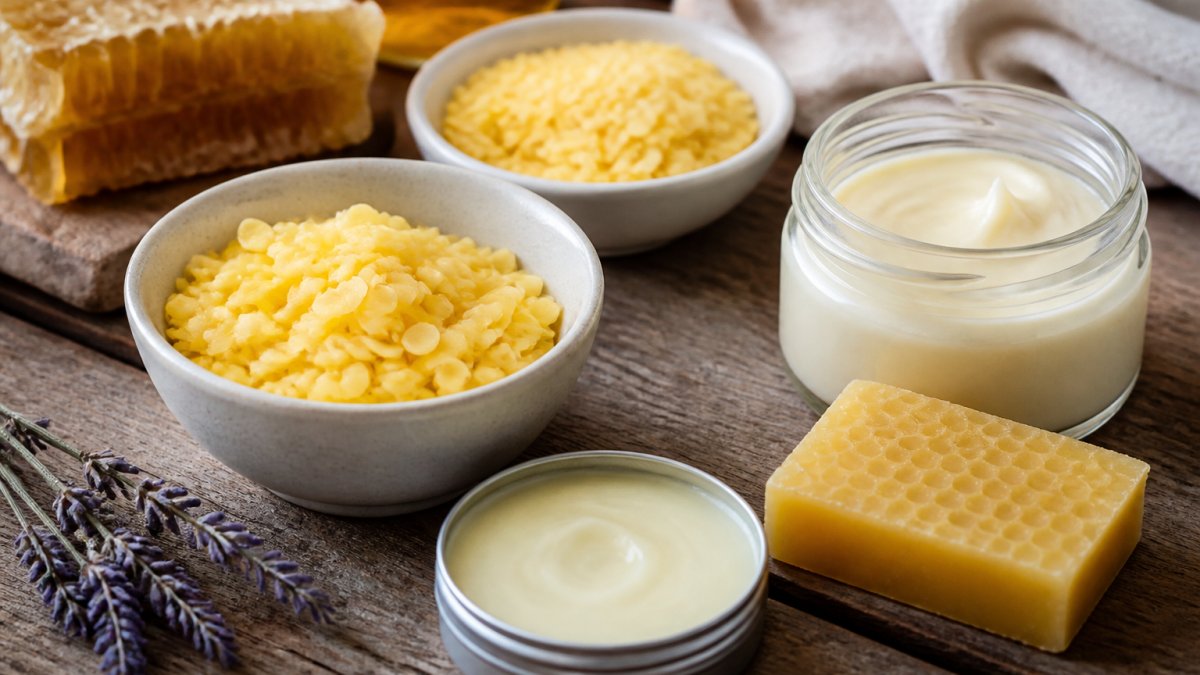
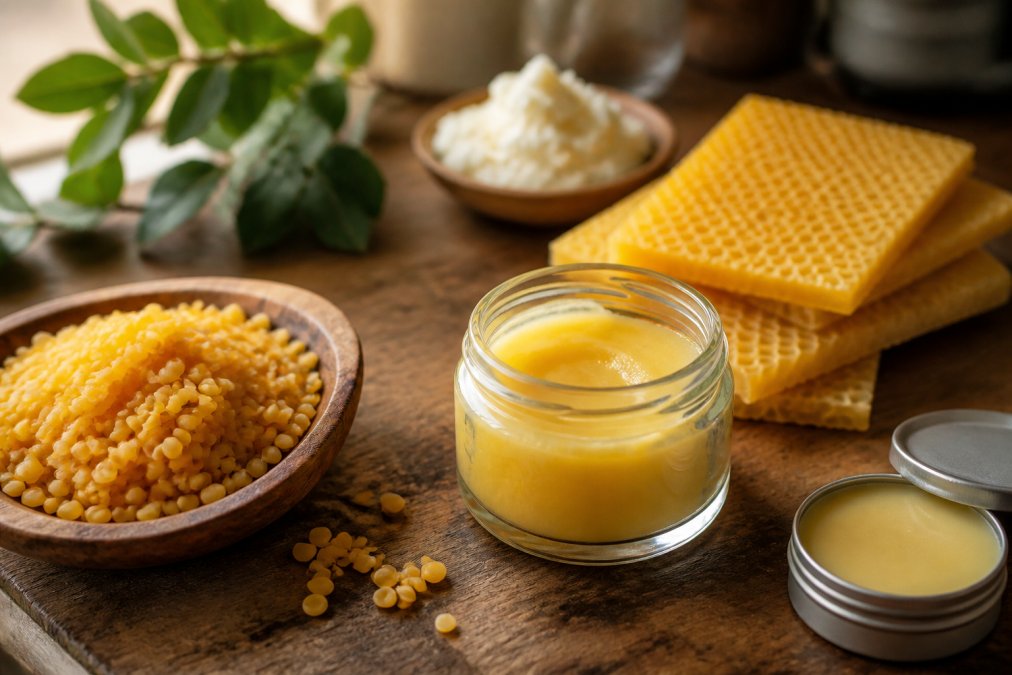
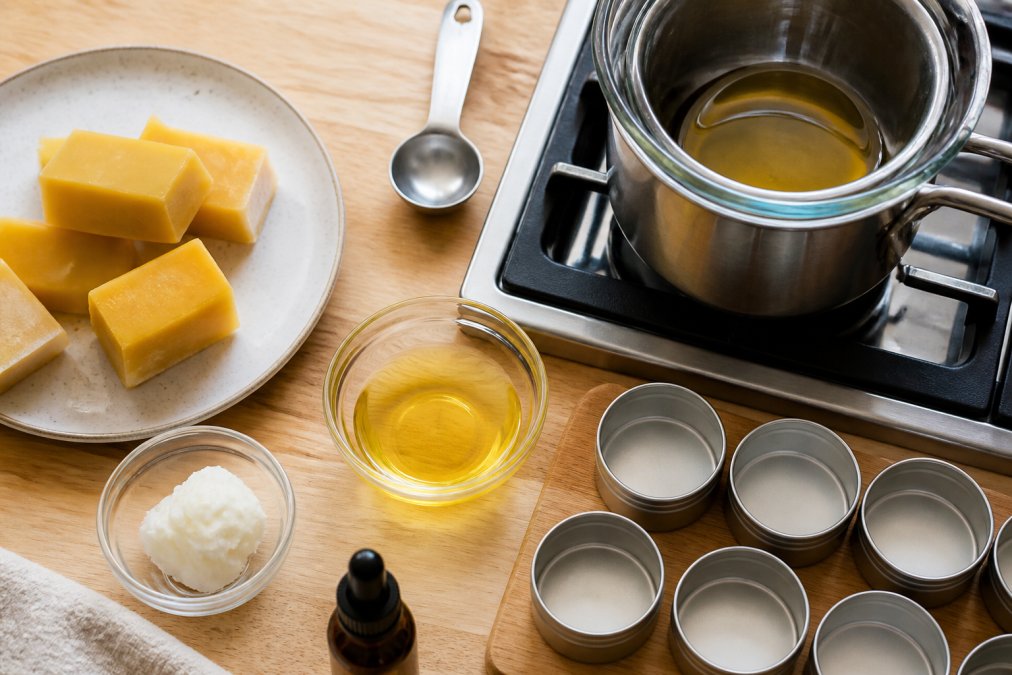
Basic method for a simple two-ingredient salve:
- Measure beeswax pellets and carrier oil by weight, not volume.
- Melt beeswax in a double boiler over low heat until fully liquid.
- Remove from heat and add carrier oil, stirring to combine.
- Pour into clean, dry tins or jars immediately before the mixture begins to set.
- Allow to cool undisturbed at room temperature for a minimum of two hours before sealing.
Allergy Testing and Patch Test Protocol
Before using any new beeswax product on your face or a large area of skin, a patch test is the responsible first step, especially for people with known bee-related sensitivities or a history of contact dermatitis.
Standard patch test protocol:
- Apply a small amount of the product to the inner forearm or behind the ear.
- Leave it undisturbed for 24 hours without washing the area.
- Check for redness, itching, swelling, or any unusual sensation at the 24-hour mark.
- If no reaction occurs, extend observation to 48 hours before proceeding with full application.
For DIY formulations, test the finished product, not the individual ingredients. The interaction between components can produce sensitization even when each ingredient tests clean individually.
Beeswax vs Petroleum-Based Products: A Petroleum-Free Alternative
The comparison between beeswax and petroleum-based products comes down to origin, breathability, and what you want your skincare to do. As documented in the Environmental Working Group's cosmetic ingredient database, petroleum-derived ingredients like petrolatum are fully occlusive, creating a complete seal over the skin surface that blocks both water loss and gas exchange.
Beeswax creates a semi-permeable protective film instead, allowing skin to breathe, perspire, and exchange gases normally. For people who find petroleum-based products feel suffocating or who prefer petroleum-free formulations, beeswax is a direct functional alternative. Beeswax trades some sealing efficiency for breathability and a more complex ingredient profile that includes fatty acids, vitamin A, and antimicrobial compounds that petrolatum does not offer.
For everyday lip care, hand protection, and barrier maintenance, beeswax performs comparably to petroleum-based alternatives while delivering additional skin-conditioning benefits. Many users find beeswax-based products feel lighter and less greasy than petroleum-based equivalents, which improves compliance.
Sustainability, Ethical Sourcing, and What to Look For
Sustainability in beeswax starts with the health of the hive. Responsibly sourced beeswax comes from hives managed with the bees' welfare as a priority, not just maximum yield.
What to look for when sourcing beeswax products:
- Origin transparency - Can the producer tell you where the beeswax comes from and how the hives are managed?
- Small-batch production - Smaller operations tend to have more direct relationships with their beekeepers and more control over ingredient quality.
- Minimal processing - Heavily filtered or bleached beeswax loses naturally occurring beneficial compounds. Yellow or golden beeswax that retains its natural color and scent is generally less processed.
- Certifications - Look for products from suppliers who can speak to their beekeeping practices.
The ethical sourcing question connects directly to product quality. Beeswax from well-managed, healthy hives has a richer fatty acid profile and more consistent properties than wax from stressed or poorly managed colonies. Sustainability and skin benefit point in the same direction. For consumers who want to verify sustainability claims, the Xerces Society's pollinator conservation resources provides guidance on what responsible beekeeping practices look like.
Dry, sensitive skin deserves better than synthetic fillers and petroleum-heavy formulas that sit on the surface and do nothing meaningful. Beeswax for skin offers a genuinely functional alternative: barrier protection, antimicrobial activity, and skin-conditioning fatty acids in a single, time-tested ingredient. At The Beekeeper's Basket, every small-batch balm, lotion, and salve we craft in New England is built around exactly this kind of thoughtful, ingredient-first approach. Explore our handcrafted beeswax skincare collection and find the product your skin has been missing.
Frequently Asked Questions
Is beeswax good to put on your face?
Beeswax is generally safe for facial use, especially for dry or sensitive skin. It forms a protective film that reduces transepidermal water loss without fully blocking the skin's ability to breathe. Because it scores a 0-2 on the comedogenic scale, most skin types tolerate it well. However, if you have acne-prone skin, apply it to dry patches rather than oily zones, and always do a patch test first to rule out any sensitivity to honeybee secretions.
Does beeswax clog pores?
Beeswax is considered non-comedogenic or very mildly so, rating between 0 and 2 on the standard comedogenic scale. That means it rarely clogs pores for most people. Its large molecular structure sits on top of the skin as an occlusive agent rather than penetrating deeply into follicles. Acne-prone individuals should still patch test and use beeswax-based products sparingly on the face, focusing on drier areas like lips, cheeks, and brow bone.
Which is better for skin, beeswax or shea butter?
They serve different functions. Beeswax for skin works primarily as an occlusive agent, forming a protective barrier that locks in moisture and shields against environmental irritants. Shea butter is an emollient and humectant, softening skin and drawing moisture in. For very dry or cracked skin, combining both gives the best results: shea butter hydrates while beeswax seals that hydration in. Alone, beeswax suits protective balms and salves; shea butter suits daily moisturizers.
What are the potential disadvantages of using beeswax on skin?
The main concerns are allergic reactions and texture. People with bee-related allergies should patch test before use, since beeswax contains trace proteins from honeybee secretions. The waxy consistency can feel heavy on oily skin types. Pure beeswax also melts at relatively high temperatures, so solid formulas may feel stiff in cold weather. Finally, because it is an occlusive agent rather than a humectant, beeswax alone won't add moisture, it only prevents moisture loss.
This article was written using GrandRanker