 listicle
7 Best Beeswax Melts for Home: Natural, Non-Toxic Scents
Table of Contents
- Why Beeswax Melts Beat Paraffin for Home Fragrance
- How We Picked the Best Beeswax Melts
- The 7 Best Beeswax Melts for Your Warmer
- Beeswax vs Soy Wax for Melts: Which Is Better?
- How to Make Beeswax Wax Melts at Home
- Beyond the Warmer: Benefits of Beeswax for Skin
- Warmer Compatibility and Scent Troubleshooting
- Conclusion: Choose Your Perfect Scent
- Frequently Asked Questions
Last Updated: September 6, 2026
Why Beeswax Melts Beat Paraffin for Home Fragrance
Beeswax melts are a natural, non-toxic alternative to paraffin-based wax tarts, offering a cleaner burn and a subtle honey aroma that synthetic fragrances can't replicate. For health-conscious homeowners, the switch comes down to what you are breathing in: paraffin is a petroleum byproduct that can release unwanted compounds when heated, while pure beeswax is a renewable resource that actually purifies the air as it warms. At The Beekeeper’s Basket, we believe that choosing the right melt transforms the entire ambiance of your home.
The most obvious difference is the scent profile. Paraffin tarts often rely on artificial fragrance oils to achieve their throw, which can smell sharp or chemical. Beeswax has a naturally low, sweet scent on its own, so makers blend it with essential oils and coconut oil to create a more complex, grounded aroma. This means the best beeswax melts for home use deliver fragrance that feels softer and more authentic, never overpowering. Below, we will show you exactly how to pick the right melt, which warmer to use, and what to expect from scent throw.
How We Picked the Best Beeswax Melts
We evaluated dozens of options based on four criteria: ingredient purity, scent throw, warmer compatibility, and value. Since beeswax has a higher melting point than soy or paraffin, we prioritized melts designed to work with standard electric warmers rather than those that require excessive wattage.
- Purity: Look for 100% pure beeswax or blends that list beeswax first, without paraffin or synthetic additives.
- Fragrance: Natural essential oils and phthalate-free fragrance oils score highest for clean burning.
- Texture: A crumbly, hand-poured look often indicates a higher beeswax content versus a dense, uniform block.
- Packaging: Sustainable, biodegradable options matter for eco-conscious buyers.
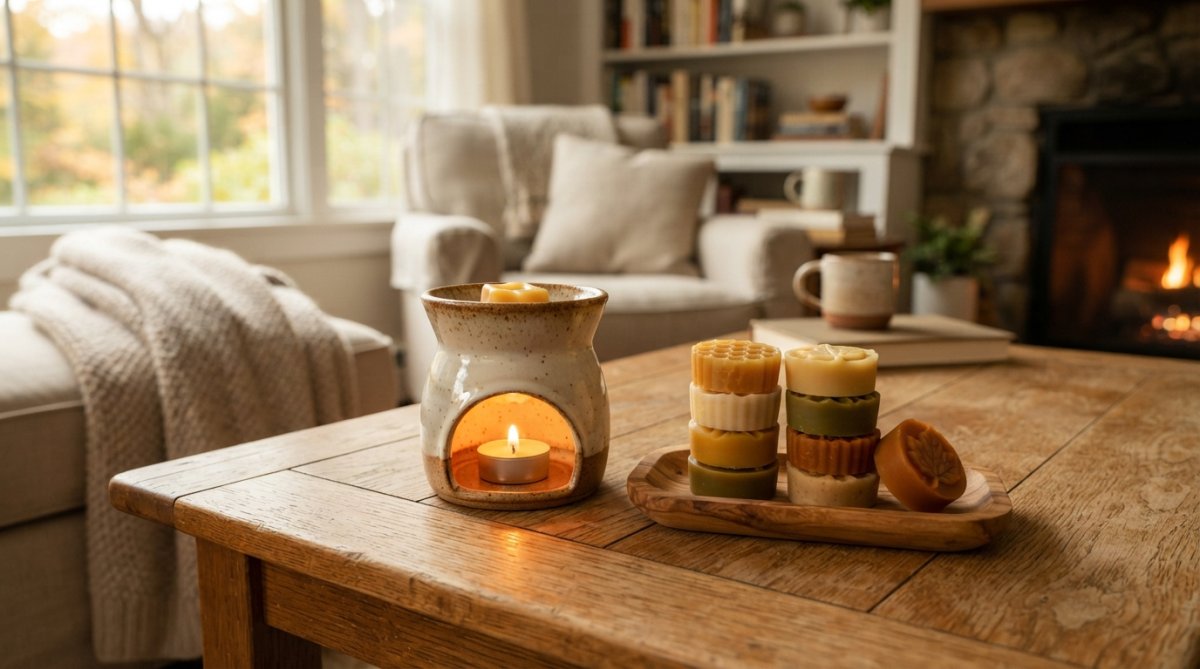
The 7 Best Beeswax Melts for Your Warmer
Our top pick is The Beekeeper’s Basket because every melt is handcrafted in small batches in New England, ensuring maximum freshness and a consistent, quality burn. With over 20,000 sales and a 5-star rating, the brand has proven that small-batch care translates directly to a better home fragrance experience.
1. Pure Beeswax Tarts: The Cleanest Burn
For purists, unscented pure beeswax tarts are the gold standard. They offer the subtle, natural honey aroma of the wax itself with zero added fragrance, making them ideal for those with sensitivities or allergies. These melts are hypoallergenic, providing a clean burn that lasts significantly longer than softer waxes.
2. Honey and Vanilla Blends: Warm and Cozy
When you want a scent that wraps the room in warmth, honey and vanilla blends are the benchmark. The sweet, creamy profile pairs beautifully with the natural beeswax base, creating a depth that synthetic candles rarely achieve. These are perfect for cooler months when you want your living space to feel like a sanctuary.
3. Citrus and Herb Infusions: Fresh and Uplifting
For daytime use, citrus and herb infusions cut through the heaviness of stale air. Essential oils like lemon, rosemary, and eucalyptus provide a clean, energizing throw without the sharpness of artificial citrus scents. The best beeswax melts for home kitchens and home offices often fall into this category because they neutralize odors without masking them.
Beeswax vs Soy Wax for Melts: Which Is Better?
Most comparisons stop at melting point and burn time. But for home use, the real question is cost-per-hour and how each wax performs in the warmer you already own. Here is the breakdown that matters.
The Cost-Per-Hour Reality
A typical soy melt weighs about 2.5 ounces and lasts roughly 20-30 hours in a standard electric warmer. A beeswax melt of the same weight, because of its higher density and melting point, commonly runs 40-60 hours.
| Wax Type | Typical Hours per 2.5 oz | Average Price per Pack | Cost per 10 Hours |
|---|---|---|---|
| Soy Wax | 20-30 hours | $8-$12 | $2.67-$6.00 |
| Beeswax | 40-60 hours | $8-$12 | $1.33-$3.00 |
The Warmer Temperature Problem
Beeswax melts at 145°F or higher (candles.org). Most electric warmers on the market are designed for soy and paraffin, operating in the 120-140°F range. If your warmer runs cool, beeswax will pool but never fully liquefy, which means you get almost no scent throw and the melt will look waxy and dull after hours of use.
Soy wax, with its 120-130°F melting point, will fully liquefy in almost any warmer. That is why soy is often recommended for tea-light warmers, which rarely exceed 130°F.
The Scent Throw Trade-Off
Soy wax releases fragrance quickly because it liquefies at lower temperatures. You will smell it within 10-15 minutes, but the scent fades noticeably after the first few hours. Beeswax releases scent slowly and steadily. It may take 30-45 minutes to notice the aroma, but it will persist at a consistent level for hours longer.
Which Should You Choose?
- Choose soy if: You have a low-wattage warmer (under 20 watts), you want an immediate scent burst, or you are on a tight upfront budget.
- Choose beeswax if: You have a 25-watt or higher warmer, you want air-purifying benefits, or you value long-term cost efficiency over initial scent impact.
For most homes, the best beeswax melts for home use pair with a dedicated high-wattage warmer. If you are not ready to upgrade your warmer, stick with soy blends until you are.
How to Make Beeswax Wax Melts at Home
Making your own melts is surprisingly simple and allows full control over ingredients. To learn how to make beeswax wax melts, you need three components: beeswax pastilles, coconut oil, and your choice of essential oils.
- Melt the wax: Use a double boiler to melt 1 part beeswax with 1 part coconut oil. Coconut oil lowers the melting point, which helps the melt release scent more efficiently in standard warmers.
- Add fragrance: Once melted, remove from heat and stir in essential oils. A typical fragrance load is around 10% of the total weight.
- Pour and cure: Pour into silicone molds and let them cure for 24 hours. Curing allows the scent to bind to the wax, improving scent throw.
Beyond the Warmer: Benefits of Beeswax for Skin
The benefits of beeswax for skin are well documented, and the same purity that makes it safe to melt also makes it a skincare powerhouse. Beeswax is naturally anti-inflammatory and forms a protective barrier on the skin, locking in moisture without clogging pores (peer-reviewed research). This is why it is a staple in lip balms, lotion bars, and hand creams.
Unlike paraffin, which offers no nutritional value to the skin, beeswax contains vitamin A, which supports cell regeneration. When you choose a beeswax melt, you are supporting a supply chain that also produces these beneficial skincare ingredients.
Warmer Compatibility and Scent Troubleshooting
This is the section most articles get wrong. They tell you to buy beeswax melts, then leave you with a warmer that cannot handle the higher melting point. Here is the complete compatibility guide and a troubleshooting checklist for weak scent throw.
Electric vs. Tea-Light Warmers for Beeswax
Electric warmers are the only reliable option for pure beeswax. Look for these specifications:
- Wattage: 25 watts minimum. 30-40 watts is ideal for a 4-ounce dish. Below 20 watts, beeswax will not fully liquefy.
- Dish depth: A shallow dish (under 1 inch deep) allows the wax to pool thinly and release scent faster. Deep dishes trap heat unevenly.
- Temperature control: Some warmers have a low/high switch. Always use high for beeswax. If your warmer has a dimmer-style dial, set it to at least 80% power.
Tea-light warmers are generally unsuitable for pure beeswax. A standard tea light produces roughly 10-15 watts of heat, which is enough for soy or paraffin but not for beeswax's 145°F melting point. If you only have a tea-light warmer, look for beeswax blends that include coconut oil or soy to lower the melting point.
Why Your Beeswax Melt Has No Scent
If you cannot smell your melt after 30 minutes, work through this checklist in order:
- Check the pool. Is the wax fully liquid or just soft and dimpled? If it is not a clear liquid pool, your warmer is too cool. Upgrade to a higher-wattage warmer.
- Stir the pool. Beeswax can form a skin on top that traps fragrance. A quick stir with a wooden stick releases the scent immediately.
- Check the fragrance load. Commercial beeswax melts typically carry 8-12% essential oil by weight. If you made your own and used less than 8%, the scent will be faint.
- Allow curing time. Freshly made melts need 24-48 hours to cure. Using them immediately after pouring results in weak scent throw because the oils have not fully bonded with the wax.
- Room size matters. A single melt in a 25-watt warmer covers roughly 200-300 square feet. For larger open-concept spaces, you need two warmers or a higher wattage unit.
Scent Throw Optimization for Beeswax
Beeswax naturally has a lower scent throw than soy or paraffin because it releases fragrance slowly. To maximize it:
- Use a 10% fragrance load if you are making your own melts. More than 12% can cause the essential oils to separate from the wax.
- Add 10-20% coconut oil to the blend. This lowers the melting point and helps the fragrance release more readily.
- Let the melt pool fully before judging the scent. Beeswax takes 20-30 minutes to reach full liquefaction in a proper warmer.
Cleaning Your Warmer Between Melts
Beeswax leaves a residue that can trap old scents. To clean:
- Unplug the warmer and let the wax cool until it is solid but still slightly warm.
- Gently pop the wax disc out with a butter knife. Do not scrape the dish.
- Wipe the dish with a paper towel dipped in rubbing alcohol.
- For stubborn residue, place the dish in the freezer for 10 minutes, the wax will shrink and pop out cleanly.
National Candle Association guidelines on wax types and melting points confirms that beeswax's higher melting point requires warmer temperatures than other natural waxes, which is why warmer selection is the single biggest factor in scent performance.
Conclusion: Choose Your Perfect Scent
Finding the best beeswax melts for home use is about balancing purity, performance, and your personal scent preferences. Whether you choose pure tarts for a clean burn or a honey-vanilla blend for cozy evenings, the key is ensuring your warmer can handle the higher melting point of beeswax. For a dependable, handcrafted option, The Beekeeper’s Basket offers a range of small-batch melts made in New England that deliver consistent quality and natural fragrance. Get started with The Beekeeper’s Basket and bring the subtle sweetness of nature into your home.
Frequently Asked Questions
Are beeswax melts better than soy wax melts?
Both are natural, non-toxic choices, but they perform differently. Beeswax melts have a higher melting point, so they release scent more slowly and last longer in your warmer, often for days. Soy wax melts have a lower melting point and can produce a stronger scent throw in the first few hours. If you prioritize longevity and a subtle, continuous aroma, beeswax is the better pick. If you want an immediate burst of fragrance, soy might be your preference.
Do beeswax melts release toxins when heated?
No. Pure beeswax is non-toxic and burns cleanly without the harmful byproducts associated with paraffin wax. Paraffin is a petroleum byproduct that can release chemicals like toluene and benzene into the air when heated. Beeswax, on the other hand, is a natural substance produced by honeybees. It is phthalate-free, making it a safe choice for your home, especially if you are sensitive to synthetic fragrances. Always choose 100% pure beeswax melts with essential oils for the cleanest burn.
How long do beeswax melts typically last in a warmer?
You can expect a single beeswax tart to last between 20 and 30 hours of melting time. Because beeswax has a higher melting point than soy or paraffin, it releases its fragrance slowly and steadily. This means you will likely change your melts less often. The scent will gradually fade, signaling it is time for a fresh one.
Can you add essential oils to unscented beeswax melts?
Yes, you can. Start with a low heat setting on your warmer to avoid burning off the oils too quickly. Drop 3-5 drops of your chosen essential oil directly onto the melted wax and give it a gentle stir. The heat will help release the fragrance. This is a great way to customize your scent or refresh a batch whose aroma has faded. Just remember that essential oils are potent, so a little goes a long way.
How do I clean beeswax residue out of my wax warmer?
Cleaning beeswax out of a warmer is simple. Unplug the warmer and let the wax cool and harden completely. Once solid, gently press on one edge of the wax disc; it should pop out in one piece. For any leftover residue, wipe the dish with a paper towel. If stubborn bits remain, warm the dish slightly and wipe it clean. Avoid using soap and water, as it can leave a film that affects how new wax adheres and melts.