 ultimate-guide
Natural Skincare for Dry Skin: 2026 Guide
Table of Contents
- Why Dry Skin Happens and What Your Skin Actually Needs
- Best Natural Oils for Dry Skin: A Practical Breakdown
- Benefits of Beeswax for Skin: Nature's Occlusive Shield
- Natural Skincare Routine for Dry Skin: Step-by-Step
- DIY Face Masks and Natural Remedies for Dry Skin
- Internal Hydration and Nutrition: The Missing Piece in Natural Skincare
- Choosing Organic Products: Sustainability, Sourcing, and What to Look For
- Frequently Asked Questions
Why Dry Skin Happens and What Your Skin Actually Needs
Dry skin is not simply a lack of moisture, it's a sign that your skin barrier is struggling to hold onto the water it already has. The outermost layer of your skin relies on a network of fatty acids, ceramides, and natural oils to seal moisture in and irritants out. When that lipid barrier is compromised, transepidermal water loss accelerates, and water evaporates faster than the body can replace it.
At The Beekeeper's Basket, we formulate bee-inspired products for people who know that what you put on your skin matters as much as what you leave off it. The good news: most causes of dry skin are addressable, and many of the best solutions come straight from nature.
Common Causes of a Compromised Skin Barrier
A weakened skin barrier rarely has a single cause. The most common culprits include harsh cleansers and synthetic fragrances that disrupt pH balance, over-exfoliation that removes protective cells faster than skin can regenerate them, hot showers that dissolve the lipid layer, skin conditions like eczema or psoriasis, and age-related slowdown in sebum production.
A common mistake is reaching for heavier moisturizers without first addressing what's stripping the skin. More product on a disrupted barrier is a short-term fix. Fixing the barrier is the real goal.
Environmental Factors That Accelerate Moisture Loss
Cold, dry air, especially during winter, is one of the most significant drivers of transepidermal water loss. Central heating compounds the problem indoors. UV exposure degrades the skin's collagen and lipid structure over time, making the barrier less effective at retaining hydration. Wind, pollution, and chlorinated water can also strip natural oils and trigger inflammation.
Barrier repair requires both protection from the outside and nourishment from within.
Best Natural Oils for Dry Skin: A Practical Breakdown
The best natural oils for dry skin work by mimicking or supplementing the skin's own lipid structure, rather than sitting on top of it like a plastic film. This distinction matters enormously for people with sensitive or reactive skin.
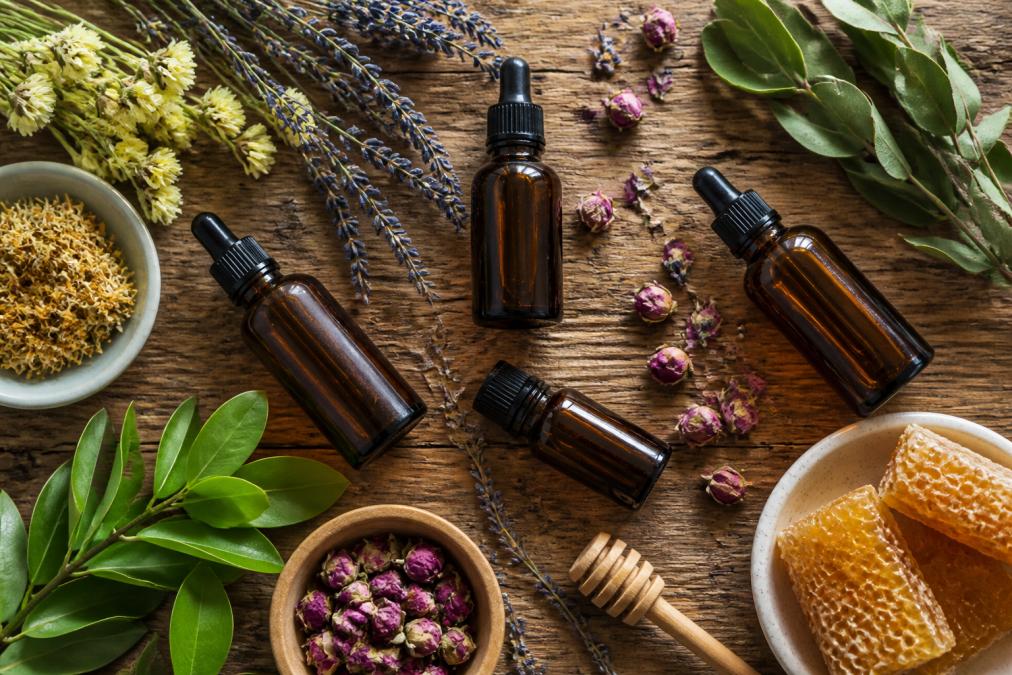
Oils fall into three functional categories: emollients, which soften and smooth; humectants, which draw water into the skin; and occlusives, which seal moisture in. Most botanical oils are primarily emollient, but many carry additional antioxidant and anti-inflammatory properties that support overall skin health.
Emollient Oils That Soften and Smooth
| Oil | Key Property | Best For | Absorption Rate |
|---|---|---|---|
| Jojoba | Structurally similar to sebum | All skin types, including oily-dry | Fast |
| Rosehip (cold-pressed) | High in linoleic acid | Mature or scarred dry skin | Medium |
| Sweet almond | Rich in oleic acid | Very dry, sensitive skin | Medium-slow |
| Argan | Antioxidants + fatty acids | Dry, aging complexion | Fast |
| Avocado | Deeply penetrating oleic acid | Severely dehydrated skin | Slow |
Cold-pressed oils retain more of their active nutrients than heat-processed alternatives. If you're buying botanical oils for skin use, cold-pressed is the standard to look for on the label.
How to Patch Test Before You Commit
Patch testing is the step most people skip, and it's the one that prevents the most problems. Here's a simple protocol:
- Apply a small amount of the oil or product to the inside of your wrist or behind your ear
- Leave it on for 24 hours without washing the area
- Check for redness, itching, swelling, or small bumps
- If no reaction appears after 48 hours, the product is likely safe for broader use
Repeat this process for every new product, even within the same brand.
Benefits of Beeswax for Skin: Nature's Occlusive Shield
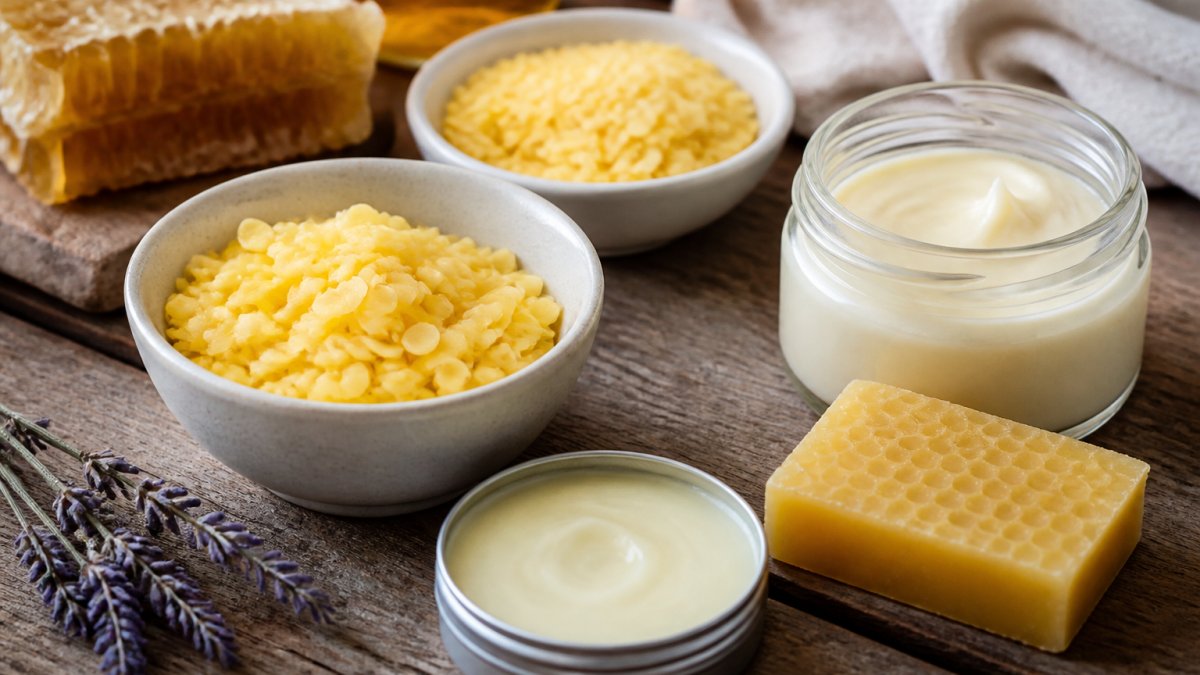
Beeswax is one of the most effective natural occlusives available and has been used in skin preparations for centuries. As an occlusive, beeswax forms a breathable, protective layer over the skin's surface that slows transepidermal water loss without completely blocking the skin from breathing.
Unlike petroleum-based occlusives, beeswax is a complex natural substance containing esters, fatty acids, and long-chain alcohols that actively nourish the epidermis while protecting it. It has natural anti-inflammatory properties that help soothe irritated or inflamed skin, and it's naturally hypoallergenic for most users. Beeswax also acts as a natural emulsifier, which is why it appears in lip balms, body butters, and hand salves.
The Beekeeper's Basket builds beeswax into many of its handcrafted formulations precisely because of this dual function. Every product is made in small batches to preserve ingredient integrity.
Natural Skincare Routine for Dry Skin: Step-by-Step
Building a natural skincare routine for dry skin is less about adding more products and more about sequencing the right ones correctly. The core principle: cleanse gently, layer hydration, then seal it in.
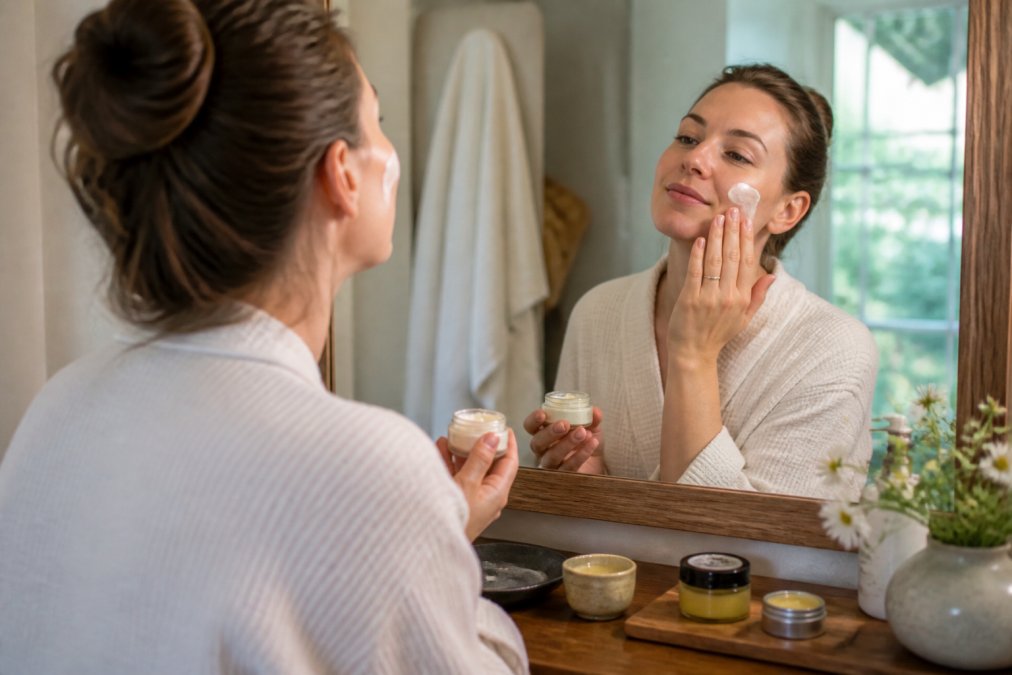
Morning Routine: Protect and Hydrate
- Cleanse lightly: Use lukewarm water and a gentle, fragrance-free cleanser. A water rinse alone is often sufficient.
- Apply a humectant: Hyaluronic acid or glycerin draws moisture into the skin. Apply to damp skin for best absorption.
- Layer an emollient: A few drops of jojoba or rosehip oil lock in the humectant layer.
- Seal with an occlusive: A light beeswax-based balm completes the moisture-sealing stack.
- Apply SPF: UV exposure accelerates moisture loss and damages the lipid barrier. Use mineral SPF year-round.
Evening Routine: Repair and Nourish Overnight
- Double cleanse if needed: An oil cleanser first, then a gentle water-based cleanser removes residue without stripping.
- Apply a richer botanical oil: Avocado or sweet almond oil, warmed between the palms and pressed into the face and neck.
- Use a targeted treatment if needed: Rosehip oil is a strong choice for dry skin with uneven complexion or early signs of aging.
- Finish with a beeswax balm or rich moisturizer: Apply generously to any particularly dry patches.
Consistency over intensity matters most. A simple routine done every night outperforms an elaborate one done twice a week.
DIY Face Masks and Natural Remedies for Dry Skin
Homemade face masks are one of the most satisfying ways to give dry skin an intensive hydration boost using ingredients already in your kitchen.
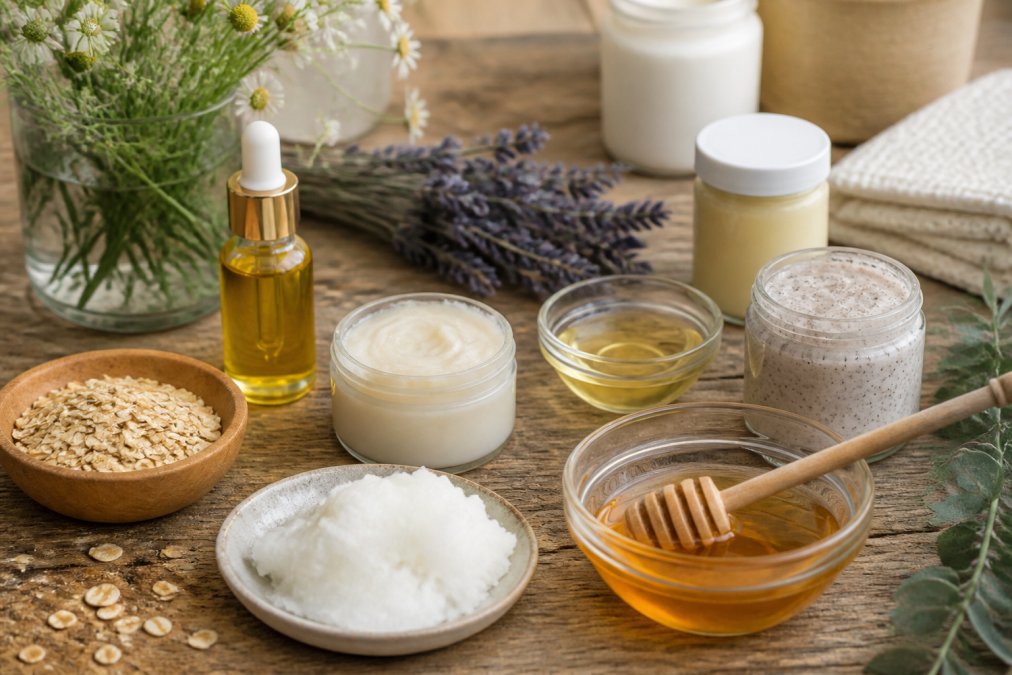
Honey and oat mask: Raw honey is a natural humectant with mild antibacterial properties. Colloidal oats have been recognized by dermatologists for their ability to soothe inflamed, sensitive skin. According to the National Eczema Association's ingredient guidance, colloidal oatmeal is one of the few over-the-counter ingredients with a strong track record for relieving dry, irritated skin. Mix equal parts raw honey and finely ground oats with warm water to form a paste. Apply for 15 minutes, then rinse with lukewarm water.
Avocado and jojoba mask: Mash half a ripe avocado with a teaspoon of cold-pressed jojoba oil. The fatty acids deeply nourish dehydrated skin while jojoba balances the formula for non-comedogenic absorption. Leave on for 20 minutes.
Internal Hydration and Nutrition: The Missing Piece in Natural Skincare
Most natural skincare guides focus entirely on what you apply to your skin. What you consume shapes your skin's ability to retain moisture from the inside out.
The skin's lipid barrier is built from dietary fats. A diet chronically low in omega-3 and omega-6 fatty acids produces a weaker, more permeable barrier. Foods rich in these fatty acids include fatty fish, walnuts, flaxseed, and chia seeds.
Antioxidants from colorful fruits and vegetables help combat oxidative stress that degrades the skin's collagen and lipid structure. Vitamins C and E support skin barrier integrity and help the skin rejuvenate more effectively.
Water intake matters, but it's more nuanced than "drink eight glasses a day." For most people with adequate hydration, adding more water produces minimal visible change. The bigger lever is reducing what dehydrates you: alcohol, excessive caffeine, and high-sodium diets all pull water from tissues. As noted in guidance from the Harvard T.H. Chan School of Public Health's nutrition resources, dietary fat quality has a direct relationship with skin membrane function.
Choosing Organic Products: Sustainability, Sourcing, and What to Look For
The organic skincare market is crowded with claims that range from genuinely meaningful to pure marketing noise. Knowing what to look for separates products that actually deliver from ones that simply charge more for a green label.
What "organic" actually means on a label: In the United States, the USDA's National Organic Program governs which agricultural ingredients can be certified organic. A product labeled "made with organic ingredients" must contain at least 70% certified organic content. A product labeled simply "organic" must contain at least 95%.
What to look for beyond the certification:
- Ingredient transparency: Full ingredient lists with no proprietary blends
- Cold-pressed or minimally processed botanicals: Processing method affects nutrient retention
- Small-batch production: Smaller batches mean fresher ingredients and more careful quality control
- Ethical sourcing: Responsibly sourced beeswax comes from beekeepers who prioritize hive health
The Beekeeper's Basket sources its bee-derived ingredients with hive health and sustainability in mind, and every product is handcrafted in small batches in New England. Over 20,000 customers have trusted these formulations.
Building a natural skincare routine for dry skin takes more than swapping one moisturizer for another. It requires understanding your skin barrier, choosing ingredients that work with your skin's biology, and being consistent. For people ready to make that shift, The Beekeeper's Basket offers handcrafted, small-batch formulations built around beeswax and botanical ingredients, made fresh, with full ingredient transparency, and backed by over 20,000 satisfied customers. Explore the collection and find what your skin has been missing.
Frequently Asked Questions
Q: What is the best natural thing to put on dry skin?
A: Cold-pressed botanical oils and beeswax-based balms are among the most effective natural options for dry skin. Oils like jojoba, rosehip, and argan act as emollients that soften the epidermis, while beeswax creates an occlusive layer that seals in moisture and reduces transepidermal water loss. For sensitive skin, always patch test a new product on your inner arm for 24 hours before applying it to your face.
Q: Which natural oils are most effective for deep skin hydration?
A: For deep hydration, look for oils rich in fatty acids. Rosehip oil delivers both antioxidants and essential fatty acids that support the lipid barrier. Jojoba closely mimics the skin's natural sebum, making it well-tolerated even by sensitive skin types. Argan oil is non-comedogenic and absorbs quickly without clogging pores. Apply a few drops to damp skin after cleansing to lock in moisture most effectively.
Q: How can I build a natural skincare routine for extremely dry skin?
A: Start with a gentle, pH-balanced cleanser that does not strip your skin's natural oils. Follow immediately with a humectant like aloe vera or glycerin to draw water into the epidermis, then layer a botanical oil to seal it in. At night, finish with a beeswax-based balm or occlusive cream over dry patches. Consistency matters more than complexity, even a simple three-step natural skincare routine used daily will outperform an elaborate one used sporadically.
Q: Are there natural alternatives to synthetic moisturizers for sensitive skin?
A: Yes. Products made without synthetic fragrances, artificial dyes, or harsh preservatives are generally better tolerated by sensitive skin. Look for hypoallergenic, dermatologist-tested formulas featuring ingredients like beeswax, cold-pressed jojoba, shea butter, or oat extract. Small-batch, handcrafted products often use fewer total ingredients than mass-market options, which reduces the number of potential irritants. Patch testing every new product is still essential, regardless of how natural the ingredient list looks.
Q: What nutrient deficiencies might cause chronically dry skin?
A: Chronically dry or flaky skin can sometimes signal low levels of omega-3 fatty acids, vitamin D, vitamin E, or zinc. Omega-3s in particular support the lipid barrier from the inside out. If your skin stays dry despite a solid topical routine, it may be worth discussing blood work with a healthcare provider to rule out deficiencies. Staying well hydrated and eating foods rich in antioxidants also supports overall complexion health.
Q: What are the main benefits of beeswax for skin?
A: Beeswax acts as a natural occlusive, forming a breathable protective layer over the skin that slows transepidermal water loss without completely blocking pores. It also contains vitamin A, which supports cell renewal, and has mild anti-inflammatory properties that can help soothe irritated or inflamed skin. Because it is a natural, minimally processed ingredient, beeswax is generally well-tolerated and commonly used in lip balms, body butters, and healing salves for dry or sensitive skin.
This article was written using GrandRanker