 ultimate-guide
Why Handmade Soap Is Better for Your Skin
Table of Contents
- What Makes Handmade Soap Different From Commercial Bars
- Natural vs. Synthetic Ingredients: What's Actually in Your Bar
- Handmade Soap and Skin Health: pH Balance, Sensitivity, and More
- Best Natural Soaps for Dry Skin: What Ingredients to Look For
- Environmental and Ethical Benefits of Choosing Artisan Soap
- How to Store Handmade Soap to Make It Last Longer
- Frequently Asked Questions
Last Updated: September 1, 2026
What Makes Handmade Soap Different From Commercial Bars
Handmade soap differs fundamentally from mass-produced drugstore bars. Commercial soap manufacturers cut costs and extend shelf life by producing products that barely qualify as soap. According to the FDA guidance on soap classification, most "body bars" or "beauty bars" are technically synthetic detergents, not true soap.
True handmade soap starts with natural oils and lye. The saponification reaction produces a bar that cleans while leaving naturally occurring moisturizing compounds intact. Commercial bars strip these compounds out during manufacturing, leaving a cleansing agent optimized for profit margins, not skin health.
The Saponification Process and Why It Matters
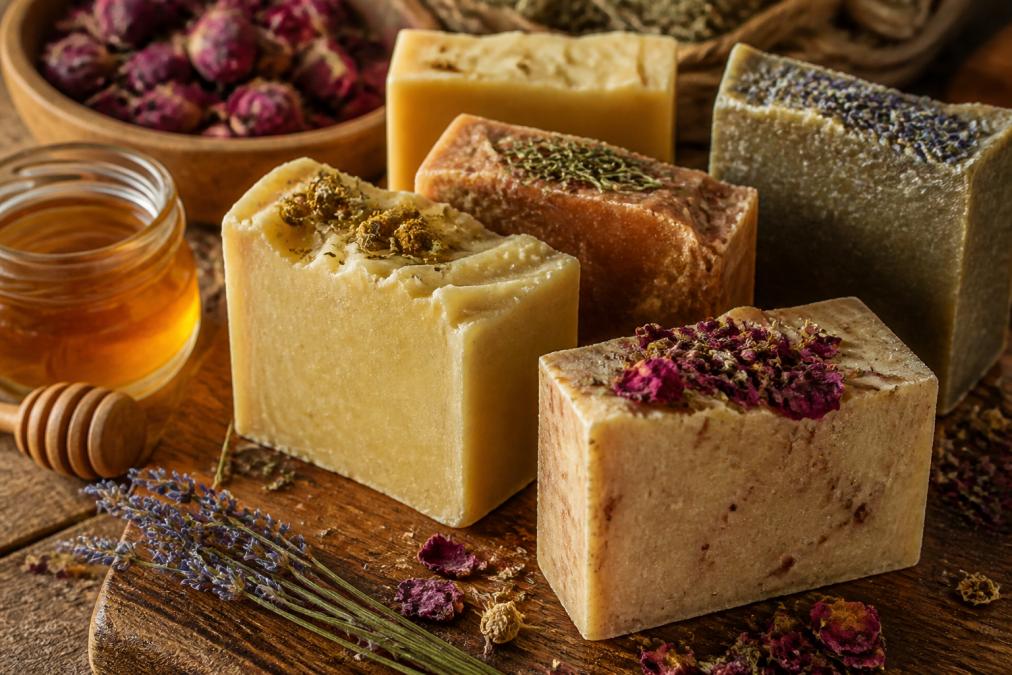
Saponification is the chemical reaction between fats or oils and an alkali (typically sodium hydroxide, commonly called lye) that produces soap and glycerin.
In cold process soapmaking, oils and lye combine at low temperatures and cure for several weeks, producing a dense, long-lasting bar. Hot process soapmaking applies external heat to accelerate the reaction. Both methods preserve the natural oils' fatty acids, emollients, and skin-conditioning properties.
Commercial manufacturing skips this patience. High-temperature industrial processes push soap through production lines in hours, not weeks, sacrificing the nuanced chemistry that makes natural oils beneficial.
Lye is present in every bar of soap ever made. In properly crafted handmade bars, the lye is fully consumed by saponification. No lye remains in the finished product, making handmade soap gentle precisely because the chemistry has been completed thoughtfully.
Glycerin: The Moisturizing Byproduct Commercial Brands Remove
Glycerin is a natural humectant produced as a direct byproduct of saponification. It draws moisture from the air into the skin, supporting the skin barrier and keeping the surface hydrated.
Commercial soap manufacturers extract glycerin and sell it separately to the cosmetics and pharmaceutical industries, it's more profitable as a standalone ingredient. Handmade soap retains all naturally occurring glycerin, delivering both cleansing efficacy and genuine skin hydration with every wash. For people with dry or sensitive skin, this single difference often produces visible improvement within weeks.
Natural vs. Synthetic Ingredients: What's Actually in Your Bar
Commercial soap bars contain sodium lauryl sulfate, synthetic fragrances, parabens, phthalates, and preservatives, each serving manufacturing purposes rather than skin health. Sulfates strip natural oils. Synthetic fragrances commonly cause contact dermatitis. Parabens and phthalates raise questions about long-term dermal absorption.
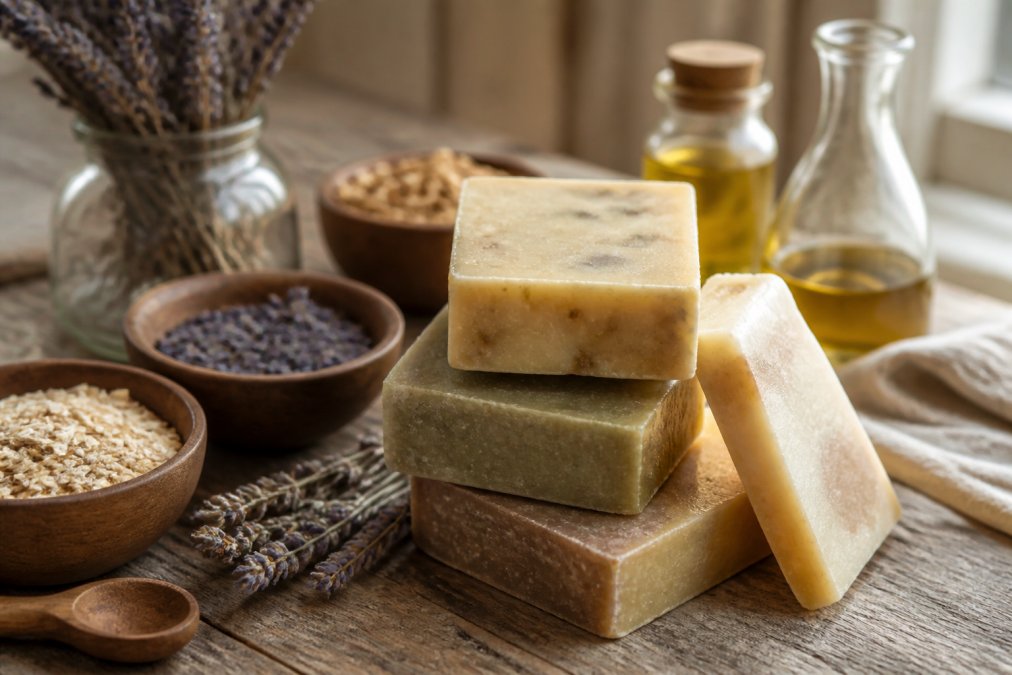
Handmade soap ingredients are recognizable: olive oil, coconut oil, shea butter, castor oil, beeswax, essential oils. These emollients work with your skin's natural chemistry rather than against it.
Commercial bars foam aggressively because of added surfactants. Handmade soap produces creamier, more conditioning lather from saponified oils themselves. For customers concerned about synthetic fragrances, handmade soaps scented with pure essential oils offer a genuinely different experience, many people who react to synthetic fragrance tolerate essential oil-scented products without issue.
| Feature | Handmade Soap | Commercial Bar |
|---|---|---|
| Glycerin content | Retained naturally | Removed during manufacturing |
| Fragrance source | Essential oils or unscented | Synthetic fragrance compounds |
| Lather type | Creamy, conditioning | High-foam, stripping surfactants |
| Preservatives | Minimal or none | Parabens, synthetic preservatives |
| Skin pH compatibility | Closer to skin's natural range | Often more alkaline or chemically adjusted |
| Biodegradability | High | Variable, often lower |
| Cruelty-free options | Widely available | Less common, harder to verify |
How to Read a Soap Label
Ingredients are listed in descending order by weight. On handmade soap, you'll typically see saponified versions of base oils listed first. On commercial bars, you'll often see sodium tallowate or sodium palmate followed by a long list of additives.
Watch for these red flags on any bar labeled "natural":
- "Fragrance" or "parfum" can legally conceal dozens of undisclosed synthetic chemicals
- Sodium lauryl sulfate (SLS) or sodium laureth sulfate (SLES), aggressive surfactants linked to skin irritation
- Parabens (methylparaben, propylparaben, butylparaben), synthetic preservatives with ongoing scrutiny
- DMDM hydantoin or diazolidinyl urea, formaldehyde-releasing preservatives
A genuinely clean handmade soap label should be short. A true handmade cold process bar typically has five to ten ingredients.
Handmade Soap and Skin Health: pH Balance, Sensitivity, and More
Healthy skin maintains a slightly acidic pH, generally 4.5 to 5.5, according to research published by the National Institutes of Health on skin surface pH. This acidity supports the skin's acid mantle, the protective film that guards against bacteria and moisture loss.
Many commercial soaps sit at a higher pH, disrupting the acid mantle and leaving skin tight, dry, or reactive. Handmade soaps made with quality natural oils tend to fall closer to skin's natural range. The retained glycerin and natural fatty acids help skin recover its balance quickly after washing.
Impact on Specific Skin Conditions
Dry skin: The combination of retained glycerin, emollient-rich base oils, and absence of stripping surfactants makes handmade soap genuinely better for dry skin. Many people report less need for heavy moisturizers after switching.
Eczema-prone skin: Fragrance-free, hypoallergenic handmade bars formulated with gentle oils like sunflower or oat avoid known eczema triggers.
Acne-prone skin: Some handmade soaps incorporate activated charcoal or tea tree essential oil with natural antibacterial properties.
Aging or mature skin: Natural oils rich in antioxidants support skin elasticity and hydration.
Best Natural Soaps for Dry Skin: What Ingredients to Look For
The best natural soaps for dry skin are high in emollient oils, free of stripping surfactants, and rich in retained glycerin. Look for these base oils:
- Olive oil, deeply moisturizing and gentle
- Shea butter, rich in fatty acids and natural vitamins
- Castor oil, adds creamy lather and helps other oils penetrate
- Coconut oil, produces excellent lather with natural cleansing properties
- Sweet almond oil, lightweight and absorbs readily
Avoid sodium lauryl sulfate, alcohol denat, synthetic fragrance, and synthetic colorants in soaps marketed for dry skin.
The Beekeeper's Basket formulates handmade soaps with carefully selected natural oils, crafted in New England to ensure every bar reaches you fresh. For dry skin, freshness matters: oils oxidize over time, and a fresh bar delivers the full conditioning benefit of its ingredients.
Environmental and Ethical Benefits of Choosing Artisan Soap
Commercial soap production relies heavily on palm oil, linked to deforestation and habitat destruction. Synthetic chemicals enter waterways and many are not fully biodegradable.
Handmade soap made with responsibly sourced natural oils presents a genuinely different environmental profile. Saponified plant oils biodegrade readily. According to the Environmental Protection Agency's guidelines on safer chemical ingredients, reducing synthetic chemical exposure in personal care products contributes to waterway safety and aquatic ecosystem health.
Cruelty-free and vegan handmade soaps are widely available and easy to verify. Small-batch makers typically disclose full ingredient sourcing. For consumers who want to support small, sustainable businesses rather than multinational corporations, artisan soap offers exactly that.
How to Store Handmade Soap to Make It Last Longer
A well-made handmade soap bar can last significantly longer than a commercial bar if stored correctly. The core principle is simple: keep it dry between uses.
Follow these storage practices:
- Use a draining soap dish. A wooden or slatted dish allows water to drain and air to circulate.
- Keep it away from direct shower spray. Place your soap dish on a shelf where it receives minimal water splash.
- Rotate multiple bars. Allowing a bar to dry completely between uses extends its life considerably.
- Store unused bars in a cool, dry place. Unwrapped bars actually improve with age as curing continues.
- Avoid airtight containers. Handmade soap needs airflow.
- Keep bars out of direct sunlight. UV exposure fades natural colorants and accelerates oil oxidation.
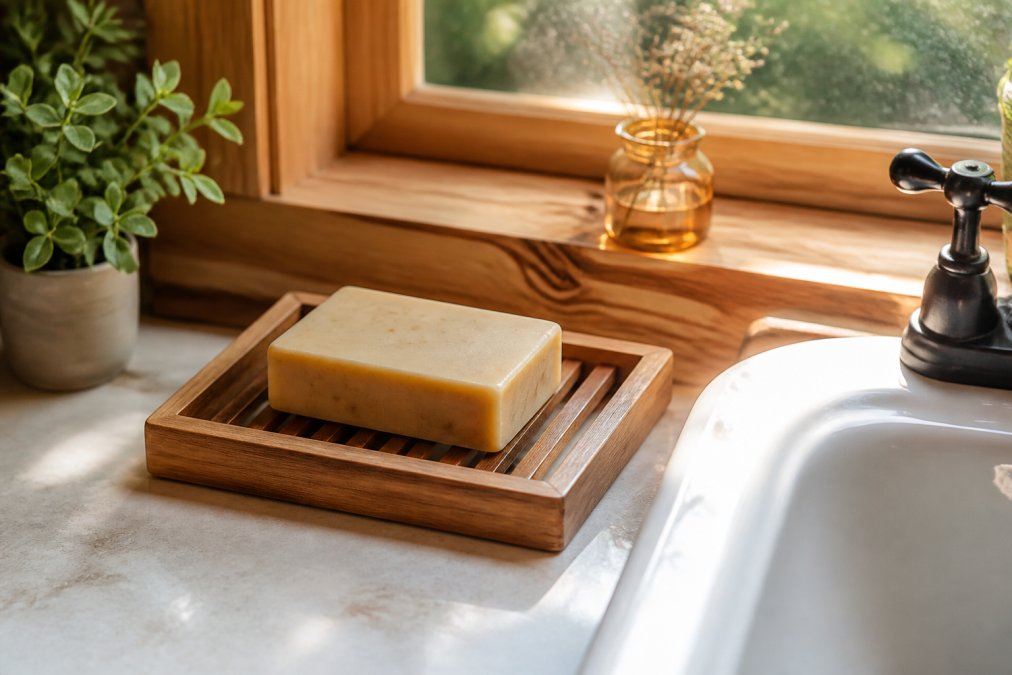
A properly stored handmade bar typically outlasts a commercial bar of similar size.
| Storage Mistake | What Happens | The Fix |
|---|---|---|
| Sitting in water | Bar goes soft and dissolves quickly | Use a draining wooden soap dish |
| Airtight container | Moisture buildup, rancid spots | Store in open air or breathable wrap |
| Direct shower spray | Rapid wear, wasted product | Move dish to a splash-free ledge |
| Direct sunlight | Faded color, oxidized oils | Store in a cool, shaded spot |
| No rotation | Single bar wears unevenly | Alternate between two bars |
Choosing handmade soap over commercial bars is a decision that touches skin health, environmental impact, and what you're willing to put on your body every day. The retained glycerin, natural fatty acids, and absence of synthetic detergents show up in how your skin feels.
The Beekeeper's Basket crafts every bar in small batches in New England, using carefully chosen natural oils and bee-inspired ingredients. With over 20,000 sales and a 5-star rating, our customers keep coming back because the difference is real. Get started with The Beekeeper's Basket and discover what a truly nourishing handmade soap bar feels like.
Frequently Asked Questions
Why is glycerin important in handmade soap?
Glycerin is a natural humectant produced during the saponification process. It draws moisture from the air into your skin, helping maintain hydration and supporting the skin barrier. Commercial manufacturers typically extract glycerin from their soap and sell it separately for use in lotions and cosmetics. Handmade soap retains this glycerin, which is a key reason artisan bars feel more moisturizing than their mass-produced counterparts, especially for people with dry or sensitive skin.
What ingredients should you avoid in commercial soap?
Check labels for sulfates, parabens, phthalates, and synthetic fragrances. Sulfates create aggressive lather that strips the skin's natural oils. Parabens are preservatives linked to hormonal disruption concerns. Phthalates are often hidden under the term 'fragrance' and can irritate sensitive skin. Synthetic detergents, sometimes listed as sodium lauryl sulfate or sodium laureth sulfate, lower the skin's pH and weaken the skin barrier over time. Handmade soaps made with natural oils and essential oils typically avoid all of these.
How long should handmade soap cure before it is ready for use?
Cold process handmade soap needs to cure for four to six weeks after it is made. During this time, excess water evaporates and the saponification process completes fully, producing a harder, longer-lasting bar with milder cleansing properties. Hot process soap is ready sooner, often within one to two weeks, because the heat accelerates saponification. Using a bar too early produces a soft, mushy soap that dissolves quickly and may feel harsh on skin.
Are there environmental benefits to choosing handmade soap?
Handmade soap is typically biodegradable, made with plant-based fatty acids and natural oils rather than synthetic detergents and surfactants that can persist in waterways. Many artisan makers also use minimal or plastic-free packaging. Choosing cruelty-free and vegan formulations avoids animal testing and animal-derived ingredients. Buying from small-batch makers also reduces the carbon footprint associated with large-scale industrial manufacturing and long supply chains.
This article was written using GrandRanker