 How-to
Botanical Perfume Fades Faster: Why and What to Do
Last Updated: October 25, 2026
Quick Summary
Botanical perfume fades faster than synthetic fragrance because natural ingredients lack the chemical stability of lab-created compounds. Natural ingredients are volatile by nature and evaporate more quickly when exposed to air, skin heat, and light, while synthetic fragrances use fixatives and stabilizers that keep scent molecules locked in place longer.
- Top notes in botanical perfume typically last 5-15 minutes before fading completely.
- Botanical base notes last 6-8 hours, while synthetic base notes persist 10-12 hours.
- Apply perfume to pulse points like inner wrists and behind ears to maximize longevity.
- Store botanical perfume in cool, dark places between 60-70°F to prevent degradation.
- Moisturize skin before application, as hydrated skin holds fragrance molecules longer than dry skin.
Table of Contents
- Why Botanical Perfume Fades Faster Than Synthetic Alternatives
- Understanding Fragrance Notes and How Long Does Natural Perfume Last
- How to Make Natural Perfume Last Longer on Your Skin
- How to Store Natural Perfume for Maximum Freshness
- Choosing Botanical Ingredients That Last Longer
- Skin Chemistry and Personal Factors Affecting Scent Longevity
- Finding Your Signature Botanical Scent at The Beekeeper's Basket
- Frequently Asked Questions
Why Botanical Perfume Fades Faster Than Synthetic Alternatives
Botanical perfume fades faster than synthetic fragrance because natural ingredients lack the chemical stability of lab-created compounds.
The core issue comes down to chemistry. Natural ingredients are volatile by nature. They evaporate more quickly when exposed to air, skin heat, and light. Synthetic fragrances, by contrast, are engineered to cling to skin longer.
This doesn't mean botanical perfume is inferior, it's simply different. Many people prefer the authentic, evolving scent profile of botanicals despite shorter wear time. The trade-off is real, but it's manageable once you understand what's happening.
The Role of Volatile Organic Compounds
Volatile organic compounds are carbon-based molecules that evaporate easily at room temperature. Botanical perfumes contain high concentrations of these compounds because they come directly from plants, flowers, resins, woods, and oils.
When you apply botanical perfume to your skin, these volatile compounds begin escaping into the air immediately. Heat from your body accelerates this process. Within 2-4 hours, many of the lighter, more fragrant molecules have evaporated completely.
Synthetic fragrances use fewer volatile compounds. Instead, they rely on heavy base molecules designed to stay put. These synthetic fixatives hold lighter scent notes in place, extending longevity significantly.
How Synthetic Fixatives Extend Wear Time
Synthetic fixatives are polymers and heavy aromatic compounds that don't evaporate easily. They act like anchors, trapping lighter fragrance molecules and slowing their escape into the air.
Common synthetic fixatives include:
- Diethyl phthalate (DEP)
- Galaxolide
- Polycyclic musks
- Synthetic ambroxan
These compounds are nearly odorless on their own. Their job is purely functional: they hold the fragrance on skin. A fragrance with 15% synthetic fixatives will last noticeably longer than one with 5%.
Botanical perfumes can use some natural fixatives, resins like frankincense, myrrh, or benzoin help extend wear. But these natural options don't match the holding power of synthetic alternatives. This is why botanical perfume fades faster, even with careful formulation.
Understanding Fragrance Notes and How Long Does Natural Perfume Last
Fragrance notes are categories of scent intensity based on how quickly they evaporate. Understanding these layers helps explain why botanical perfume fades faster and how to work with that reality.
All fragrances, botanical and synthetic, contain three note layers. Each layer evaporates at a different rate, creating the fragrance's journey on your skin.
Top Notes, Middle Notes, and Base Notes
Top notes hit your nose first. They're the bright, immediate scent you smell when you apply perfume. These are the most volatile compounds.
Common botanical top notes include citrus (lemon, bergamot, grapefruit), mint, and light florals. These are pleasant but fleeting.
Middle notes emerge as top notes fade. Also called heart notes, these last 20 minutes to several hours. They form the core of the fragrance's personality.
Base notes are the foundation. These heavy, slow-evaporating compounds last 4-8 hours or longer. In botanical perfume, base notes include sandalwood, vetiver, patchouli, and resins like amber or vanilla.
Why Botanical Base Notes Fade Faster
Even botanical base notes fade faster than their synthetic counterparts because they're still derived from plants. Natural sandalwood oil, for example, contains volatile compounds that gradually escape.
Synthetic sandalwood (polycyclic musks) is engineered to persist much longer. It's chemically stable in ways natural wood oils simply aren't.
This is where the real difference emerges. A synthetic fragrance's base notes might last 10-12 hours. A botanical perfume's base notes might last 6-8 hours.
Fragrance notes evaporate at different rates, with botanical versions fading noticeably faster than synthetic alternatives at every stage.
| Note Type | Typical Duration | Common Botanical Examples |
|---|---|---|
| Top notes | 5-15 minutes | Citrus, mint, light florals |
| Middle notes | 20 minutes to several hours | Jasmine, rose, lily of the valley |
| Base notes (botanical) | 6-8 hours | Sandalwood, vetiver, patchouli |
| Base notes (synthetic) | 10-12 hours | Polycyclic musks, synthetic sandalwood |
How to Make Natural Perfume Last Longer on Your Skin
The fade is real, but it's not inevitable. Several techniques maximize how long botanical perfume stays on your skin. These methods work with your skin's chemistry rather than against it.
Application Techniques That Maximize Longevity
Apply botanical perfume to pulse points, areas where blood vessels sit close to the surface.
Best pulse points:
- Inner wrists
- Behind ears
- Inside elbows
- Base of throat
- Behind knees
Don't rub your wrists together after applying perfume. This friction breaks down fragrance molecules and accelerates evaporation. Instead, let the perfume settle naturally.
Apply to skin, not clothing. Fabric absorbs fragrance differently than skin does. Perfume on cloth fades faster and can stain.
Use more product. A generous application lasts longer than a light spritz.
Apply multiple times daily. Since botanical perfume fades faster, reapplication is normal. Many people apply once in the morning and once in the afternoon.
Skin Preparation and Moisture
Dry skin sheds fragrance faster than hydrated skin. Moisturize before applying botanical perfume. Use an unscented lotion or oil to create a better base for fragrance.
Hydrated skin holds fragrance molecules longer. The moisture acts as a barrier, slowing evaporation. This is why perfume lasts longer on humid days and shorter on dry winter days.
Apply perfume to damp skin for maximum longevity. Spray fragrance immediately after showering, while skin is still slightly moist. The water helps lock in scent molecules.
Avoid applying perfume to freshly shaved skin. Irritation accelerates evaporation. Wait at least 30 minutes after shaving before applying fragrance.
How to Store Natural Perfume for Maximum Freshness
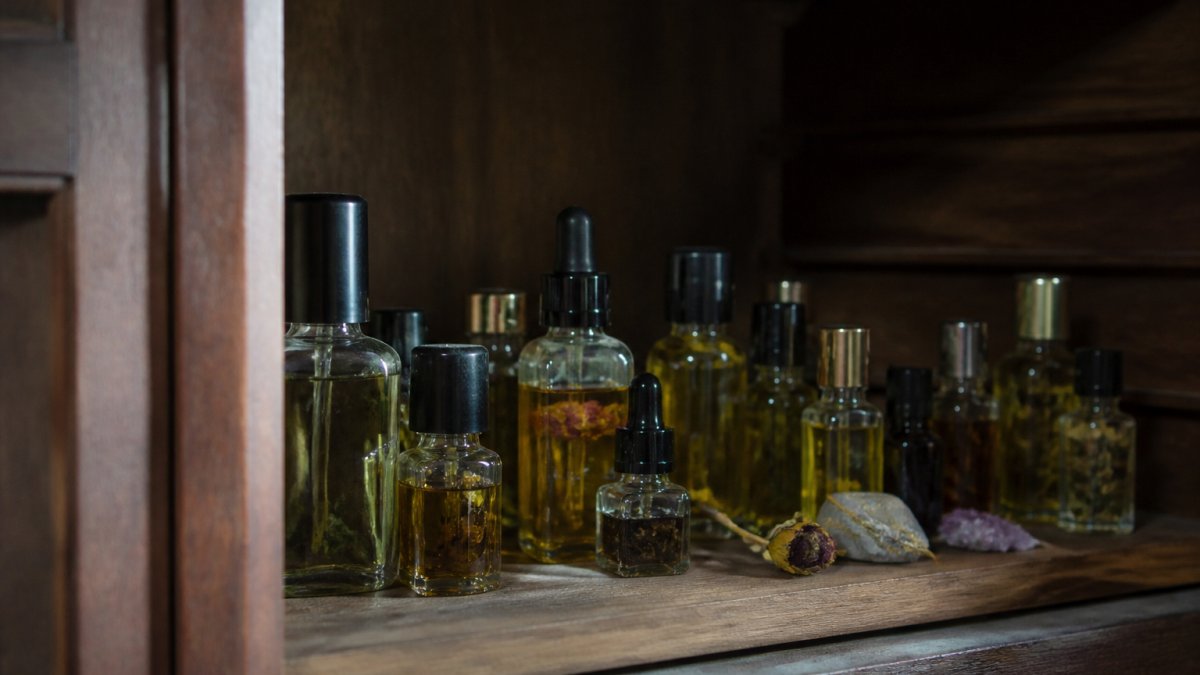
Storage dramatically affects how long botanical perfume lasts before it even touches your skin. Poor storage degrades fragrance quickly, making it fade even faster when you wear it.
Temperature, Light, and Air Exposure
Store botanical perfume in a cool, dark place. Heat breaks down natural fragrance molecules. Sunlight accelerates degradation. A dark closet or drawer is ideal.
Temperature fluctuations are especially damaging. Keep perfume at a consistent temperature between 60-70°F.
Air exposure degrades fragrance over time. Keep bottles tightly capped when not in use. Every time you open the bottle, volatile compounds escape. Minimize opening and closing.
Avoid storing perfume in the bathroom. Humidity and temperature swings damage botanical formulas. The kitchen is also poor storage due to heat from cooking.
Container Materials That Protect Botanical Formulas
Glass bottles offer the best protection. Dark glass (amber or cobalt) blocks light while allowing you to see contents. Mirrored or opaque glass works even better for light protection.
Plastic containers are problematic. Over time, fragrance oils interact with plastic, degrading both the fragrance and the container. Glass is always superior.
Airtight seals are essential. Bottles with tight-fitting caps or spray pumps prevent air exposure. Loose caps allow fragrance to evaporate steadily, even while stored.
Smaller bottles are preferable to large ones. Once you open a large bottle, you expose more fragrance to air with each use. Smaller bottles mean less surface area exposed to oxygen.
Choosing Botanical Ingredients That Last Longer
Not all botanical ingredients fade at the same rate. Some plants naturally produce compounds that persist longer on skin. Choosing the right ingredients makes a real difference in longevity.
Woody, Earthy, and Mossy Botanicals
Woody notes form the most stable base for botanical perfume. Sandalwood, cedarwood, and vetiver contain compounds that evaporate slowly. These are ideal for creating lasting botanical fragrances.
Earthy notes like patchouli and oakmoss also provide staying power. These ingredients have deeper, heavier molecules that cling to skin longer than light florals or citrus.
Mossy botanicals, actual plant mosses and their synthetic analogs, add complexity and longevity. Oakmoss and tree moss extracts create a grounding effect that slows overall fragrance fade.
Fragrances built on woody and earthy bases last noticeably longer than those centered on florals or citrus.
Resinous and Aromatic Plant Extracts
Resins are plant compounds that naturally resist evaporation. Frankincense, myrrh, benzoin, and amber resins are dense, slow-evaporating ingredients.
These resins act as natural fixatives. They don't just smell good, they actually hold lighter fragrance molecules in place. A botanical perfume with resinous base notes will fade slower than one without.
Aromatic plant extracts like labdanum, opoponax, and galbanum add both scent and staying power. These are less common than florals but highly valued for their longevity and complexity.
Blending resinous ingredients with lighter botanical notes creates a more balanced fragrance. The resin anchors the lighter scents, extending overall wear time.
Skin Chemistry and Personal Factors Affecting Scent Longevity
Your individual skin chemistry dramatically affects how long any fragrance, botanical or synthetic, lasts.
Skin pH influences fragrance longevity. More acidic skin tends to hold fragrance longer. Alkaline skin sheds fragrance faster.
Skin oiliness matters significantly. Oily skin holds fragrance better than dry skin.
Body temperature affects evaporation speed. People with naturally higher body temperature experience faster fragrance fade.
Genetics play a role too. Some people naturally produce more skin oils. Others have skin chemistry that breaks down fragrance molecules faster.
Medications and hormones can alter skin chemistry. Certain prescriptions change skin pH or oil production, affecting how fragrance performs.
Finding Your Signature Botanical Scent at The Beekeeper's Basket
Start by identifying scents you already love. Think about fragrances you've enjoyed in the past.
Explore fragrance families. Floral fragrances appeal to people who love classic, romantic scents.
Test fragrances on your skin before committing. Botanical perfume smells different on each person due to skin chemistry.
Consider your lifestyle and routine. Do you work in a professional environment where subtle fragrance is appropriate?
Accept the fade as part of the experience.
book a drain inspection to learn how to choose a botanical perfume that truly matches your preferences and lifestyle.
Understanding why botanical perfume fades faster isn't about accepting inferior fragrance.
When you choose a botanical signature scent, you're choosing authenticity over longevity.
Ready to explore botanical fragrances that match your personality and lifestyle? Explore our handcrafted botanical perfume collection at The Beekeeper's Basket and find the signature scent that feels uniquely yours. Is Natural Perfume Worth the Price? explores whether the natural fade is worth the investment for your daily routine.
Frequently Asked Questions
Why does botanical perfume fade faster than synthetic fragrance?
Botanical perfume fades faster because natural fragrance compounds are more volatile than synthetic molecules. Plant-derived ingredients like citrus, florals, and fresh botanicals evaporate more quickly from skin. Synthetic fragrances use chemical fixatives that bind to skin longer, extending longevity. Natural perfumes prioritize pure scent over lasting power, which is why they typically last 2-4 hours compared to 6-8 hours for synthetic options.
How long does natural perfume usually last on skin?
Natural perfume typically lasts 2-4 hours on skin, depending on the botanical ingredients, concentration, and your skin chemistry. Fragrances with woody or resinous base notes may last toward the longer end of that range, while fresh, citrus-based botanicals often fade within 2-3 hours. Proper application to pulse points and moisturized skin can extend wear time by 30-60 minutes.
How can I make natural perfume last longer throughout the day?
Apply natural perfume to moisturized skin immediately after showering, when pores are open and hydration helps fragrance cling longer. Target pulse points: wrists, neck, inner elbows, and behind ears. Layer a matching unscented lotion or body oil first to create a longer-lasting base. Reapply mid-day if needed, and avoid rubbing your wrists together, which breaks down fragrance molecules. Storing your bottle away from heat and light also preserves potency.
How should I store botanical perfume to keep it fresh?
Store natural perfume in a cool, dark place away from direct sunlight and heat sources. Keep bottles tightly sealed to prevent evaporation and oxidation. Glass containers with dark or opaque tinting protect botanical ingredients best. Avoid bathrooms with humidity and temperature fluctuations. A bedroom closet or cabinet maintained at 60-70°F is ideal. Proper storage preserves the scent profile and prevents the fragrance from degrading or smelling off over time.