 How-to
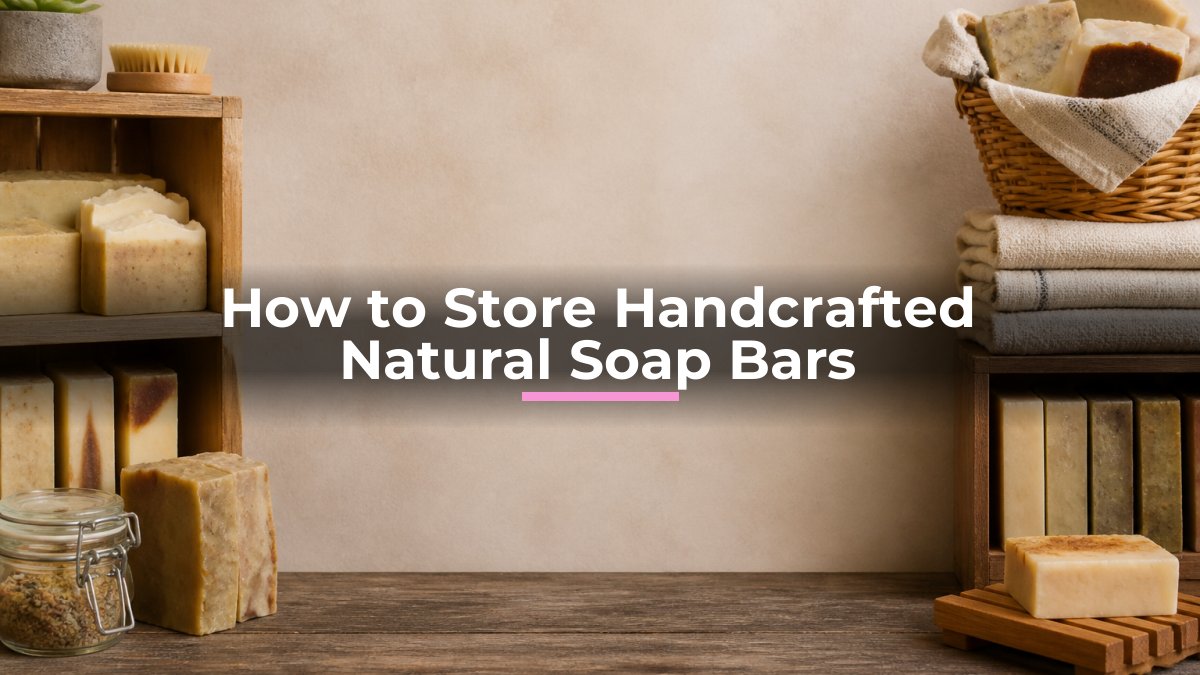
How to Store Handcrafted Natural Soap Bars
Table of Contents
- Why Storage Matters for Handcrafted Natural Soap
- Let Your Soap Cure Before You Store It
- How to Store Bar Soap Between Uses
- How Long Does Handmade Soap Last in Storage?
- Picking the Best Soap Dish for Handmade Soap
- Long-Term Storage for Handmade Soap: A Simple Setup
- Start Storing Your Soap Bars the Right Way Today
- Frequently Asked Questions
Last Updated: November 1, 2026
Handcrafted natural soap bars are a pleasure to use, but knowing how to store handcrafted natural soap bars properly makes all the difference between washes. A bar left in a puddle of water can turn mushy within days, while one stored well can keep its shape and scent for many months. For more detailed handmade-soap storage tips, see dedicated storage guide. At The Beekeeper's Basket, we want every bar to reach your shower in the best condition.
Why Storage Matters for Handcrafted Natural Soap
Handcrafted soap is often made without the heavy preservatives found in many mass-produced bars. That makes storage more important, not less. Moisture, heat and direct sunlight are the main things that wear a bar down.
Natural soap is made by reacting oils with an alkali, and the result is a bar that still contains glycerin and other natural compounds.
Here is what poor storage usually causes:
- Soft, mushy edges that wear away fast
- Cracks or a dull, powdery surface
- Dark spots or a change in smell
- Fading of botanical colors and decorations
A little attention to storage makes each bar last longer and feel better every time you use it.
Let Your Soap Cure Before You Store It
Curing is the step that dries out the bar and makes it firm. You can see how cured bars fit into a daily routine in a natural skincare starter routine.
During this time, the water slowly leaves the bar and the soap hardens. Keep cured bars on a rack or tray where air can move around every side.
A few curing tips:
- Place bars on a rack, not on a flat plate or counter
- Keep them out of direct sunlight, which can cause fading
- Turn the bars every few days so all sides dry evenly
- Wait until the bar feels hard and no longer sticky before you store it
Skipping the cure is one of the most common reasons homemade soap goes soft in storage.
How to Store Bar Soap Between Uses
Between uses, the goal is simple: keep the bar dry and give it air. A bar that sits in standing water will soften, while a bar that dries between showers will last much longer.
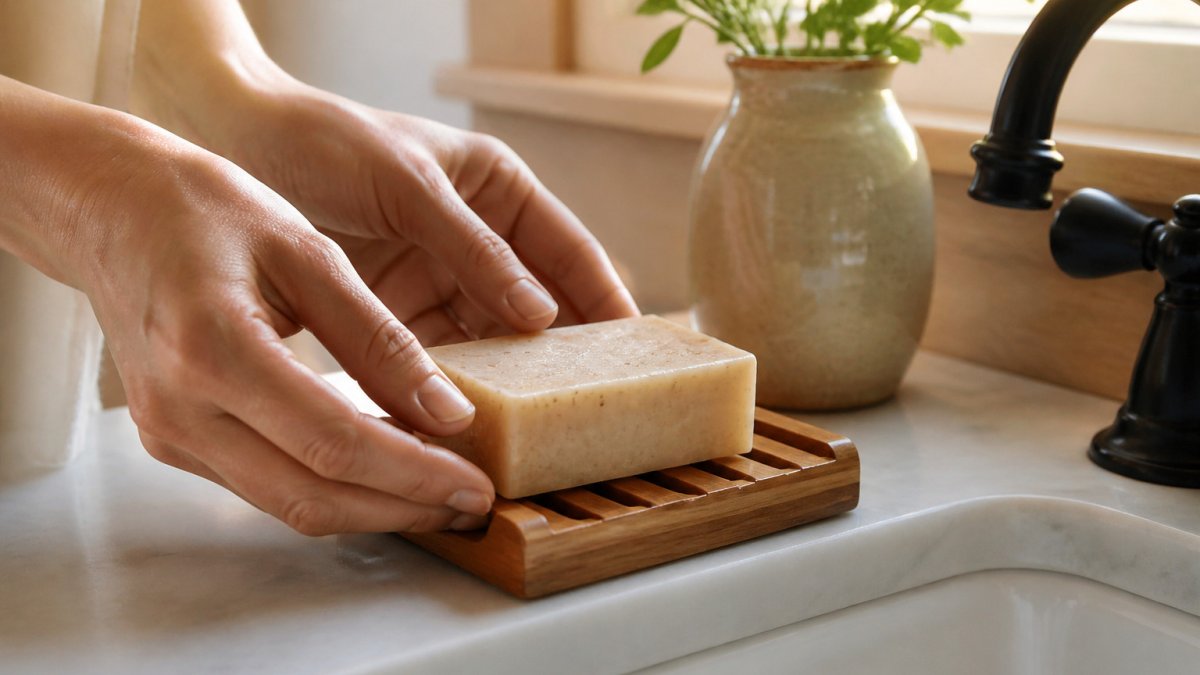
Choosing a Cool, Dry Spot With Good Airflow
Look for a spot that stays cool and dry and has moving air. A bathroom with a window or a working fan is often a good choice, as long as the bar stays out of the shower spray.
Good storage spots for handcrafted natural soap bars include:
- A shelf or rack away from the tub and sink
- A drawer or cabinet with the door partly open for airflow
- A linen closet with vents
Avoid closed, damp spaces. Warm, humid air slows drying and invites soft spots.
Keeping Bars Out of Sunlight, Heat and Standing Water
Direct sunlight can fade colors and warm the bar until it softens. Heat sources like radiators, heaters and hot appliances can do the same.
Standing water is the biggest threat. Never leave a bar sitting in a pool of water. Choose a draining dish or rack that lets water run off, and lift the bar out of the water after each use.
Between uses, the goal is to keep the bar dry and give it air. These are the key storage spots and the conditions to avoid.
| Storage spot | Why it works | What to avoid |
|---|---|---|
| Shelf or rack away from tub and sink | Keeps the bar out of spray | Direct shower spray |
| Drawer or cabinet, door partly open | Allows airflow | Closed, damp spaces |
| Linen closet with vents | Ventilated and dry | Warm, humid air |
| Draining dish with raised ridges | Lets water run off | Flat dishes that trap water |
How Long Does Handmade Soap Last in Storage?
There is no single shelf life for handcrafted soap. A hard, well-cured bar made mostly from olive or coconut oil can stay in good shape far longer than a soft bar loaded with milk, honey, or fresh botanicals. The shelf life of a bar depends on its recipe and how it is stored, so there is no single answer that applies to every bar.
What actually makes soap go bad
- Oxidation (rancidity): Unsaturated oils in the recipe react with oxygen over time. The bar develops a sharp, sour, or crayon-like smell, and the surface may turn tacky or discolored. Fragrance oils and essential oils can oxidize too, which is why a bar can lose its scent before it loses its texture.
- Moisture damage: Glycerin, which handcrafted soap retains, is a humectant, it pulls water from humid air. A bar stored in a damp space can sweat, soften, and grow a powdery surface (often called soda ash) or, worse, mold.
Signs a bar is past its best
Check stored bars every few months. Retire a bar if you see or smell any of these:
- A sour, rancid, or off odor that does not fade after airing
- Dark spots, fuzzy patches, or mold that does not wipe away
- Deep cracks, crumbling edges, or a texture that stays soft and sticky after drying
- Colors from botanicals or clays that have faded to gray or brown (cosmetic, not necessarily unsafe)
- A powdery white film (soda ash), usually harmless and can be rinsed or steamed off, but it signals the bar has been exposed to air and moisture swings
Formulation matters more than the calendar
Use these rough expectations to set your own rotation:
- High-oleic or high-hard-oil bars (olive, coconut, palm, tallow): Longest storage life, often 18 to 24 months when cured and dry.
- Milk, honey, beer, or fruit puree bars: Shorter life, roughly 9 to 12 months; these ingredients add sugars and proteins that attract moisture and support microbial growth if the bar stays damp.
- Melt-and-pour (glycerin) bars: High glycerin content means they sweat readily in humidity; keep them wrapped in breathable paper and use within about 12 months.
- Heavily botanically decorated bars: Dried flowers and herbs can absorb moisture and discolor; expect a shorter decorative life even if the soap itself is fine.
A simple habit: label each stored bar with the cure date and recipe type, then use the oldest first. That rotation alone prevents most shelf-life surprises.
Picking the Best Soap Dish for Handmade Soap
The right soap dish makes storage much easier. Look for one that is self-draining, with raised ridges or slots underneath so water can flow away from the bar.
Avoid flat, solid dishes that trap water. A bar sitting in a puddle will soften even if the dish looks clean. If you use a simple dish, empty and dry it after every shower.
Long-Term Storage for Handmade Soap: A Simple Setup
Storing a few spare bars is easy. Storing a season's worth, or a batch you made yourself, needs a system, and the right system depends on your recipe, your climate, and how you package the bars. This is the part most storage guides skip.
Step 1: Match storage to the formulation
Different bars have different needs, so group them before you store:
- Hard, high-oleic or high-hard-oil bars: The most forgiving. A wire rack in a cool closet works; they tolerate more air exposure and longer storage.
- Milk, honey, beer, or fruit bars: Store in a cooler, drier spot and plan to use them within about a year. These attract moisture and are the first to show spoilage.
- Melt-and-pour and high-glycerin bars: Prone to sweating. Keep them in breathable paper rather than airtight containers, and avoid humid rooms.
- Botanically decorated bars: Store away from light to slow fading, and keep them separate from strongly scented bars so decorations do not absorb neighboring odors.
Step 2: Adjust for your climate
Generic 'cool and dry' advice fails in real homes. Adjust like this:
- Humid bathrooms or coastal air: Use a draining dish with raised ridges and run the exhaust fan during and after showers. For stored bars, add a small rechargeable dehumidifier or a container of silica gel packets near, not touching, the bars.
- Damp basements: Avoid them for soap storage unless you run a dehumidifier. Basement humidity swings cause sweating and soda ash.
- Hot, dry climates: Heat speeds oxidation and scent loss. Store bars in the coolest interior closet, away from exterior walls and appliances, and keep them out of garages and attics.
- Seasonal swings: In humid summers, rotate stock faster and check for sweating monthly; in dry winters, bars are usually safest.
Step 3: Choose packaging deliberately
Packaging is a trade-off between airflow and protection:
- Breathable paper or cardboard (with a few air holes): Best default for cured bars. Allows moisture to escape and lets the bar continue to dry. Good for most recipes and for gift wrapping.
- Cloth bags or cotton wraps: Breathable and reusable, but offer little protection from humidity or light; best in dry climates.
- Airtight plastic or shrink wrap: Traps moisture and can cause sweating, soft spots, and scent concentration. Only use for fully dry, hard bars in dry climates, and open and air them periodically.
- Vacuum sealing: Can extend storage for hard bars by limiting oxygen and oxidation, but only if the bar is bone-dry first; any residual moisture gets trapped.
Step 4: Build the setup by quantity
- Under 6 bars: A single drawer lined with clean cloth, away from heat and light. Check monthly.
- 6 to 20 bars: An open shelf or wire rack in a cool closet with airflow. Leave a finger-width between bars so air moves.
- 20+ bars or seasonal stock: A wire rack in a dry room, stacked in single layers with space between. Label by cure date and recipe, and rotate oldest-first. For bulk, a cardboard box with air holes beats a sealed bin.
Step 5: Keep scented and decorated bars safe
Scent transfer is real: strong fragrance oils can migrate into neighboring bars and into food or linens. Store scented bars away from food storage, pet areas, and children's reach, and keep botanically decorated bars out of direct light to slow fading. If you store multiple scents together, separate them with paper or keep each scent in its own breathable bag.
Start Storing Your Soap Bars the Right Way Today
Good storage is simple. Let your bars cure, keep them dry between uses, and store them in a cool spot with good airflow. Lift the bar out of water after each shower, and keep it away from heat and sunlight.
Small habits can help. Setting up a draining dish and a good storage spot can keep your handcrafted bars in better shape. Explore our full collection of handcrafted soaps and find a bar you will love to keep in your shower.
Frequently Asked Questions
How should I store handmade soap to keep it fresh?
Keep handmade soap in a cool, dry place with good airflow, away from direct sunlight, heat sources and standing water. Let bars sit on a rack or in an open box rather than sealed plastic, which traps moisture and can cause soft spots or a damp film. Turning bars occasionally helps them dry evenly on all sides, which preserves firmness and keeps the surface looking clean.
Does handmade soap need to cure before storage?
Yes. Handmade soap generally benefits from a curing period before use or long-term storage, during which excess water evaporates and the bar becomes firmer. Store bars during curing on a rack with airflow around each piece. Once cured, the bars can be packed or stored more securely without losing quality.
Can I store handmade soap in an airtight container?
An airtight container is not ideal for handmade soap, especially while it is still curing or if it has any remaining moisture. Trapped humidity can soften a bar. If you need packaging, choose breathable options like paper wraps, cardboard boxes with ventilation holes, or cotton bags, and keep them in a dry room.
How should I store soap bars in a humid bathroom?
In a humid bathroom, keep bars out of the shower and off the edge of the tub, and place them on a draining soap dish or metal rack that lifts them from wet surfaces. If possible, store unused bars in a drier room such as a linen closet or bedroom, using cardboard or a breathable box. Good ventilation and a fan during and after showers will also help bars stay firm between uses.