 blog
Best Natural Humectants for Dry Skin That Actually Work
Last Updated: November 4, 2026
Quick Summary
The best natural humectants for dry skin are honey, glycerin, aloe vera and hyaluronic acid, which pull water into the outer layer of skin. Apply them to damp skin and always seal with an emollient or occlusive, since humectants add water but do not lock it in.
- Humectants attract water, emollients soften skin, and occlusives seal water in; dry skin usually needs all three.
- Apply humectants to damp skin and seal with a cream or balm within about 60 seconds.
- When the dew point is below about 40°F, use humectants sparingly and always under a rich cream or balm.
- A thin layer of honey works as a mask: leave it on for ten minutes, then rinse with lukewarm water.
- Homemade water-based humectant blends should be kept small, refrigerated, and used within about a week.
Table of Contents
- Why Natural Humectants Matter for Dry Skin
- How Humectants Work to Hold Moisture in the Skin Barrier
- Top Natural Humectants for Dry Skin, Compared
- Benefits of Honey in Skincare Beyond Hydration
- Humectants vs Emollients for Dry Skin: What's the Difference
- How to Use Humectants for Dehydrated Skin in Any Climate
- Layering Humectants Safely and Avoiding DIY Mistakes
- Finding Small-Batch Humectant Products You Can Trust
- Frequently Asked Questions
Why Natural Humectants Matter for Dry Skin
Dry, tight skin usually isn't a lack of oil. It's a lack of water, and that water is escaping faster than your skin can hold onto it.
Here's the core idea: a humectant is a water-attracting ingredient that draws moisture from the air and from deeper skin layers into the outer layer of skin. Think of it as a sponge sitting on the surface of your skin, pulling water toward it.
That matters because the outer layer of skin, the stratum corneum, needs water to stay flexible. When it dries out, you get flaking, tightness, and a rough texture that no amount of heavy cream can fully fix if the water isn't there in the first place.
If you're building a natural routine from scratch, it helps to see the bigger picture first. Our natural skincare for dry skin guide covers the full foundation before you narrow down to individual ingredients.
How Humectants Work to Hold Moisture in the Skin Barrier
Humectants are hygroscopic, meaning they attract and hold water molecules. Glycerin, honey, and aloe all pull water into the upper layers of skin, which temporarily plumps the surface and improves skin texture.
The catch is that humectants work both ways. In humid air, they pull moisture from the environment. In dry air, they can pull water from deeper skin layers toward the surface, where it then evaporates. That's why humectants need a seal on top.
This is where the lipid barrier comes in. Healthy skin has a lipid barrier that slows moisture evaporation. When that barrier is compromised, water escapes quickly, a process called transepidermal water loss. Humectants address hydration levels; occlusives and emollients address the barrier. You need both.
A simple way to remember it: humectants add water, emollients soften, occlusives seal. Skip any one and the routine underperforms.
Top Natural Humectants for Dry Skin, Compared
Not all humectants behave the same. Some are light and watery, others are thick and sticky, and their water-binding capacity varies widely. Here's how the main natural options stack up.
| Humectant | Texture | Best For | Watch Out For |
|---|---|---|---|
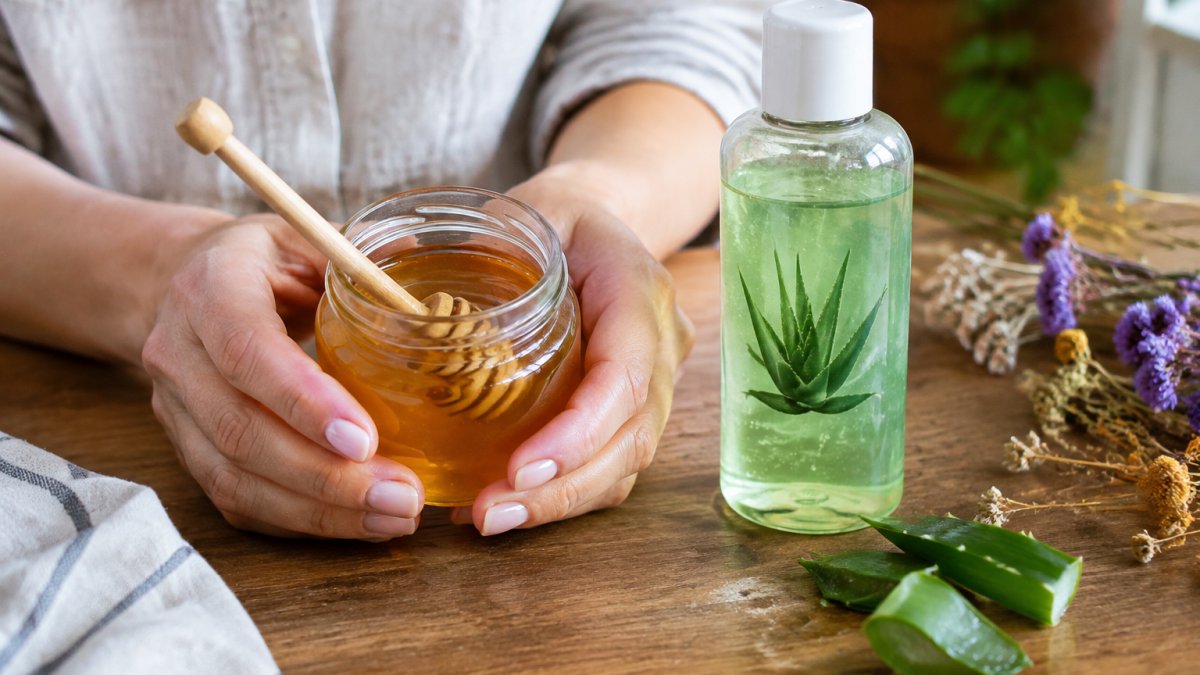
| Honey | Thick, sticky | Dry patches, sensitive skin | Messy to apply; dilute for daily use |
| Glycerin | Light, slippery | All skin types, layering | Can feel tacky in high humidity |
| Aloe vera | Watery gel | Oily and combination skin | Often diluted in commercial products |
| Hyaluronic acid | Serum-like | Fine lines, plumping | Needs a seal or it draws water out |
Honey: The All-in-One Humectant
Honey is often considered a versatile natural humectant because it draws water into the skin and contains natural compounds that can support skin comfort.
For dry skin, a thin layer of honey as a mask works well. Leave it on for ten minutes, rinse with lukewarm water, and follow with a moisturizer. The stickiness is the tradeoff, but the payoff is soft, calm skin. If you want ready-made options, our roundup of the best honey-infused skincare products shows what to look for on a label.
Best for: dry patches and sensitive skin that reacts to fragranced products. Skip if: you want a no-mess, quick-absorbing routine.
Glycerin: The Reliable Workhorse
Glycerin is a widely used humectant that draws water into the outer layer of skin.
The one thing to know: glycerin is a humectant, not a moisturizer on its own. Used alone in very dry air, it can leave skin feeling tight. Pair it with an emollient-rich product and it performs beautifully. A glycerin-based soap is one of the easiest ways to work it into a daily routine, and our Red Dirt Road Honeybee Glycerin Soap pairs glycerin with honey for exactly that reason.
Best for: nearly everyone, especially as a base layer. Skip if: you're in extremely low humidity and have no sealant on top.
Aloe Vera and Hyaluronic Acid: Lightweight Hydrators
Aloe vera is a watery humectant with a light texture, and aloe products can vary in concentration.
Hyaluronic acid holds many times its weight in water and gives an immediate plumping effect. It's a larger molecule that sits on the surface, so it hydrates the top layers rather than penetrating deeply. That's fine for most people, but it needs an occlusive layer over it or it can pull moisture out of the skin in dry conditions.
Best for: layering under a richer cream, and for skin that dislikes heavy textures. Skip if: you want a single-step product; both need a seal.
Benefits of Honey in Skincare Beyond Hydration
What most guides miss is that the type of honey matters. Raw, unprocessed honey retains more of its natural compounds than heavily filtered versions. Look for that on the label.
Humectants vs Emollients for Dry Skin: What's the Difference
This is the distinction that trips up most routines. Humectants attract water. Emollients soften and smooth the skin by filling gaps between skin cells. Occlusives sit on top and block water from escaping.
Dry skin usually needs all three, applied in that order: humectant first on damp skin, emollient next, occlusive last. If you only use a humectant, you're adding water without locking it in. If you only use an occlusive, you're sealing in whatever water is already there, which may not be enough.
For a deeper look at how these categories interact, the National Eczema Association's moisturizer guidance explains why barrier repair and hydration are treated as separate jobs. That framing alone will improve most dry-skin routines.
How to Use Humectants for Dehydrated Skin in Any Climate
Most guides tell you to "adjust for humidity" and stop there. The useful variable is dew point, not relative humidity. Dew point measures the absolute amount of water vapor in the air, and it predicts whether a humectant will pull water from the atmosphere or from your skin.
Here is how that plays out in practice:
- Dew point above about 55°F (humid summer air): humectants pull moisture from the environment almost effortlessly. Apply to damp skin and follow with a light lotion or gel-cream. A heavy occlusive is usually unnecessary and can feel suffocating.
- Dew point between roughly 40°F and 55°F (typical indoor air, mild seasons): humectants still work, but the margin is thinner. Apply to damp skin and seal with a medium-weight cream within about 60 seconds, before the water evaporates.
- Dew point below about 40°F (cold winter air, desert, high altitude, most heated indoor spaces): this is where humectants backfire. They can pull water from deeper skin layers toward the surface, where it evaporates. Use them sparingly, always on damp skin, and always under a rich cream or balm. In this range, an occlusive is not optional.
Indoor heating and air conditioning deserve their own note. A heated room in January often sits at a dew point in the low 30s or below, drier than many outdoor desert days.
A practical test: check the dew point in your weather app before you build your routine for the day. If it is below 40°F, reach for the balm. If it is above 55°F, a light lotion is enough. That single number explains more about humectant performance than any skin-type label.
If winter is your problem season, our guide on choosing the right body lotion for winter walks through the specific textures that hold up in cold, dry air.
Layering Humectants Safely and Avoiding DIY Mistakes
Order matters, but so does timing and compatibility. The general rule is thinnest to thickest: watery humectants first, then serums, then creams, then balms. Applying a heavy cream before a watery humectant blocks the humectant from reaching the skin.
Water-based humectant serums layered under silicone-heavy or powder-finish products can ball up, especially if you rub rather than press. Press each layer in with your palms and give it 30 to 60 seconds to set before the next one.
A few compatibility notes worth knowing:
- Glycerin and hyaluronic acid layer well together; both are water-based and water-loving.
- Hyaluronic acid under a rich cream is the classic pairing, because the cream seals in the water the acid pulled to the surface.
- Honey-based masks are best used as a standalone step, rinsed off, then followed by your normal humectant-and-seal routine. Leaving honey under other layers is messy and does not add benefit.
- Acids and humectants can be layered, but apply the acid first, let it set, then follow with the humectant to reduce the tight, stripped feeling acids can leave.
DIY is where the real risk sits. Honey, aloe, and glycerin are all water-based, and water-based mixtures without a preservative can grow bacteria within days.
Watch out: undiluted essential oils added to a DIY humectant blend can irritate sensitive skin and cause contact reactions.
Higher glycerin concentrations feel tacky and can draw water out of the skin in dry air. If you would rather skip the guesswork, a step-by-step natural skincare routine shows the order in practice with formulated products.
Finding Small-Batch Humectant Products You Can Trust
Small-batch products can be excellent, but consistency is the fair question to ask.
Look for products that name their humectants plainly (honey, glycerin, aloe) rather than burying them under a proprietary blend. Check that water-based products list a preservative, since a product with no preservative and a long shelf life is a red flag.
At The Beekeeper's Basket, every item is made in small batches in New England, and we have over 20,000 sales and a 5-star rating.
Dry skin rarely fixes itself with one product. The fix is a routine built in the right order: a natural humectant on damp skin, an emollient to soften, and an occlusive to seal it all in.
At The Beekeeper's Basket, we make small-batch, bee-inspired products crafted fresh in New England, with over 20,000 sales and a 5-star rating. Start with a single soap or lotion, see how your skin responds, then build from there.
Frequently Asked Questions
What is the best natural humectant for dry skin?
Honey is a popular natural humectant because it draws water toward the skin. Glycerin is the most reliable and widely available option, while aloe vera suits sensitive skin that reacts to richer formulas. The best pick depends on your climate and how you layer it, so pair any natural humectant with an emollient or occlusive to lock the moisture in.
How do natural humectants differ from synthetic ones?
The main difference is origin and formulation, not necessarily performance. Natural humectants like honey, glycerin derived from plants, and aloe vera come from botanical or bee sources, while synthetic versions such as petroleum-derived glycerin or lab-made hyaluronic acid are produced in a factory. Natural options often bring extra compounds like amino acids and antioxidants, but they can vary batch to batch. Synthetic humectants tend to be more consistent and easier to formulate at high concentrations.
Can natural humectants be used on sensitive skin?
Yes, but patch testing matters. Raw honey can trigger reactions in people with bee product allergies. Avoid products with added fragrance or essential oils if your skin reacts easily, and apply a small amount to your inner forearm for 24 hours before using a new humectant on your face. Small-batch products with short ingredient lists are often easier to evaluate.
What is the most effective way to apply humectants to dry skin?
Apply humectants to damp skin right after cleansing, while the stratum corneum still holds water. Press or pat the product in rather than rubbing, then seal it with an emollient or occlusive within a minute or two so the moisture does not evaporate. In dry indoor air, run a humidifier or mist your face lightly before applying. Layer thin humectant serums first, then richer creams.