 How-to
How to Prevent Ingrown Hairs on Sensitive Skin
Last Updated: November 18, 2026
Quick Summary
To prevent ingrown hairs on sensitive skin, shave with the grain using a sharp, clean razor and light pressure, and skip stretching the skin. Shave no more than every two to three days, exfoliate gently on non-shave days, and moisturize daily with a fragrance-free product.
- Shave at the end of a warm shower after letting hair soften in water for at least three minutes.
- Use one pass only and rinse the razor between strokes to avoid dragging and cutting hair too short.
- Apply a fragrance-free moisturizer while skin is still slightly damp, and avoid alcohol, fragrance, and menthol.
- Exfoliate gently two to three times a week, never right after shaving, and patch test new products first.
- See a doctor if a bump becomes large, hot, or filled with pus, or if redness spreads.
Table of Contents
- Why Sensitive Skin Gets Ingrown Hairs More Often
- How to Prevent Ingrown Hairs After Shaving
- How to Prevent Ingrown Hairs After Shaving the Pubic Area
- What to Put on Skin to Avoid Ingrown Hairs
- Do Ingrown Hairs Go Away on Their Own?
- Prevention by Hair Removal Method and Body Area
- When to Seek Care for Recurring or Infected Bumps
- Build a Gentle Routine with Small-Batch Skin Care
- Frequently Asked Questions
Why Sensitive Skin Gets Ingrown Hairs More Often
Learning how to prevent ingrown hairs on sensitive skin starts with understanding why your skin reacts the way it does. An ingrown hair is a hair that has curled back into the skin or grown sideways, trapping itself beneath the surface. Sensitive skin develops these bumps more easily because its barrier is already reactive, so any small trauma from shaving or waxing triggers redness and swelling fast.
The good news: most bumps are preventable with a few changes to your routine.
How Curled Hair Gets Trapped Beneath the Skin
Hair grows out of a follicle, a small pocket in the skin. When a strand is cut too short or pulled out roughly, the new hair can curl back on itself. Dead skin cells pile up on the surface and block the follicle opening.
Sensitive skin makes this worse. Inflammation narrows the follicle, so the hair has an even harder time breaking through.
Causes and Risk Factors That Make Bumps Likelier
Several everyday habits raise your risk:
- Dull blades. A dull razor drags and tugs instead of cutting cleanly.
- Shaving against the grain. This cuts hair below the surface, so it regrows under the skin.
- Dry shaving. No slip means more friction and irritation.
How to Prevent Ingrown Hairs After Shaving
Knowing how to prevent ingrown hairs after shaving comes down to three things: soft skin, a sharp blade, and the right direction. Most bumps we see come from rushing these steps. On sensitive skin, the aftercare matters as much as the shave itself, so treat this as a before-during-after routine rather than a single pass with a razor.
Pre-Shave Preparation and Skin Hydration
Soften the hair before the blade touches it. Shave at the end of a warm shower, when hair has absorbed water and the follicle is relaxed. Never shave dry skin.
Follow this order:
- Wash the area with a gentle, fragrance-free cleanser.
- Let warm water soften the hair for at least three minutes.
- Apply a thin layer of shave cream or a slick, fragrance-free soap.
- Wait 30 seconds before you start so the product can cushion the blade.
Watch out: hot water and long soaks feel good but can strip the skin barrier, so keep the shower warm rather than steaming and limit soaking time.
Shaving Technique: With the Grain and a Sharp, Clean Razor
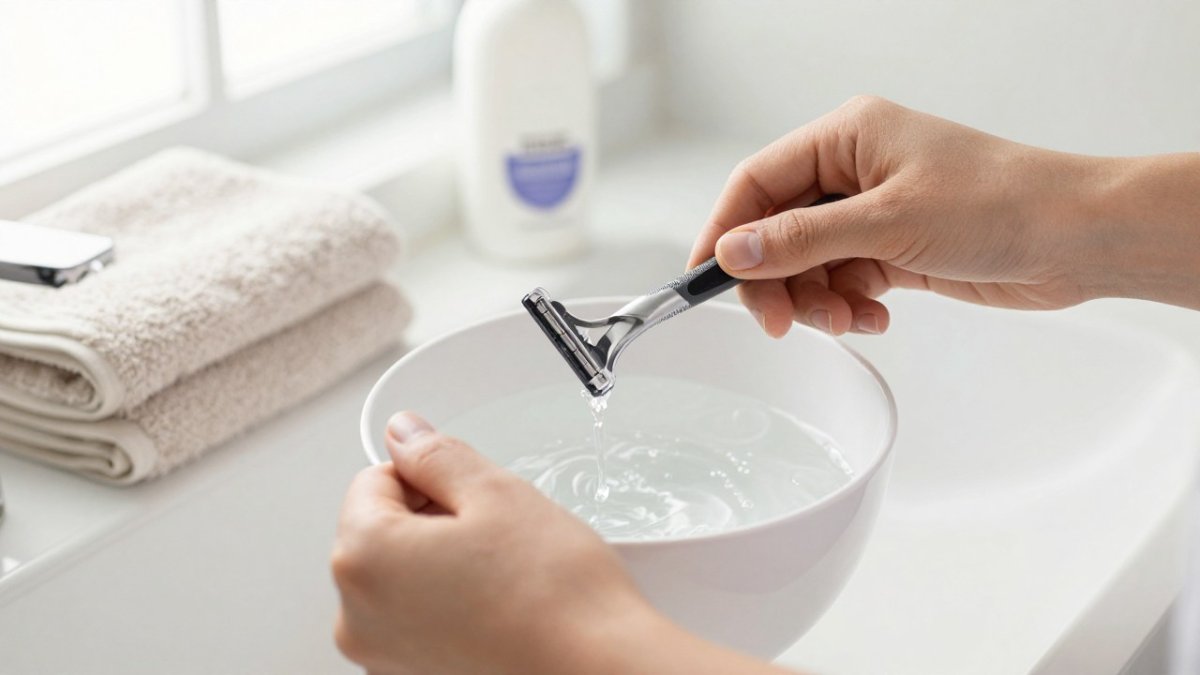
Shave with the grain, in the direction the hair grows. Short, light strokes work better than long presses. Rinse the razor after every pass.
A sharp, clean razor matters more than any product. Rinse and dry your blade after each use, and replace it when it starts to pull. A common mistake is pressing harder to compensate for a dull blade, which irritates sensitive skin and cuts hair too short.
Use these technique rules on sensitive skin:
- One pass only. Going over the same spot repeatedly cuts hair below the surface and raises the risk of a bump.
- No stretching. Pulling skin tight gives a closer shave but encourages hair to regrow under the skin.
- Light pressure. Let the blade do the work; pressing down causes razor burn.
Post-Shave Care That Calms Sensitive Skin
The ten minutes after shaving are when irritation starts. Rinse with cool water, pat dry with a clean towel, and apply a fragrance-free moisturizer while the skin is still slightly damp. Look for soothing ingredients such as aloe, colloidal oatmeal, or shea butter, and skip anything with alcohol, fragrance, or menthol, which sting reactive skin.
For the first day after shaving, avoid tight clothing and heavy exercise that causes friction on the shaved area. If you are prone to bumps, a gentle chemical exfoliant containing salicylic acid or a low-strength alpha-hydroxy acid can help clear dead skin, but introduce it once or twice a week and patch test first.
A simple timing rule: shave no more than every two to three days, exfoliate on the days you do not shave, and moisturize daily. That rhythm gives the skin barrier time to recover between sessions.
How to Prevent Ingrown Hairs After Shaving the Pubic Area
Preventing ingrown hairs after shaving the pubic area takes extra care because the skin there is thin and folds easily. The bikini line is one of the most common spots for razor bumps.
Try these steps:
- Trim long hair first with a clean trimmer.
- Use a fresh blade every time.
- Shave in the direction of hair growth, never against it.
- Keep the area moisturized with a fragrance-free lotion.
Watch out: pulling skin tight and shaving close for a "smooth" finish is the fastest way to get bumps here. Leave a little length instead.
What to Put on Skin to Avoid Ingrown Hairs
Knowing what to put on skin to avoid ingrown hairs means choosing gentle, simple products over harsh ones. Exfoliation clears dead cells, and moisturizer keeps the surface soft so new hair can push through. On sensitive skin, the bigger question is not which product is strongest but which one your skin will tolerate, so build a short routine and introduce one new product at a time.
Exfoliation, Moisturizing, and Fragrance-Free Care
Exfoliate gently two to three times a week, not daily. A physical exfoliant with fine grains or a soft cloth is enough for sensitive skin. If you want to understand the risks of going too hard, read about what happens if you over-exfoliate skin.
Choose a gentle cleanser and a rich moisturizer. If you are picking a bar soap, our guide on natural soap for sensitive skin walks through what to look for.
For daily moisture, our fragrance-free creamy body lotion softens skin with shea butter and aloe. For bump-prone areas, our honey oatmeal exfoliating soap offers gentle physical exfoliation.
How to Choose Products Your Skin Will Tolerate
Read the ingredient list before you buy. On sensitive skin, favor short formulas built around cleansers and moisturizers, and treat these as the products most likely to cause trouble:
- Fragrance and essential oils. Even "natural" scents can trigger redness and itching; choose products labeled fragrance-free rather than unscented.
- Alcohol and menthol. They feel cooling but dry and sting the skin barrier.
- Strong acids and retinoids. Salicylic acid, glycolic acid, and retinoids can help with bumps, but start at the lowest strength and use them once or twice a week.
- Abrasive scrubs. Large grains and rough cloths create microtears that invite irritation.
Introduce one new product at a time and wait a few days before adding another, so you can tell what caused a reaction. Patch test on the inner forearm or behind the ear for 24 to 48 hours before using a product on the face or bikini line.
A Simple Product Routine for Bump-Prone Skin
A workable routine does not need many steps:
- Cleanse with a fragrance-free, non-foaming cleanser once or twice a day.
- Exfoliate two to three times a week with a gentle chemical exfoliant or a fine-grained physical scrub, never right after shaving.
- Moisturize daily with a fragrance-free lotion or cream, applied to slightly damp skin.
- Spot-treat existing bumps with a warm compress rather than harsh acids or picking.
Watch out: layering several exfoliating products, such as a scrub plus an acid toner, is a common cause of irritation on sensitive skin. Pick one exfoliation method and give your skin rest days between uses.
Do Ingrown Hairs Go Away on Their Own?
Most ingrown hairs go away on their own within a week or two as the hair grows out and the skin heals. A warm compress for a few minutes a day helps the hair surface faster.
Do not pick or squeeze. Picking raises the risk of infection, scarring, and dark marks on sensitive skin. If a bump stays for weeks or gets painful, stop treating it at home and read the next section.
Prevention by Hair Removal Method and Body Area
Each hair removal method needs its own approach. Here is how to lower your risk by method:
| Method | Main Risk | Best Prevention |
|---|---|---|
| Shaving | Hair cut below surface | Sharp blade, with the grain |
| Waxing | Follicle trauma | Exfoliate before, moisturize after |
| Tweezing | Curled regrowth | Pull in hair direction, don't overdo it |
| Depilatory cream | Chemical irritation | Patch test first, follow timing |
| Laser hair removal | Temporary redness | Follow provider aftercare |
Body area matters too. The bikini line and underarms need gentler handling than the legs. Thick, curly hair and darker skin tones are more prone to post-inflammatory dark marks, so gentle exfoliation and daily moisturizing pay off.
When to Seek Care for Recurring or Infected Bumps
See a doctor or dermatologist if a bump becomes large, hot, or filled with pus, or if the redness spreads. These are signs of infection. Recurring crops of painful bumps in the same spot also deserve a professional look, since some conditions mimic ingrown hairs.
Avoid picking, and do not dig at a bump with a needle. Medical care is the right call when home care is not working after a few weeks.
Build a Gentle Routine with Small-Batch Skin Care
A gentle routine beats an aggressive one every time. You can learn more about why small-batch care suits reactive skin in our guide on the benefits of small-batch artisan skincare.
If bumps keep coming back, the fix is usually patience and gentler products, not more scrubbing. Get started with The Beekeeper’s Basket and give your skin a calmer daily routine.
Frequently Asked Questions
Why am I so prone to ingrown hairs on sensitive skin?
Sensitive skin reacts more strongly to friction, dull blades, and harsh products, so the follicle becomes inflamed and the hair curls back into the skin. Curled hair is the underlying cause, but irritation, dead skin cells, and shaving against the grain make it likelier. People with coarse or tightly curled hair and those who shave, wax, or tweeze frequently tend to see more bumps. Switching to a sharp, clean razor, shaving with the grain, and exfoliating gently helps prevent ingrown hairs over time.
Do ingrown hairs go away without treatment?
Most mild ingrown hairs do go away on their own within a week or two as the hair grows out and the inflammation settles. Warm compresses and gentle exfoliation can speed the process. Avoid picking or squeezing, which can cause infection, pus, and scarring. If a bump grows larger, becomes painful, or shows signs of infection, see a healthcare provider. Recurring bumps in the same spot may need a different hair removal method.
What should I put on my skin to avoid ingrown hairs after shaving?
Apply a fragrance-free moisturizer or a gentle lotion while skin is still slightly damp to support the skin barrier. Look for soothing ingredients like aloe, oat, or shea butter, and avoid heavy fragrance or strong active ingredients right after shaving. A warm compress on any tender spot and a light chemical exfoliant once or twice a week can help clear dead skin cells. Patch test new products on a small area first, especially on sensitive skin.
How do I prevent ingrown hairs when shaving the pubic area?
Trim hair first, then shave in the direction of hair growth with a sharp, clean razor and a lubricating shave cream. Rinse the blade after each stroke and avoid stretching the skin tight. Afterward, rinse with warm water, pat dry, and apply a fragrance-free moisturizer. Wear loose clothing for a few hours. Exfoliate gently a day or two later, not immediately. If bumps recur, consider trimming instead of close shaving.