 Comparison
Is Cold Process Soap Better for Your Skin?
Quick Summary
Cold process soap is often gentler on skin than many mass-produced bars, because it can keep glycerin and leftover oils in the bar. It is not automatically better, though, since results depend on your skin type, the ingredients, and how carefully the soap was made and cured.
- Cold process soap keeps its natural glycerin, a humectant that helps skin hold moisture after washing.
- Superfatting leaves extra oil in the bar, which offsets some of the drying effect of cleansing.
- Finished cold process soap is alkaline, so people with eczema or rosacea may prefer a low-pH cleanser.
- Test a new bar on your inner forearm and wait 24 to 48 hours before using it on your face.
- Cure bars for several weeks, since a bar used too soon can feel harsher and dissolve faster.
Table of Contents
- What Cold Process Soap Is and How It Differs from Hot Process
- What Glycerin and Superfatting Do for Your Skin
- Pros and Cons of Cold Process Soap for Sensitive Skin
- Best Natural Soap for Dry Skin: What to Look For
- Best Natural Soap for Face and the Side Effects of Soap on Face
- Why Cold Process Soap Curing Time Matters Before You Use It
- Trying Handcrafted Cold Process Soap from The Beekeeper's Basket
- Frequently Asked Questions
What Cold Process Soap Is and How It Differs from Hot Process
Last Updated: November 4, 2026
Cold process soap is handmade soap that forms when oils or fats react with a lye solution, a reaction called saponification. Cold process soap is often considered gentler on skin than many mass-produced bars, in part because it can retain glycerin and unsaponified oils. Whether it is actually better for your skin depends on your skin type, ingredients, and how carefully the soap was made.
We make our bars in small batches in New England. Here is what separates cold process from other methods, and why it matters at the bathroom sink.
Saponification, Trace, and the Curing Stage
Saponification is the chemical reaction at the heart of all soapmaking. Fats combine with sodium hydroxide, and the result is soap plus glycerin. In cold process, the mixture is poured into molds at room temperature, and it heats up on its own through an exothermic reaction.
Trace is the point where the batter thickens enough to leave a visible pattern when drizzled. Soapmakers stop mixing at trace, pour the batter, and let it set into a firm bar.
The curing stage is where most of the work happens after pouring. Bars rest for several weeks, letting excess water evaporate and the chemical reaction finish. Shorter curing leaves more moisture in the bar, while longer curing produces a harder bar. Many shoppers never think about curing, but it shapes how the soap performs on your skin.
Hot Process Soap Compared
Hot process soap uses heat to speed saponification. The batter is cooked in a slow cooker or oven until it gels, then molded and usually used within days. The result is a rougher, more rustic bar that often has a bumpier texture.
The main practical differences are:
| Factor | Cold Process | Hot Process |
|---|---|---|
| Making method | Batter set at room temperature | Batter cooked with heat |
| Typical curing | Several weeks | Usually ready within days |
| Texture | Smooth, dense bar | Rustic, often bumpy |
| Glycerin retention | Generally high | Varies with technique |
Neither method is inherently better. Cold process is often preferred for its smooth finish and gentle feel, while hot process suits people who want a quicker turnaround.
What Glycerin and Superfatting Do for Your Skin
Glycerin is a natural byproduct of saponification, and it is a humectant, meaning it draws moisture toward the skin. Many commercial soaps remove glycerin during manufacturing and sell it separately as a premium ingredient. Cold process soap keeps its glycerin in the bar, which is one reason it often feels softer after rinsing. The mechanism matters: glycerin attracts water molecules from the air and from the skin's surface, slowing the rate at which water evaporates after you towel off. That is why a bar with retained glycerin can leave skin feeling comfortable rather than tight.
Superfatting means adding a small excess of oil beyond what the lye can convert into soap. That leftover oil stays in the finished bar as an emollient, helping to offset the drying effect of cleansing. Superfat levels vary by recipe, with dry-skin formulations often using more superfat than facial bars. The right amount balances cleansing power with a moisturizing feel.
Bars with too little superfat can leave skin feeling tight, especially in dry winter air.
How Heat Affects Essential Oil Retention
One difference between cold and hot process that rarely gets discussed is what happens to fragrance. Essential oils are volatile compounds, and heat drives them off. In hot process, the batter is cooked for an extended period, so a portion of the essential oil added before the cook flashes off and never reaches the finished bar. Cold process avoids the sustained cook, so essential oils added at trace tend to survive in higher concentration.
Reading a Superfat Label
Superfat percentage is not always printed, but you can infer a lot from the ingredient list. Bars that list shea butter, cocoa butter, or avocado oil near the top of the list after the saponified oils are usually formulated for a higher superfat. Bars that list only hard oils and no butters tend to be leaner. If a maker publishes a superfat number, treat 5% as a standard body bar, 7% to 8% as a dry-skin bar, and anything above 10% as a specialty product that may feel greasy in humid weather.
Pros and Cons of Cold Process Soap for Sensitive Skin
For sensitive skin, cold process soap has real advantages. It is typically made with fewer synthetic detergents than body bars sold at the drugstore, and small-batch makers can control ingredient quality closely. Retained glycerin and leftover oils can help the skin hold moisture after washing. The trade-offs matter too:
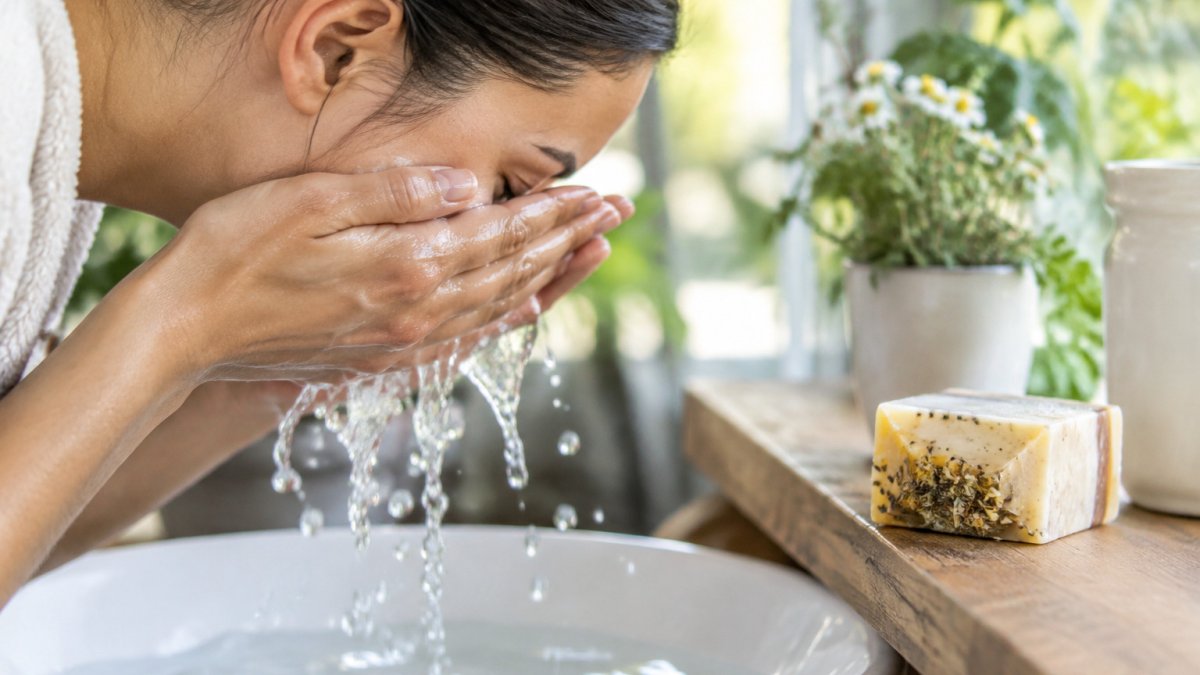
- Pros: Gentle cleansing, retained glycerin, simple ingredient lists, and small-batch freshness
- Cons: Higher pH than some skin-care cleansers, possible reactions to botanical additives or essential oils, and quality that varies between makers
The pH Question, With Actual Numbers
Most articles describe cold process soap as "gentle" without saying what that means chemically. Finished cold process soap is alkaline, and its pH depends on the recipe and cure time. By contrast, many syndet (synthetic detergent) bars and liquid facial cleansers are formulated between pH 5 and 7 to match skin's natural acid mantle, which sits around pH 4.5 to 5.5. That gap is the real story: cold process soap is gentler than many mass-market bar soaps, but it is still alkaline, and alkaline cleansers can disrupt the skin barrier in people with eczema or rosacea. If your skin reacts to alkaline products, a syndet bar or a low-pH cleanser may serve you better regardless of how the soap was made.
Ingredient-Level Guidance for Reactive Skin
A common mistake is assuming "natural" means "non-irritating." Fragrances and essential oils from plants can still trigger reactions. For sensitive skin, scan the ingredient list for these common culprits:
- Essential oils high in eugenol or cinnamal (cinnamon, clove, and some citrus blends) are among the most frequent contact allergens in handmade soap.
- Botanical exfoliants such as ground oatmeal, poppy seeds, or coffee grounds can micro-abrade reactive skin.
- Colorants, especially mica blends and some plant powders, occasionally cause reactions in people with sensitive skin.
A fragrance-free or essential-oil-free cold process bar is often the safest starting point. If you want scent, look for bars scented with a single low-allergen essential oil rather than a blend.
Patch Testing and What to Expect
If you have a history of reactions, read the full ingredient list and test a new bar on a small area first, the inner forearm is a common spot. Wash once, rinse, and wait 24 to 48 hours before using the bar on your face or body. Most reactions show up within that window. If irritation persists, stop use and consult a dermatologist. Cold process soap can be a good fit for sensitive skin, but it is not universally better; the recipe, the cure time, and your individual barrier function all matter more than the method name on the label.
Best Natural Soap for Dry Skin: What to Look For
When you shop for a natural soap for dry skin, prioritize bars with high superfat levels, added plant butters such as shea or cocoa, and no heavy synthetic fragrance. Glycerin on the ingredient list is a good sign.
For a broader look at options, see our guide to the best natural soaps for dry skin. Many dry-skin shoppers also find that a shorter shower and lukewarm water help more than any soap alone.
Best Natural Soap for Face and the Side Effects of Soap on Face
Facial skin is thinner and more reactive than body skin, so a bar that works on your arms may not suit your face. Look for mild, low-fragrance bars and avoid scrubs with harsh particles. Some people find that any bar leaves a slight tightness, which is a sign to switch to a cleanser or to use a moisturizer right after washing.
Common side effects of soap on the face include dryness, redness, and breakouts when a product clogs pores or strips natural oils. If irritation persists, stop use and consult a dermatologist. For a deeper look at why natural bars can be gentler on the face, read why natural soap is better for your face.
Why Cold Process Soap Curing Time Matters Before You Use It
Curing time affects both hardness and mildness. A bar used too soon can be soft, dissolve quickly, and feel harsher because the chemistry has not finished. Cold process bars are commonly cured for several weeks.
If you buy a new bar, give it time to dry on a shelf out of the shower. Letting it sit for a few days after unwrapping extends its life. For a closer look at timelines, see how long natural skincare takes to work, since curing and results both take patience.
Trying Handcrafted Cold Process Soap from The Beekeeper's Basket
At The Beekeeper's Basket, every bar is made in small batches in New England, so each pour gets close attention. We focus on freshness, gentle ingredients, and bee-inspired designs that make washing feel like a small treat. Our customers have placed over 20,000 orders.
If you want to try cold process soap for yourself, start with a single bar to see how your skin responds. You can try handcrafted cold process soap from our shop and find the scent and texture that suit you best. LET'S EXPLORE!
Frequently Asked Questions
Is cold process soap good for dry or sensitive skin?
Cold process soap can suit dry or sensitive skin because the saponification process leaves glycerin in the bar and often includes extra oils through superfatting. Glycerin is a humectant that draws moisture into the skin, and it is usually removed from commercial soaps during manufacturing. Results still vary by person, so patch testing a new bar on a small area of skin for a few days before full use is a practical first step.
Can you use cold process soap on your face every day?
Many people use cold process soap on their face daily, but skin responds differently to alkaline bars. If you notice tightness, redness, or flaking, reduce use to every other day or switch to a bar formulated with a lower superfat level. Pair it with a moisturizer afterward.
Does cold process soap retain glycerin?
Yes. Cold process soap keeps the glycerin produced during saponification, while many commercial bars have it removed and sold separately. Retained glycerin helps the bar attract water to the skin's surface. This is one reason handcrafted bars are often described as more moisturizing, though the amount of glycerin depends on the oils used and the recipe.