 Comparison
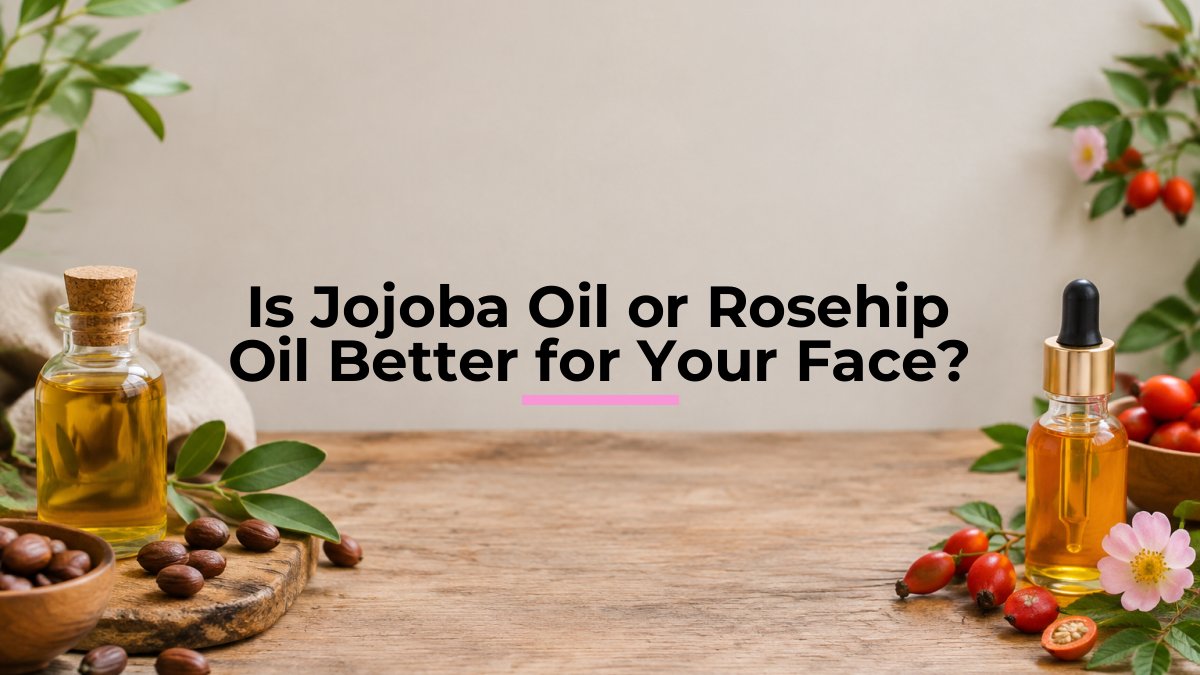
Is Jojoba Oil or Rosehip Oil Better for Your Face?
Last Updated: November 22, 2026
Quick Summary
Jojoba oil is generally lighter and more balancing, while rosehip oil is richer and more moisturizing, so neither is universally better. Jojoba suits oily or combination skin, and rosehip suits tight or dry skin. Patch test either one before using it on your whole face.
- Jojoba oil is a liquid wax ester that feels light and sits close to natural sebum.
- Rosehip oil is higher in linoleic and linolenic acid, giving it a silkier, more emollient feel.
- Rosehip oil oxidizes faster, so store it in a dark bottle and discard it if it smells sharp or paint-like.
- Apply facial oil to slightly damp skin after a hydrating serum or lotion, not on its own.
- Patch test on the jawline twice daily for five to seven days before full-face use.
Table of Contents
- Jojoba Oil Versus Rosehip Oil for Face: What Actually Differs
- What Jojoba Oil Is and How It Is Produced
- What Rosehip Oil Is and How It Is Produced
- Jojoba Oil for Oily Skin: Shine, Sebum Balance and Acne-Prone Skin
- Rosehip Oil for Dry Skin: Moisture, Barrier and Texture
- Can I Mix Jojoba Oil and Rosehip Oil for Face?
- Choosing Your Facial Oil: Skin Type, Patch Testing and Your Next Step with The Beekeeper's Basket
- Frequently Asked Questions
Jojoba Oil Versus Rosehip Oil for Face: What Actually Differs
Jojoba oil and rosehip oil are both popular plant oils for the face, but they behave differently on skin. The short answer is that jojoba oil is generally lighter and more balancing, while rosehip oil is richer and more moisturizing. Neither is universally better. The right choice depends on your skin type and what you want the oil to do.
The main difference comes down to texture and how each oil feels after it absorbs. Jojoba is a liquid wax ester that sits close to the natural sebum many people already produce, so it tends to feel light. Rosehip seed oil is higher in fatty acids such as linoleic and linolenic acid, which gives it a silkier, more emollient feel that many people with dry skin prefer.
Many people assume the more expensive or more "active" oil must be the better one. That is not a reliable way to choose. Look at how your skin responds, how the oil feels in the morning, and whether it leaves a shine you are comfortable with.
What Jojoba Oil Is and How It Is Produced
Jojoba oil comes from the seeds of the jojoba plant, a desert shrub native to the Sonoran Desert of the American Southwest and northwestern Mexico. Despite being called an oil, it is technically a liquid wax ester, which is one reason it resembles the sebum your skin makes naturally.
The seeds are pressed to extract the oil, which is then filtered and processed for skin care use. Quality varies by producer. Look for cold-pressed or unrefined labels if you want the oil closer to its natural state, and check the ingredient list to confirm nothing else has been added.
Jojoba oil is known for being stable, meaning it resists oxidation better than many plant oils. That gives it a reasonable shelf life when stored away from heat and light.
What Rosehip Oil Is and How It Is Produced
Rosehip oil is pressed from the seeds of wild rose bushes, most commonly Rosa rubiginosa and Rosa mosqueta, grown in South America and elsewhere. The oil is rich in fatty acids, particularly linoleic and linolenic acid, along with phytosterols.
Because the seeds contain a lot of unsaturated fat, rosehip oil oxidizes faster than jojoba oil. Store it in a dark bottle, keep the cap closed, and refrigerate it if the label recommends it. A rancid oil smells sharp or paint-like, and you should discard it.
Jojoba Oil for Oily Skin: Shine, Sebum Balance and Acne-Prone Skin
Oily and acne-prone skin is a common reason people look at jojoba oil. Jojoba is a liquid wax ester rather than a triglyceride like most plant oils, and it is emollient, meaning it softens and smooths the surface of the skin. It is not a sebum regulator, and it does not shrink pores or stop oil production. If you want practical ways to calm and manage oily or acne-prone skin at home, explore our guide to natural approaches.
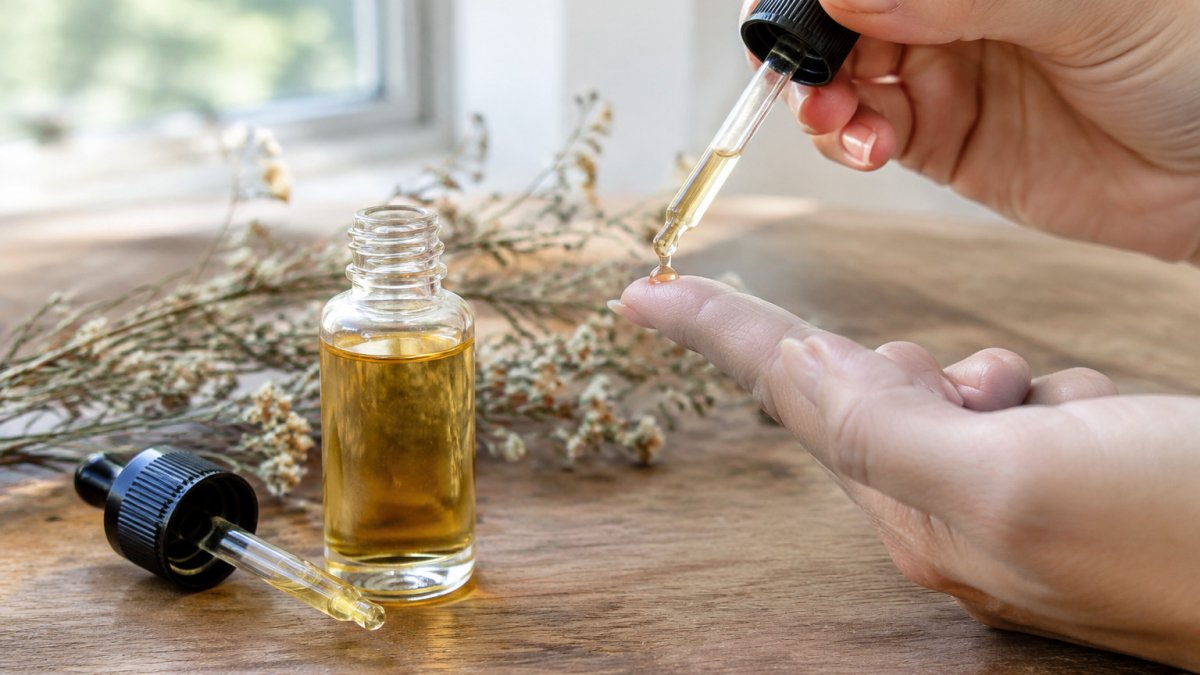
Comedogenicity nuance. Individual reactions to facial oils vary widely, and some people with acne-prone skin find any occlusive layer contributes to congestion. The most useful test is your own skin, applied consistently to one area.
Patch-test before use. Apply a small amount to a discrete area of skin before using a new facial oil on your whole face. If you have a known allergy to plant seeds, nuts, or pollen, patch test with extra caution, and stop using any oil that causes stinging, redness, itching, or new bumps.
Check with a professional first. If you have active inflammatory acne, open lesions, or a prescription retinoid routine that causes peeling, talk with a dermatologist before adding a facial oil. Jojoba is a moisturizing and emollient ingredient, not an acne treatment.
Rosehip Oil for Dry Skin: Moisture, Barrier and Texture
Rosehip oil has a richer, more cushioning feel than jojoba oil, and many people with dry skin prefer that texture. Applying it to slightly damp skin is a common way to use it.
Rosehip oil is not a replacement for a humectant. For a wider comparison of natural moisturizers for dry skin, you can see how rosehip stacks up against other options. It works best layered over a hydrating serum or lotion, which draws water into the skin before the oil seals it in. To learn more about humectants and how they pair with oils, see how these ingredients work together. Think of the oil as the final step that helps prevent moisture from escaping.
Realistic expectations matter here. Results depend on your skin, climate, and routine. If your dryness is severe, persistent, or accompanied by irritation, speak with a dermatologist.
Can I Mix Jojoba Oil and Rosehip Oil for Face?
Yes, many people combine the two. Jojoba adds lightness and balance, while rosehip adds richness and moisture. A practical blend is a few drops of each in your palm, warmed and pressed onto clean, slightly damp skin.
Start with a small test. Mix a tiny amount, apply it to one area, and watch for redness, itching, or breakouts over several days. Oil stability matters too: a blend is only as fresh as its least stable ingredient, so store it in a dark, airtight bottle and make small batches.
Choosing Your Facial Oil: Skin Type, Patch Testing and Your Next Step with The Beekeeper's Basket
Choosing between jojoba and rosehip is less about picking a winner and more about matching the oil to your skin, your routine, and the product in the bottle. Three things decide it: your skin type and concern, where the oil sits in your routine, and whether the product is fresh and what it claims to be.
Start with skin type and concern. Tight, flaky, or rough-feeling skin often prefers the richer feel of rosehip. Oily or shiny skin often starts with jojoba, which has a lighter feel. Combination skin often works best with jojoba on the oily zones and rosehip or a richer cream on dry patches. Sensitive or reactive skin should start with the plainest, shortest-ingredient-list version of either oil and patch test before full-face use.
Routine order matters more than most people expect. Facial oils are occlusive-leaning emollients, so they go near the end of the routine, after water-based hydration and before sunscreen in the morning. A workable evening sequence is: cleanser, hydrating serum or lotion, a few drops of oil pressed onto slightly damp skin, then a heavier cream on dry patches if needed. In the morning, the same order applies but sunscreen always comes last, and if your sunscreen is a rich cream, you may not need the oil at all in the morning. With actives, sequence by tolerance: apply retinoids or exfoliating acids first, wait a few minutes, then follow with moisturizer and, if your skin still feels tight, a small amount of oil. Do not layer oil directly over a strong acid or retinoid on the same night if you are still building tolerance.
Read the label like an editor. The ingredient list uses standardized names, look for Simmondsia chinensis (jojoba) seed oil and Rosa canina or Rosa rubiginosa (rosehip) seed oil, and check whether the oil is the only ingredient or blended with carrier oils and fragrance. Cold-pressed and unrefined oils retain more of their natural color and aroma but oxidize faster; refined oils are more stable and neutral but lose some minor components. Rosehip in particular is high in polyunsaturated fat and goes rancid relatively quickly, a dark glass bottle, a pump or tight cap, and a small size are all good signs. Jojoba is more oxidatively stable, but no oil lasts forever. A sharp, paint-like, or fishy smell means discard it, and a change in color toward dark orange or brown is another warning sign.
Patch test before you commit. Apply a small amount to the jawline twice daily for five to seven days with the rest of your routine unchanged, and stop if you see stinging, redness, itching, or new congestion. If you have sensitive skin, eczema, or a known seed or pollen allergy, check with a dermatologist before adding a new oil.
When you are ready to choose, explore our facial oils at The Beekeeper's Basket. If you are also looking for the right moisturizer for winter, our guide walks through the options. Our small-batch products are made in New England. LET'S EXPLORE!
The right oil depends on your skin type and what you want from it, so this quick guide sums up the key choices.
| Skin type | Likely fit | Starting point |
|---|---|---|
| Tight, flaky or rough | Rosehip oil | Richer, more cushioning feel |
| Oily or shiny | Jojoba oil | Lighter feel |
| Combination | Jojoba and rosehip | Jojoba on oily zones, richer product on dry patches |
| Sensitive or reactive | Plainest version of either | Patch test before full-face use |
| Patch test duration | Five to seven days | Jawline, twice daily |
Frequently Asked Questions
Which is better for aging skin, rosehip oil or jojoba oil?
Neither oil is proven to reverse aging, and the research on both is limited, so set realistic expectations. Rosehip oil is richer in linoleic and linolenic acids, which are fatty acids the skin uses in its barrier, and it is often chosen by people who want a lightly nourishing oil for fine lines and dullness. Jojoba oil is a liquid wax ester closer to the skin's own sebum, so it tends to feel lighter and absorb more evenly. If your main concern is texture and comfort, try a small amount of each on a patch of skin for two weeks and see which feels better to you.
What are the cons of using jojoba oil on the face?
Jojoba oil is generally well tolerated, but it can still cause problems. Some people with sensitive skin or a known allergy to plant oils may react, so it is worth testing before wider use. It can also feel too light for very dry skin in cold weather. Patch test on your jawline or inner forearm for several days before using it all over your face, and stop if you notice redness, itching or new bumps.
Can I use rosehip oil and jojoba oil together?
Yes, many people layer or blend the two. A common approach is to apply a few drops of jojoba oil first, since it absorbs quickly and helps balance oil, then follow with rosehip oil if your skin still feels dry. You can also mix a drop of each in your palm before applying. Use only a small amount of each, since layering too much oil can feel heavy. Apply to slightly damp skin, and introduce one product at a time so you can identify any reaction.