 how-to
How to Identify Sustainable Skincare Ingredients
Table of Contents
- What Makes Skincare Ingredients Sustainable
- Step 1: Read the Ingredient Label Correctly
- Step 2: How to Spot Greenwashing in Beauty Products
- Step 3: Check for Best Sustainable Skincare Certifications
- Step 4: Verify Ethical Sourcing in Skincare Ingredients
- Common Sustainable Botanical Ingredients to Look For
- Synthetic vs. Natural: Which Is Actually More Sustainable
- Frequently Asked Questions
Last Updated: September 2, 2026
What Makes Skincare Ingredients Sustainable
Sustainability in skincare goes far beyond slapping a green leaf on packaging. It's about understanding the entire journey of an ingredient, from how it's grown or synthesized, to how it affects the environment during production, to whether it biodegrades after use. At The Beekeeper's Basket, we prioritize ingredients that minimize environmental impact while delivering real skin benefits.
A sustainable skincare ingredient is one sourced, produced, and used in ways that protect ecosystems, reduce carbon footprint, and support fair labor practices throughout the supply chain.
Understanding ingredient lifecycle and environmental impact
The lifecycle of an ingredient tells the real story. Water usage varies dramatically: some botanical extracts require enormous amounts of water to grow, while others thrive in water-scarce regions with minimal irrigation. Biotechnology has introduced new possibilities, bio-based ingredients created through fermentation can replicate natural compounds without depleting wild plant populations. Hyaluronic acid, for instance, was once extracted from rooster combs; today, most brands produce it through bacterial fermentation, a process that's more sustainable, scalable, and ethical.
Carbon footprint matters too. An ingredient grown locally and extracted with minimal processing will have smaller environmental impact than one shipped globally and processed through multiple chemical transformations. Supply chain transparency is critical, you need to know not just what's in the product, but where it came from and how it got there.
The difference between natural and bio-based ingredients
"Natural" doesn't automatically mean sustainable. A natural ingredient harvested from wild plants can devastate ecosystems if overharvested. Conversely, a synthetic ingredient produced in a controlled facility with renewable energy might be far more sustainable than its natural counterpart.
Bio-based ingredients occupy the middle ground. They're derived from renewable resources, plants, algae, or microorganisms, but created through controlled processes like fermentation or extraction. Niacinamide (vitamin B3) is a perfect example: whether derived from yeast fermentation or synthesized chemically, it performs identically on skin. The sustainable version uses renewable feedstock and optimized production methods that reduce waste.
Natural botanical extracts have genuine benefits, but their sustainability depends entirely on sourcing practices. Fair trade certification and regenerative agriculture practices make a real difference. Without those markers, even "natural" ingredients may come from farms that deplete soil or exploit workers.
Step 1: Read the Ingredient Label Correctly
The ingredient label is your first line of defense against greenwashing and a direct window into what you're actually putting on your skin. Understanding how to decode it transforms you from a passive consumer into an informed buyer.
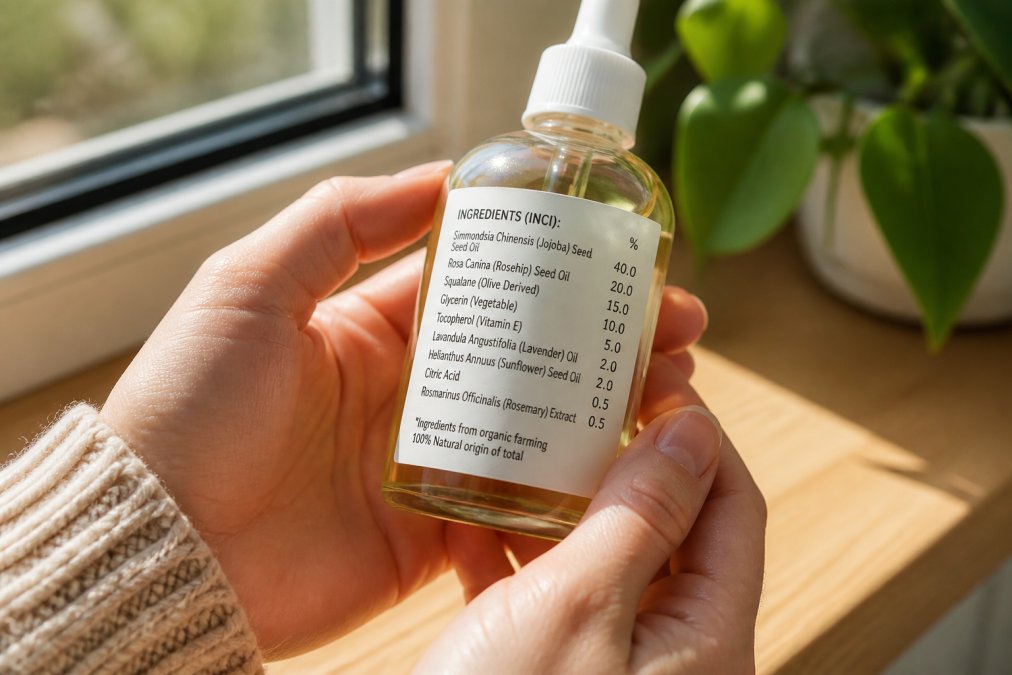
Decoding INCI names and concentration order
INCI (International Nomenclature of Cosmetic Ingredients) names are standardized globally, preventing brands from hiding ingredients behind vague marketing terms. The order matters tremendously: ingredients are listed by concentration, highest to lowest. If water is first, the product is mostly water. If a botanical extract appears fifth or sixth, it's present in minimal amounts, likely too little to deliver meaningful skin benefits.
Look for specific INCI names rather than vague categories. "Plant extract" tells you nothing. "Helianthus annuus (sunflower) seed oil" tells you exactly what you're getting and makes it easier to research an ingredient's sustainability profile independently.
Identifying common problematic ingredients
Certain ingredients carry legitimate sustainability concerns. Parabens don't biodegrade easily and accumulate in aquatic ecosystems. Sulfates strip skin and create environmental burden. Silicones feel luxurious but resist biodegradation, persisting in water systems for years.
Palm oil deserves special mention. It's in countless skincare products because it's cheap and effective, but palm cultivation drives deforestation at alarming rates. If you see "palm oil" or "palmitic acid" in the ingredient list, look for RSPO (Roundtable on Sustainable Palm Oil) certification.
Synthetic fragrance hidden under the term "fragrance" or "parfum" can contain dozens of undisclosed chemicals derived from petrochemicals that don't biodegrade. Look for products scented with essential oils or fragrance-free options instead.
Microplastics added as exfoliants or texture enhancers wash down drains and accumulate in oceans. Avoid any product listing "microbeads," "polyethylene," or "polypropylene" as exfoliants.
Step 2: How to Spot Greenwashing in Beauty Products
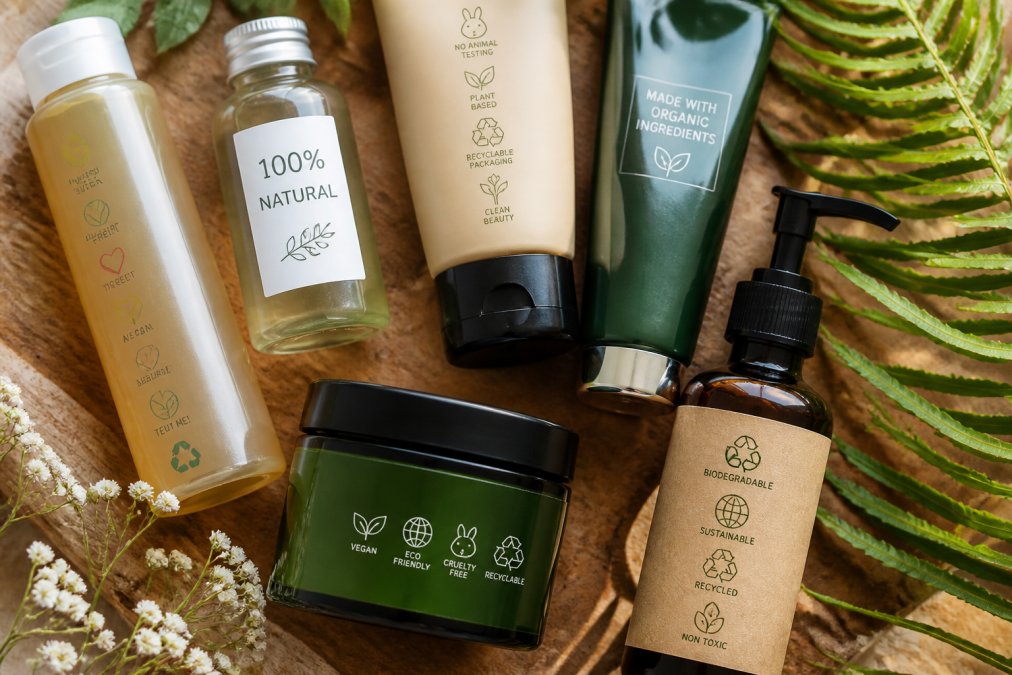
Greenwashing in beauty is rampant. Brands use nature imagery, green packaging, and vague sustainability language to create an eco-conscious impression while making minimal actual environmental commitments.
Red flags that signal misleading sustainability claims
The biggest red flag is a product marketed as "all-natural" or "100% natural" without third-party certification. This claim is completely unregulated. Similarly, "eco-friendly," "green," and "sustainable" are marketing terms with no legal definition.
Watch for vague ingredient sourcing claims. "Ethically sourced" without specifics means nothing. Genuine sustainable skincare ingredients come with traceable supply chains. The brand should be able to tell you the farm, region, or facility where an ingredient originated.
Packaging claims deserve scrutiny too. "Recyclable" doesn't mean the packaging will actually be recycled. "Eco-conscious packaging" is meaningless without specifics about material composition or recycled content percentage.
Absence of information is also a red flag. If a brand has nothing to say about ingredient sourcing, manufacturing practices, or supply chain transparency, that silence speaks volumes.
Vague terminology and marketing tricks to watch for
"Natural-derived" is deliberately ambiguous, suggesting natural origins while allowing heavy chemical processing. "Clinically proven" without linked studies is unsubstantiated. "Plant-based" can mean 99% synthetic with one plant ingredient.
Certifications matter, but not all carry equal weight. A brand-created certification is worthless. Third-party certifications from established organizations carry real meaning because an independent body verified the claims.
Step 3: Check for Best Sustainable Skincare Certifications
Third-party certifications are your most reliable tool for identifying genuinely sustainable skincare ingredients. They represent independent verification that a product meets specific environmental and ethical standards.
Third-party certifications that matter
USDA Organic is one of the most stringent. Products bearing this seal contain at least 95% certified organic ingredients with no synthetic pesticides, fertilizers, or genetic modification (usda.gov).
Fair Trade Certified verifies that farmers and workers received fair wages and worked in safe conditions, addressing the human side of sustainability.
Leaping Bunny certification indicates cruelty-free status, reflecting a brand's broader ethical commitment.
Ecocert and NATRUE certifications verify organic and natural content while monitoring environmental impact throughout production.
Rainforest Alliance certification ensures that ingredients like cacao, coffee, or palm oil come from farms practicing sustainable agriculture that protects biodiversity and worker rights.
Certifications requiring third-party audits and ongoing compliance are meaningful. Certifications a brand awards itself are marketing.
How to verify certification authenticity
A legitimate certification includes a certification number or logo that you can verify on the certifying organization's website. Visit the Leaping Bunny website and search for the brand; if it's not listed, the certification is fake.
Beware of knockoff logos. Scammers create nearly identical logos that resemble real certifications. Compare the logo on the product directly to the official logo on the certifying organization's site.
Certifications should also be current. Organic certification requires annual renewal and compliance audits.
Step 4: Verify Ethical Sourcing in Skincare Ingredients
Ethical sourcing and supply chain transparency separate genuinely sustainable skincare ingredients from greenwashing. A brand that can't tell you where its ingredients come from isn't prioritizing sustainability.
Fair trade practices and supply chain transparency
Fair trade certification guarantees that farmers received fair compensation, typically 20-30% above market rates (fairtrade.net). This disrupts conventional supply chains that exploit producers in developing countries.
Supply chain transparency means a brand can trace ingredients backward. The best brands publish detailed sourcing information: "Our shea butter comes from women's cooperatives in Burkina Faso, certified by Fair Trade International." Vague claims like "ethically sourced from Africa" are meaningless.
Ask brands directly where their ingredients come from. Legitimate companies will provide detailed answers.
Regenerative agriculture and ingredient traceability
Regenerative agriculture goes beyond sustainability, it actively improves soil health, increases biodiversity, and sequesters carbon. When sustainable skincare ingredients come from regenerative farms, you're supporting agriculture that heals rather than merely sustains.
Modern supply chains use blockchain technology and detailed documentation to track ingredients from farm to finished product. Direct partnerships between brands and ingredient suppliers create accountability and ensure fair treatment of producers. The Beekeeper's Basket sources ingredients directly from suppliers we've vetted, ensuring we know exactly where our materials originate.
Common Sustainable Botanical Ingredients to Look For
Hyaluronic acid holds up to 1,000 times its weight in water, creating plump, hydrated skin. Modern production uses bacterial fermentation from renewable feedstock rather than animal extraction.
Niacinamide (vitamin B3) strengthens the skin barrier, reduces inflammation, and minimizes pores. It's produced through fermentation or chemical synthesis, either method can be sustainable if powered by renewable energy.
Plant-derived emollients like jojoba oil, argan oil, and shea butter provide deep hydration. When sourced from fair trade suppliers practicing regenerative agriculture, these become genuinely sustainable choices.
Botanical extracts from green tea, chamomile, and calendula offer antioxidant and soothing properties. These are sustainable when sourced from organic farms with transparent supply chains.
Plant-based preservatives like rosemary extract and vitamin E replace synthetic preservatives like parabens, though they're less effective at preventing contamination.
Synthetic vs. Natural: Which Is Actually More Sustainable
The assumption that "natural" is automatically more sustainable than "synthetic" is backwards in many cases. Natural ingredients require agricultural land, water, and often pesticides. Harvesting wild plants can deplete ecosystems. Processing natural ingredients requires energy and sometimes harsh solvents.
Synthetic ingredients, created in controlled settings, can be produced with minimal waste, powered by renewable energy, and optimized for purity and consistency. A synthetic ingredient produced in a facility powered by wind turbines might be more sustainable than a "natural" ingredient harvested from a farm using conventional agriculture.
What matters is asking the right questions: Where does this ingredient come from? How is it produced? What's the carbon footprint? Are workers treated fairly? Does it biodegrade? These questions apply regardless of whether the ingredient is natural or synthetic.
Building a genuinely sustainable skincare routine requires moving beyond marketing language to understand actual ingredient sourcing, production methods, and environmental impact. The Beekeeper's Basket creates handcrafted skincare products with sustainable ingredients sourced thoughtfully and produced in small batches to ensure freshness and quality. When you choose products made with traceable, ethically sourced ingredients and transparent supply chains, you're supporting businesses that prioritize your skin health and environmental responsibility. Learn more about sustainable cosmetic sourcing practices
| Ingredient Type | Sustainability Focus | Best For | Red Flags |
|---|---|---|---|
| Cold-pressed oils | Fair trade, organic sourcing | Dry, sensitive skin | No traceability information |
| Fermented extracts | Renewable feedstock, minimal waste | All skin types | Vague "natural" claims |
| Certified botanicals | Regenerative agriculture, supply chain transparency | Sensitive skin | Marketing-only certifications |
| Synthetic actives | Renewable energy production, biodegradability | Specific concerns (acne, aging) | Absence of environmental data |
Frequently Asked Questions
How can I tell if skincare ingredients are ethically sourced?
Look for third-party certifications like Fair Trade, Rainforest Alliance, or B Corp on the packaging. Check the brand's website for supply chain transparency information and ingredient sourcing details. Ethical brands often disclose which suppliers they work with and whether they practice fair wages and safe working conditions. Small-batch producers like The Beekeeper's Basket typically provide detailed sourcing information because they work closely with their ingredient suppliers and can trace each component back to its origin.
What are the most common signs of greenwashing in skincare?
Greenwashing red flags include vague terms like 'natural' or 'eco-friendly' without certification, green packaging that masks harmful ingredients, and claims about sustainability with no supporting evidence. Watch for products claiming to be 'all natural' while containing synthetic preservatives without explanation, or brands that highlight one sustainable ingredient while ignoring problematic ones. If a product avoids listing its full ingredient supply chain or makes broad environmental claims without certifications, that's a warning sign to investigate further.
What certifications should I look for on sustainable skincare products?
Key certifications include USDA Organic (for agricultural ingredients), NSF/ANSI 305 (for organic personal care), Leaping Bunny (cruelty-free), EWG Verified (ingredient safety and transparency), Fair Trade Certified (ethical sourcing), and B Corp (overall sustainability practices). Certifications from Rainforest Alliance and the Forest Stewardship Council indicate responsible sourcing. These third-party seals require independent audits and ongoing compliance, making them more reliable than unverified brand claims about sustainability.
Are natural ingredients always more sustainable than synthetic ones?
Not necessarily. Some natural ingredients require extensive land use, water, or pesticides to grow, while certain synthetic alternatives can be produced with lower environmental impact through biotechnology and renewable processes. The sustainability of an ingredient depends on its entire lifecycle: how it's grown or manufactured, water usage, carbon footprint, and whether it's biodegradable. A synthetic ingredient made from renewable resources may be more sustainable than a natural botanical grown with heavy pesticide use. Always check the full sourcing and production methods, not just whether the ingredient is natural.
This article was written using GrandRanker